
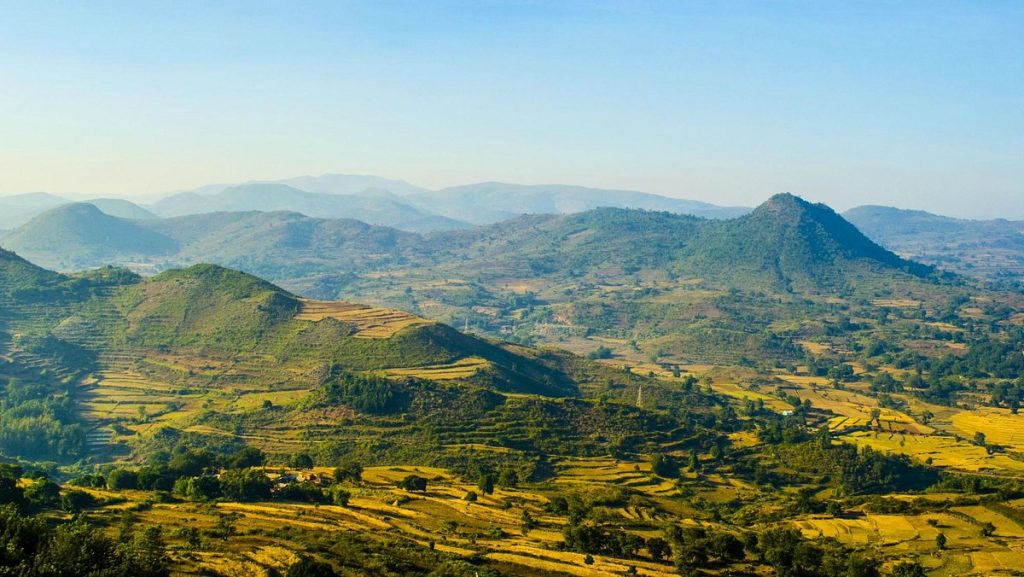
Araku Valley

Araku Valley

Tucked away in the hills of the Eastern Ghats, Araku Valley is a serene, misty hill station located roughly 110 kilometers from Visakhapatnam. Famously called the “Ooty of Andhra Pradesh,” Araku is renowned for its rich tribal culture, sprawling organic coffee plantations, and spectacular mountain landscapes.
​⛰️ The History of Araku Valley
​Ancient Tribes & Deep Isolation
​Unlike the coastal plains of Vizag, Araku’s history is fundamentally shaped by its geographic isolation. For thousands of years, these dense forests and rugged valleys served as an undisturbed sanctuary for various indigenous tribal communities, including the Kondhas, Bagatas, Valmikis, and Porjas. These tribes maintained their own distinct languages, deep spiritual connection to nature, and vibrant art forms completely separate from the mainstream medieval empires of the lowlands.
​The Mythological Echoes
​The valley holds deep roots in local lore, particularly surrounding the magnificent Borra Caves. Formed millions of years ago by the limestone action of the Gosthani River, these deep subterranean formations feature stalactites and stalagmites that locals have worshipped for centuries.
​According to regional legend, a cow herder chasing a lost animal discovered a natural stone structure resembling a Shivalingam deep inside the caves. This turned the ancient caverns into a sacred pilgrimage site long before modern roads ever carved through the mountains.

The Colonial Era & The Birth of Araku Coffee
​The modern history of the valley shifted dramatically during British colonial rule. In the early 20th century, the British recognized the region’s unique microclimate—cool altitudes with plenty of shade—as perfect for cultivation.
​In 1920, a British administrator named Broodie introduced the very first coffee plantations to the nearby Ananthagiri hills. Post-independence, the Andhra Pradesh Forest Department took over, eventually passing the baton to the Girijan Co-operative Corporation (GCC) to empower the local tribal farmers. Today, this legacy has evolved into the globally acclaimed, organic “Araku Coffee.”

FAQs

What is the history behind Araku's famous coffee?
​Araku coffee is entirely organic and "shade-grown," meaning the coffee shrubs thrive under a natural canopy of tall forest trees. Originally introduced by the British in 1920, the industry was revolutionized in the early 2000s by a unique cooperative project that trained thousands of indigenous tribal farmers in sustainable, biodynamic farming. Today, Araku Coffee has its own premium flagship store in Paris and is globally recognized for its smooth flavor profile with notes of chocolate and citrus.
What is the Dhimsa dance, and why is it important?
​The Dhimsa dance is a captivating tribal folk dance native to the Araku Valley, performed primarily by women of the local tribes. Dressed in traditional earth-toned sarees and heavy brass jewelry, dancers form a chain and move in rhythmic, snake-like patterns to the beat of instruments like the Mori (wind instrument) and Tudumu (drums). It is historically performed during the Chaitra festival (spring) and weddings to celebrate community harmony and pray for a good harvest.
Why is the train journey from Vizag to Araku considered historic?
​The Kottavalasa-Kirandul (KK) railway line that connects Vizag to Araku is an engineering marvel constructed in the 1960s with assistance from Japan to transport iron ore. It is one of the highest broad-gauge railway lines in the world. The journey takes you through 58 tunnels and over 84 bridges, offering spectacular window views of cascading waterfalls and deep valleys. Indian Railways runs a special Vistadome (glass-roof) coach on this route specifically for tourists.
What are the top places to experience history and culture in Araku?
​The Tribal Museum: A beautifully designed museum constructed using mud, clay, and traditional materials that showcases the daily life, hunting tools, textiles, and dioramas of Eastern Ghats tribes. ​Borra Caves: Located just a short drive from the main valley, these are considered among the deepest and largest cave networks in the Indian subcontinent. ​Padmapuram Botanical Gardens: Built during World War II in 1942, these historic gardens were originally meant to grow vegetables for soldiers fighting in the war. Today, it features rare plants, orchards, and popular treehouse stays.

Price From : ₹400/-

Address

Near Avaloormadam temple, thathampally po, pin code 688013, Alleppey, Kerala, India