
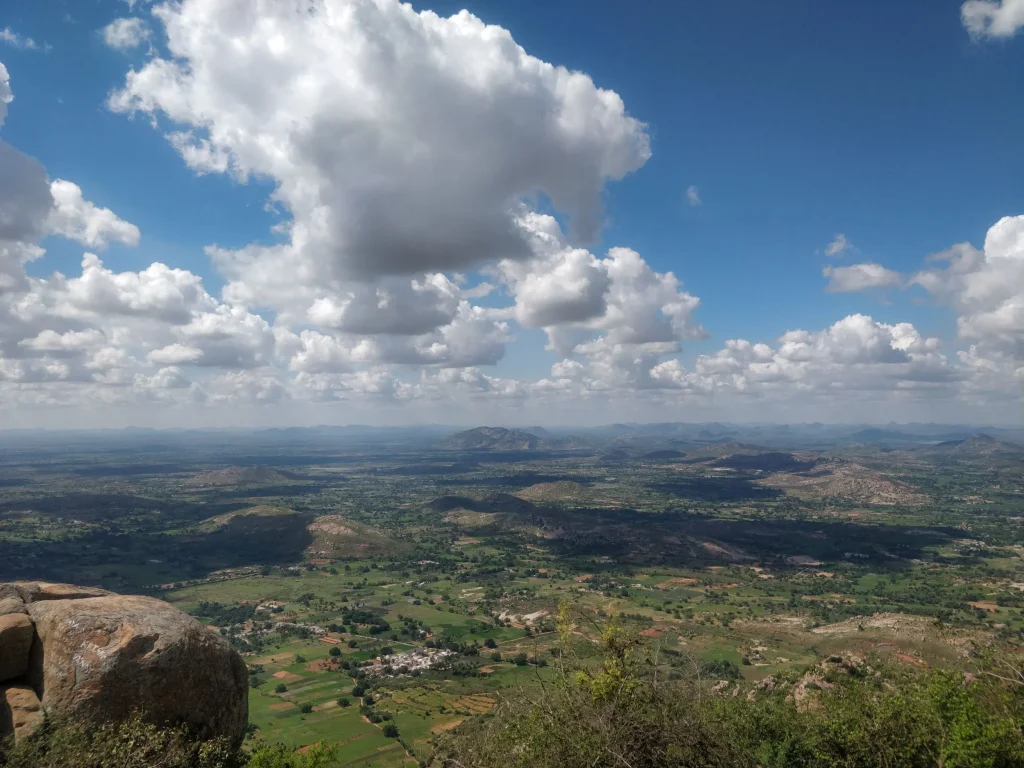
Horsley Hills
Situated at an elevation of 1,290 meters in the Chittoor district, Horsley Hills is Andhra Pradesh’s premier high-altitude retreat. Renowned for its pleasantly cool climate, dense eucalyptus forests, and sweeping panoramic views, this quiet station offers a distinct contrast to the warm plains below.
⛰️ The History of Horsley Hills
Ancient Roots & The Legend of Yenugu Mallamma
Long before the colonial era, these hills were known locally as Yenugu Mallamma Konda.
According to regional folklore, a saintly young woman named Mallamma lived on the hilltop and dedicated her life to healing the sick and conserving the local wildlife. She was deeply loved by the forest’s wild elephants (Yenugu), who would frequently bring her food and protect her dwelling. When she suddenly disappeared, local villagers believed she had transformed into a goddess. They built a modest temple in her honor on the peak, which remains a central cultural and spiritual landmark today.
The Colonial Transformation
The hill station owes its modern name and layout to W.D. Horsley, a British civil servant who served as the District Collector of Cuddapah in the mid-19th century.
Exhausted by the brutal, sweltering summer heat of the Andhra plains, Horsley stumbled upon this elevated oasis around 1870. Captivated by its pristine environment and refreshing temperatures, he selected the highest peak to build a summer residence.
To enhance the landscape, Horsley imported and planted a variety of exotic trees from around the world, most notably Eucalyptus, Jacaranda, and Mahogany. His private retreat quickly grew into a popular sanatorium and summer getaway for British officials looking to escape the heat.
Post-Independence Legacy
Following India’s independence, the private estate transitioned into a public asset managed by the state government. The original colonial house was converted into the official Governor’s Bungalow. Over the decades, the region has been carefully developed into an eco-tourism destination while successfully preserving its dense forest cover and rich biodiversity.