
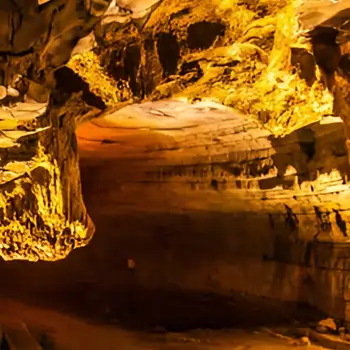
Belum Caves
Located in the Nandyal district of Andhra Pradesh, Belum Caves are the second-longest cave system open to the public in the Indian subcontinent (stretching over 3.2 kilometers). Formed millions of years ago by the constant flow of an underground river, these caves are a massive geological and historical marvel.
The History of Belum Caves
The word “Belum” is derived from the Sanskrit word Bilam, which means “cave.”
1. Ancient Buddhist Heritage
Long before they were a modern tourist attraction, Belum Caves were used by Buddhist and Jain monks as meditation halls dating back thousands of years. Inside the caves, archaeologists have unearthed ancient relics, including earthen vessels and remnants dating back to the 4th and 5th century BCE. The presence of these artifacts confirms the caves were an integral part of the regional monastic life.
2. Scientific Rediscovery
Though locals knew about the cavernous sinkholes for generations, the caves faded from official records until 1884, when British geologist Robert Bruce Foote conducted the first scientific survey of the site.
3. Exploration and Protection
The caves lay largely neglected for another century until 1982, when a German speleologist (cave expert) named Herbert Daniel Gebauer led a comprehensive expedition alongside local enthusiasts to map out the entire subterranean network. Recognizing its historical value, the Government of Andhra Pradesh declared the caves protected in 1988, and the Andhra Pradesh Tourism Development Corporation (APTDC) officially opened them to the public in 2002.