
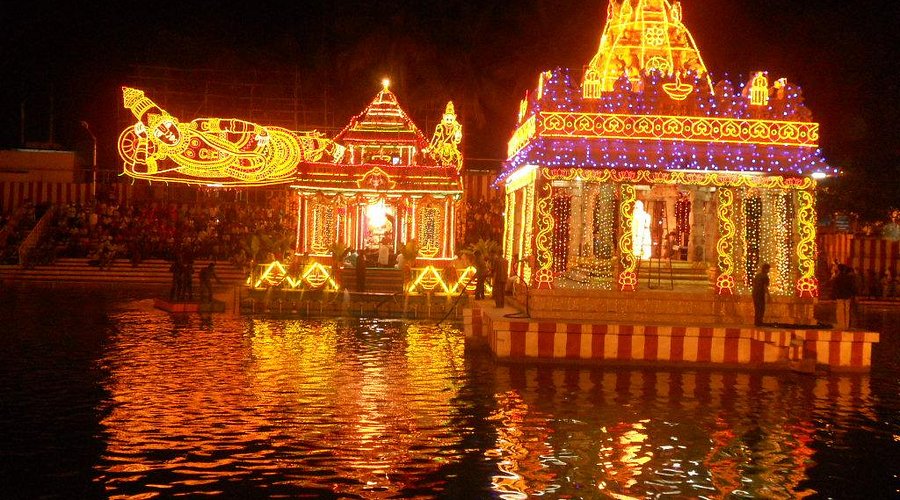
Tirupati
Tirupati—specifically the Sri Venkateswara Swamy Temple atop the Tirumala hills in Andhra Pradesh—is one of the most prominent, historic, and heavily visited pilgrimage sites in the world.
Here is a breakdown of its rich history, followed by some frequently asked questions.
The Historical Content
The history of Tirupati is a blend of sacred Puranic legends and centuries of royal patronage from South India’s greatest empires.
1. Mythological Origins
According to Hindu scriptures, the temple is recognized as Kaliyuga Vaikuntham (the earthly abode of Lord Vishnu during the present age of Kaliyuga). Legend says that Lord Vishnu manifested here as Venkateswara to save humanity from the trials of this age.
- To wed Princess Padmavati, the Lord took a massive loan from Kubera (the god of wealth).
- It is believed that the temple’s continuous flow of donations from devotees is helping the Lord repay the interest on that cosmic loan.
Royal Patronage Through the Ages
While the original idol is considered Swayambhu (self-manifested) and ancient texts trace the site back thousands of years, historical construction records date from around 300 CE onwards.
- Early Dynasties: The Pallavas of Kancheepuram (9th century) and the Cholas of Thanjavur (10th century) heavily expanded the temple. The first recorded major endowment was by Pallava Queen Samavai in 966 CE, who donated land and precious jewels.
- The Golden Era (Vijayanagara Empire): During the 14th to 16th centuries, the temple reached its peak wealth and architectural grandeur. Emperor Sri Krishnadevaraya was a zealous devotee; he visited multiple times and funded the gilding of the Ananda Nilayam (the golden roof over the inner sanctum). Copper statues of him and his consorts still stand at the temple portals.
- The Maratha & British Eras: In the 18th century, Maratha general Raghoji Bhonsle established a structured administration for the temple. In 1843, the British East India Company handed management over to the Hatiramji Mutt. Finally, the Tirumala Tirupati Devasthanams (TTD) was legally established in 1933 to manage the sprawling estate.