
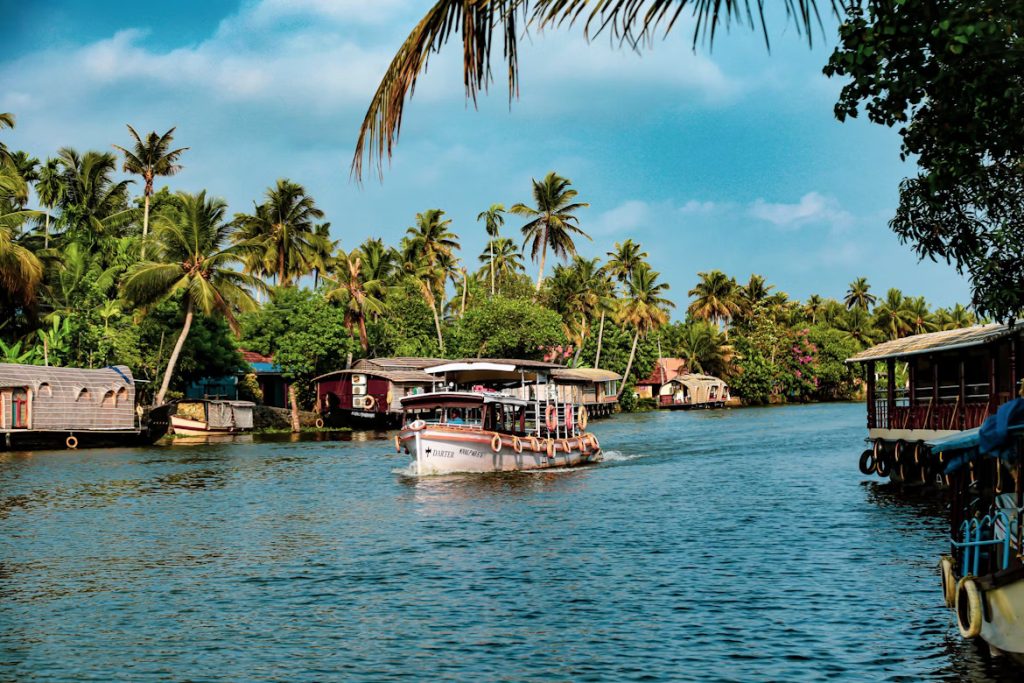
Kerala backwaters
The Kerala backwaters form a vast, interconnected network of over 900 kilometers of brackish lagoons, lakes, and canals running parallel to the Arabian Sea coast. Geographically unique, this ecosystem is fed by 38 rivers and controlled by natural barriers, making it one of the most remarkable water highway systems in the world.
The Historical Legacy of the Backwaters
Long before they became a global tourism hotspot, the backwaters served as the economic arteries of ancient and medieval Kerala.
1. The Ancient Spice Route Highway
For centuries, these calm inland waters were the only way to transport bulky goods out of the interior forest regions down to the coastal ports. Foreign traders—including the Phoenicians, Romans, Greeks, Arabs, and Chinese—sailed into port cities like Muziris and ancient Alappuzha to trade for black pepper, cardamom, and coir. Because roads did not exist in the marshy terrains, the backwaters functioned exactly like a modern interstate highway system.
2. Evolution of the Kettuvallam (Houseboat)
The iconic houseboats seen today evolved directly from ancient cargo vessels known as Kettuvallams. The name translates to “boat held together by knots.”
- The Construction: Remarkably, these massive wooden boats were constructed without using a single iron nail. Anji (jungle wood) or jackwood planks were stitched together tightly using coir ropes and then sealed with a thick black resin boiled out of cashew nut shells.
- The Purpose: A standard Kettuvallam could carry up to 30 tons of rice and spices. They featured a curved thatched roof made of bamboo poles and palm leaves to shield the crew and cargo from rain and intense sun during long journeys across the lakes. When modern roads and trucks arrived in the mid-20th century, these boats faced extinction until they were cleverly redesigned into floating hotels in the early 1990s.
3. The History of Kuttanad Farming
The backwaters are also home to Kuttanad, the “Rice Bowl of Kerala.” Historically, local farmers developed an ingenious indigenous engineering system to reclaim shallow lake beds for agriculture. By building ring dikes out of mud, coconut tree trunks, and mats, they created farming fields that sit 1.5 to 3 meters below sea level—a system strikingly similar to the famous Dutch polders, but built centuries ago using purely organic materials.