
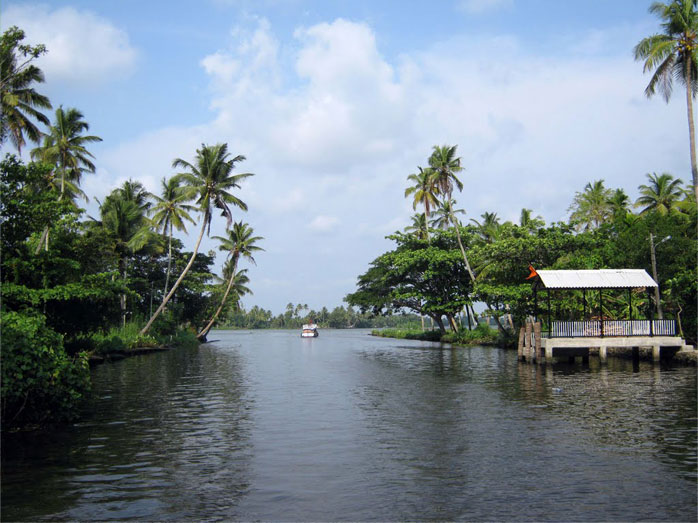
Chungom Pallathuruthy in Alappuzha
Chungom Pallathuruthy in Alappuzha (Alleppey) is a fascinating area that perfectly captures the transitional history of Kerala’s backwaters, shifting from a major commercial trading hub to a world-renowned tourism hotspot.
Historical Context
1. The Meaning Behind “Chungom”
The word Chungom (or Chungam) historically translates to a customs outpost, toll gates, or tax collection center in Malayalam.
During the 18th and 19th centuries, under the Kingdom of Travancore and its visionary Diwan (Prime Minister), Raja Kesavadas (known as the Maker of Modern Alleppey), Alappuzha was developed into a premier commercial port town. Goods, spices, and coir coming from the inland agricultural regions of Kuttanad had to pass through specific water checkpoints. Chungom Pallathuruthy served as one of these critical strategic outposts where royal taxes were levied on goods entering the main town channels.
2. The Lifeline of Kuttanad
Pallathuruthy sits at the gateway to Kuttanad, famously known as the “Rice Bowl of Kerala.” Historically, the early rulers of the Chera Dynasty (called Kuttuvans) controlled this region. The waterways around Pallathuruthy were not meant for leisure; they were the absolute lifelines for transporting rice, black pepper, and ginger in large wooden cargo boats called Kettuvallams.
3. Shift to Tourism and Houseboats
As modern roads developed and the active commercial port at Alappuzha beach declined in the 20th century, these ancient customs waterways evolved. The massive cargo Kettuvallams that used to stop at the Pallathuruthy outpost were eventually redesigned into the modern luxury houseboats we see today.