
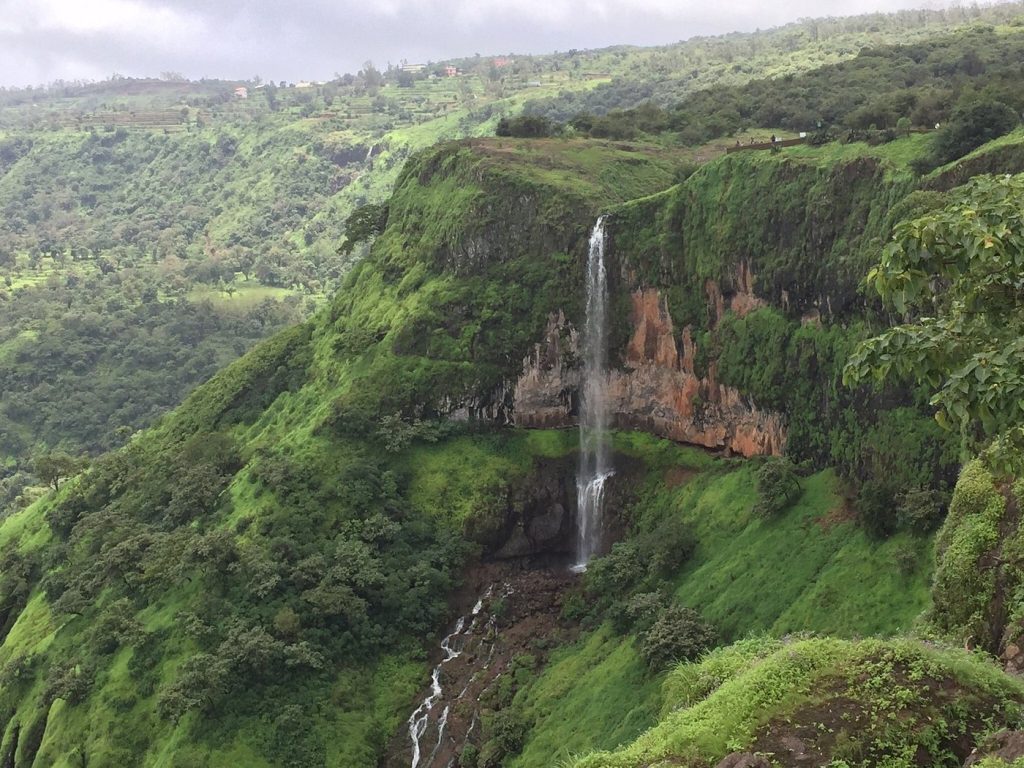
Mahabaleshwar
Nestled in the Western Ghats at an altitude of 4,439 feet, Mahabaleshwar is famed today for its cool weather and strawberry fields. However, its history is a fascinating mix of ancient Hindu lore, fierce Maratha battle strategy, and British colonial planning.
The Historical Timeline of Mahabaleshwar
Mahabaleshwar’s identity was built in three distinct historical phases:
Ancient Myth & The Yadavas
1215 CE
The recorded history begins when King Singhan of the Yadava dynasty visited the highlands. He built a small temple and a water tank at the source of the Krishna River, establishing “Kshetra Mahabaleshwar” (Old Mahabaleshwar) as a sacred pilgrimage site.
The Maratha Era & Pratapgad
1656 CE
Chhatrapati Shivaji Maharaj seized the region from the More family (vassals of the Bijapur Sultanate). Recognizing the strategic, heavily forested terrain of the Javali valley, Shivaji commissioned the construction of the mighty Pratapgad Fort nearby. In 1659, this fort became the site of the legendary Battle of Pratapgad, where Shivaji defeated the giant general Afzal Khan.
The British Summer Capital
1824 CE – 1829 CE
General P. Lodwick became the first European to scale the hills in 1824. Captivated by its climate, the British established a sanatorium for sick soldiers. In 1828, the Governor of Bombay, Sir John Malcolm, fell so in love with the place that he struck a land-exchange deal with the Raja of Satara to develop it into the official Summer Capital of the Bombay Presidency.