
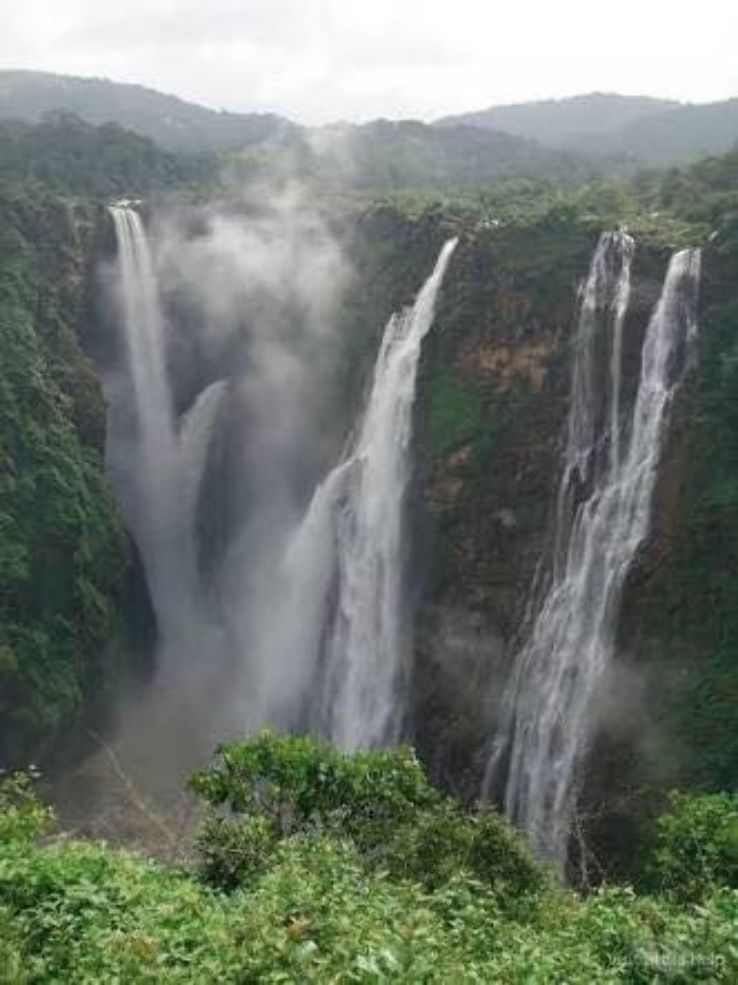
Khandala

Khandala

While Lonavala is known as the “city of caves,” Khandala serves as the historic gateway. Perched at the very edge of the Bhor Ghat pass, its history is defined by the struggle to control this treacherous mountain passage that connects the coast to the interior.
​The Historical Significance of Khandala
​Khandala’s history is essentially the history of the Bhor Ghat—the most critical trade route between the Konkan ports and the Deccan Plateau for over 2,000 years.

The Bhor Ghat Trade Route
Ancient Era
For centuries, merchants used the Bhor Ghat pass to transport goods from coastal ports (like Chaul and Kalyan) to the interior. Khandala was the vital checkpoint at the top of this descent, serving as a rest stop and defensive buffer for ancient

Maratha Strategic Stronghold
1600s – 1818
During the Maratha Empire, Khandala was the “eyes and ears” of the nearby forts. It held a strategic vantage point to watch over troop movements coming up the Ghats. It served as a secondary defensive perimeter for the nearby invincible forts of Lohagad and Visapur.

The Great Indian Peninsula Railway
1860s
The British transformed the pass by engineering one of the most difficult railway inclines in the world. The railway expansion forced the development of Khandala as a logistical hub for the engineers and workers building the bridges, tunnels, and tracks that snake through the mountain cliffs here today.

FAQs

What is the history behind the name "Duke's Nose"?
​The famous cliffside in Khandala, known locally as Nagphani (Cobra's Hood), was renamed Duke's Nose by the British. They thought the shape of the massive rocky precipice looked exactly like the nose of the Duke of Wellington (Arthur Wellesley), who had visited the region during his time in India. The name stuck in local colonial history.
Is Khandala distinct from Lonavala?
​Historically, they were separate settlements, but they have physically merged over time. Lonavala was the plateau center for trade and farming, while Khandala was the mountain-pass gateway. Today, they are collectively referred to as "Lonavala-Khandala," but Khandala remains the "cliff-side" twin, offering steeper valley views, whereas Lonavala is flatter and more sprawling.
How important was the "Khandala Ghat" pass?
​The Bhor Ghat pass at Khandala was essentially the "jugular vein" of the region. If an invading army could take the pass, they could control the flow of trade and military reinforcements between Pune and Mumbai. This is why you see so many defensive fortifications—like the twin forts of Lohagad and Visapur—clustered in the immediate vicinity.
Why is Khandala so famous in Indian pop culture?
​While Khandala has been a weekend retreat for decades, it became a massive cultural icon in the 1990s due to the film Ghulam. The song "Aati Kya Khandala" (Will you come to Khandala?) became a national sensation. It shifted the perception of Khandala from a quiet colonial hill station to a romantic getaway, sparking a massive boom in tourism that changed the town's economy overnight.
Why are there so many tunnels in the Khandala Ghat?
​The geography is incredibly steep. When the British were building the rail line in the 19th century, they couldn't just build tracks over the slope; they had to cut through the rock. The result was a massive feat of 19th-century engineering, creating a series of tunnels and viaducts that are still some of the most complex in India's railway network.

Price From : ₹4500/-

Address

Near Avaloormadam temple, thathampally po, pin code 688013, Alleppey, Kerala, India