
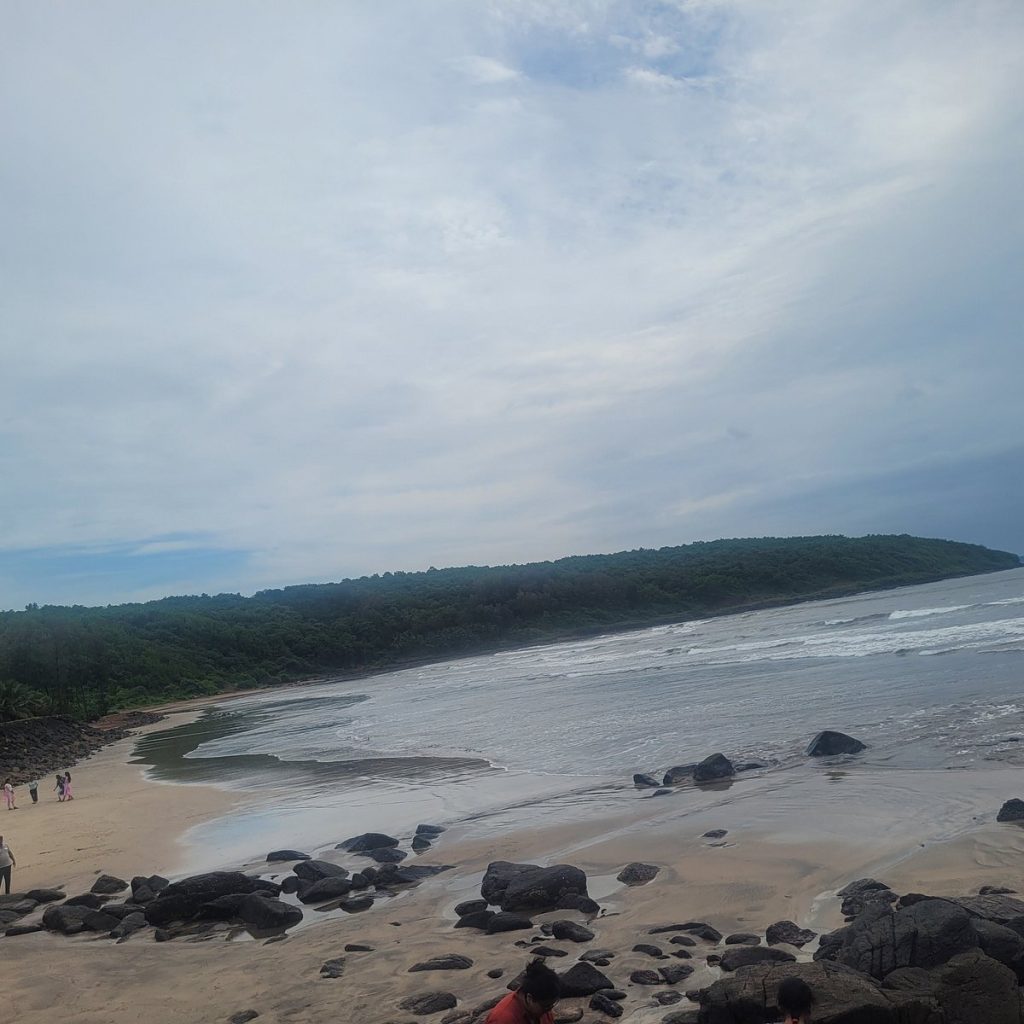
Hedvi
Hedvi, situated just a short drive south of Guhagar in the Ratnagiri district of Maharashtra, is a historic coastal hamlet tucked away from mainstream commercialization. The town’s history is intimately bound to Peshwa-era religious architecture, unique iconography, and a violent, dramatic geological marvel that has attracted spiritual seekers and travelers for centuries.
Historical Background
Hedvi’s past is shaped by royal Maratha support, traditional Konkani migration, and its status as a sacred pilgrimage stop.
1. The Era of the Peshwas & The Dashabhuja Ganesh
The absolute historical core of Hedvi is the Shri Dashabhuja Ganesh Temple.
- The Origin (1785): The temple was constructed in 1785 during the golden age of the Peshwas, who served as the Prime Ministers of the Maratha Empire. The Peshwas were deeply devoted to Lord Ganesha and funded several iconic Ganpati shrines across Maharashtra.
- The White Marble Influx: The temple was established by a prominent local historic figure, Kelkar Swami. The exquisite, single-block white marble used to carve the deity was specially sourced and transported all the way from the quarries of Rajasthan to this remote coastal pocket—a monumental logistics feat in the late 18th century.
2. The Bahmani & Maratha Coastline Guard
Geographically, Hedvi sits right between the historic ports of Guhagar and Jaigad. During the medieval centuries, its coastal hills served as localized lookout points for regional rulers monitoring the Vashishti and Shastri river creeks. While nearby ports handled shipping, Hedvi developed strictly as an inner sanctum of Vedic scholarship and traditional orchard farming (Wadis).