
Kolhapur

Kolhapur

Kolhapur, situated on the banks of the Panchganga River, is a land of profound spiritual heritage, martial valor, and revolutionary social reform. Known as Dakshin Kashi (the Kashi of the South) due to its ancient spiritual roots, it later evolved into a prominent princely state ruled by the direct descendants of Chhatrapati Shivaji Maharaj.

Chronological History

​Kolhapur’s past transitions smoothly from an ancient religious sanctuary mentioned in the Puranas to the epicenter of a progressive Maratha branch.

Shilahara Dynasty & The Great Temple
7th Century – 12th Century CE
The region flourished under the Shilahara and Chalukya dynasties. The iconic Mahalakshmi (Ambabai) Temple was constructed during this era. Built in a distinct star shape, the temple reflects ancient Hemadpanti architectural style.

The Siege of Panhala
1660 CE
Chhatrapati Shivaji Maharaj captured the nearby Panhala Fort from the Adilshahi Sultanate. This triggered a legendary siege where Shivaji Maharaj was trapped for months before making a daring midnight escape through a dense downpour to Vishalgadh, aided by the ultimate sacrifice of Baji Prabhu Deshpande.

Establishment of the Kolhapur Throne
1710 CE
Following internal power dynamics within the Maratha Empire, Maharani Tarabai (the fierce daughter-in-law of Shivaji Maharaj) broke away from Satara and established an independent Kolhapur seat of the Maratha Empire, making Panhala and later Kolhapur city her capital.

The Golden Era of Shahu Maharaj
1894 – 1922 CE
Rajarshi Shahu Maharaj ascended the throne. A visionary reformer, he broke rigid caste hierarchies by introducing India’s very first affirmative action policy (50% reservation for backward classes in 1902), made primary education free and compulsory, and transformed Kolhapur into a hub for wrestling, arts, and textile commerce.

Iconic Historical Sites to Visit

  • Mahalakshmi Temple (Ambabai): A highly revered Hindu pilgrimage site. Architecturally unique, its sanctum is aligned so that twice a year, the rays of the setting sun fall directly on the face of the stone idol of Goddess Mahalakshmi during an event called Kirnotsav.
  • Panhala Fort: Located 20 kilometers from the city, it is one of the largest forts in the Deccan. It features the Teen Darwaza (a triple-layered stone gateway), vast granaries, and commanding views of the Sahyadri mountain passes.
  • The New Palace (Chhatrapati Shahu Museum): Completed in 1884, this grand palace showcases an eclectic mix of Indo-Saracenic, Gothic, and Rajasthani architecture. The ground floor serves as a stunning museum housing royal artifacts, weaponry, and rare clothing.
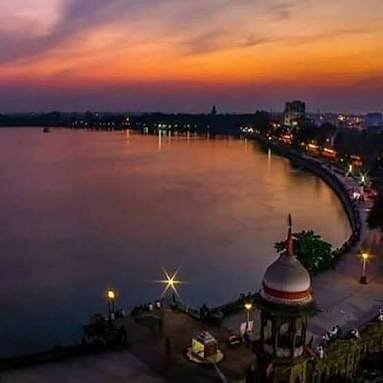
  • Rankala Lake: Built by Shahu Maharaj to resolve the city’s water needs, this historic lake is flanked by the ornate Shalini Palace. Today, it serves as a central cultural and recreational hangout for the city.

FAQs

What makes Kolhapur's wrestling culture (Kusti) historically unique?
Kolhapur is the wrestling capital of India. Rajarshi Shahu Maharaj was a passionate patron of the sport and built traditional red-mud wrestling arenas called Talims all across the city, funding the diet and training of athletes regardless of their caste. To this day, wrestlers from across India move to Kolhapur to train for prestigious titles like Maharashtra Kesari.
Are traditional Kolhapuri Chappals still made the old-fashioned way?
Yes. These world-famous, open-toed leather sandals trace their origin back to the 13th century. Traditionally handcrafted using locally sourced vegetable dyes and buffalo hide, they are renowned for their signature intricate braiding and distinct "creaking" sound when walking.
What is the secret behind Kolhapur’s famous "Tambda" and "Pandhra" Rassa?
Kolhapuri cuisine is legendary for its bold spice profiles. When you order a traditional mutton thali, it comes served with two distinct broths: ​Tambda Rassa (Red Broth): A fiery, red chili-heavy meat stock spiced with a special local spice blend called Kanda-Lasun Masala. ​Pandhra Rassa (White Broth): A soothing, rich white soup made from a base of mutton stock, coconut milk, poppy seeds, and mild spices designed to balance the heat of the red broth.
When is the best time of year to visit Kolhapur?
The absolute best time is from October to March. The weather is cool and breezy, making it ideal for exploring Panhala Fort. Furthermore, visiting during Navratri (October) allows you to witness the spectacular celebrations and traditional processions at the Mahalakshmi Temple.
What are the key features to look for to identify genuine handcrafted Kolhapuri Chappals from fakes?
Because of the massive global popularity of traditional Kolhapuri Chappals, markets are often flooded with cheap, synthetic, machine-made replicas. Genuine Kolhapuris are protected under a Geographical Indication (GI) tag, meaning true pairs must be handcrafted using specific traditional methods within designated districts of Maharashtra and Karnataka. When shopping, look for these key physical and sensory features to ensure you are buying an authentic piece of artisanal heritage: 1. The Stitching (Look for Leather Thongs, Not Thread) ​The Real Deal: Authentic Kolhapuris are entirely hand-stitched. Instead of nylon thread or sewing machines, artisans use thin, thick leather cords (thongs) to stitch the upper portion to the sole. The stitches will look raw, strong, and inherently a bit uneven—a signature mark of human hands. No metal nails are used in traditional assembly. The Fake: Replicas use perfectly uniform machine lines, synthetic nylon threads that fray over time, or rely heavily on industrial glue and adhesive residue around the seams. 2. The Material and Smell Test ​The Real Deal: Real Kolhapuris are crafted from thick, vegetable-tanned buffalo or cow hide. It is treated naturally using local plant leaves and tree barks instead of harsh factory chemicals. It will have a distinct, earthy, natural leather aroma. To the touch, it feels firm and stiff initially but softens and molds precisely to the shape of your feet over a week of wear. The Fake: Imitations are made from synthetic materials, PU leather, or "pressed" chemical leather. They often feel overly soft, flimsy, or unnaturally smooth straight out of the box, and they carry a distinct plastic or harsh chemical chemical odor. ​3. The Visual Finish and Imperfections ​The Real Deal: Because of natural vegetable dyeing, the finish is typically matte or subtly polished, displaying natural variations in texture and shade. No two pairs are completely identical. The Fake: Mass-produced pairs feature an artificial, uniform, and hyper-glossy or shiny sheen that natural leather doesn't possess. 4. The Weight and The Sole ​The Real Deal: Pure leather is dense. When you pick up a genuine pair, it will feel solid and have a noticeable weight to it. The sole consists of thick, layered leather that resists easy bending but offers heavy-duty durability. The Fake: Synthetic replicas are suspiciously lightweight. If the sole bends completely in half with zero resistance or features a thin rubber/plastic bottom plate, it is a machine-made copy. 5. Listen for the Iconic "Squeak" or "Crunch" ​The Real Deal: Premium traditional varieties (like the Kapashi or Senapati styles) are intentionally designed to make a rhythmic, crunching or creaking sound as you walk. Artisans achieve this by inserting small, dry pieces of leather or specific seeds between the layers of the sole. Historically, this sound announced the arrival of an important person or served as a warning to step aside. The Fake: Replicas are completely silent or sound like regular rubber flip-flops. ​6. Price and GI Verification ​The Real Deal: Given the days of intensive hand labor required to weave the intricate braids (Veni), authentic pairs typically start from ₹800 to ₹3,000+ depending on the complexity of the design. Reputable sellers or authentic artisan portals will often display their GI certification or QR codes linking back to the artisan cluster. The Fake: Vendors offering "Genuine Leather Kolhapuris" at throwaway street prices (under ₹400–₹500) are almost always selling synthetic mass-produced duplicates.

Price From : ₹4500/-

Address

Near Avaloormadam temple, thathampally po, pin code 688013, Alleppey, Kerala, India