
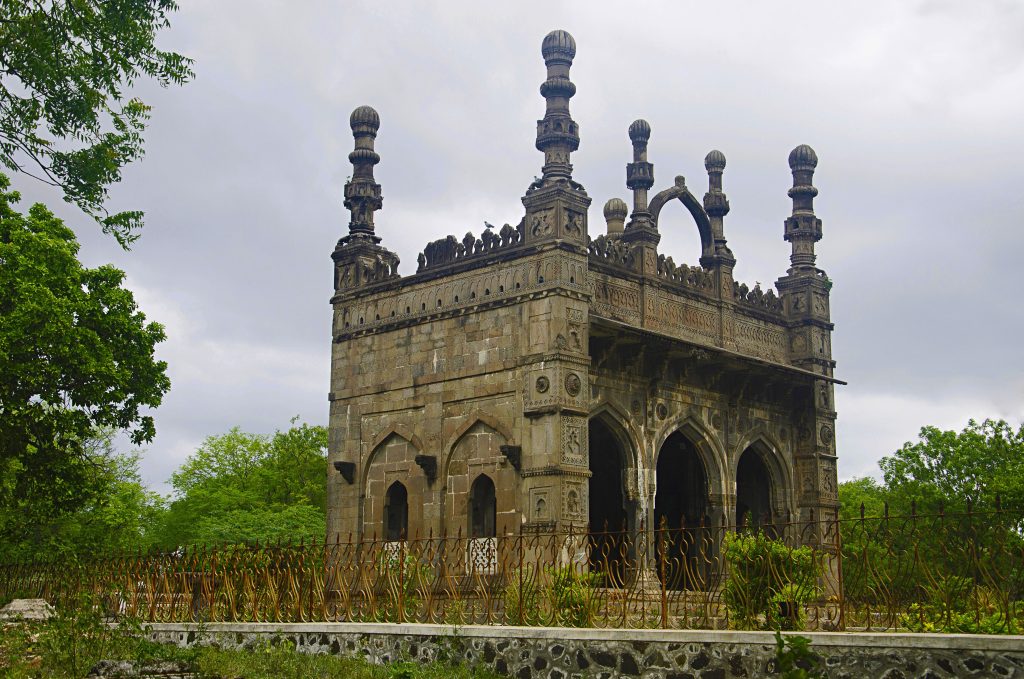
Ahmednagar
Ahmednagar—recently officially renamed Ahilyanagar in honor of the legendary 18th-century Maratha queen Ahilyabai Holkar—is a city steeped in over five centuries of rich history. Founded on the site of an ancient settlement called Bhingar, it has served as a critical political, cultural, and military hub in Maharashtra.
Historical Highlights
1. The Founding & Golden Age (1494)
The city was founded in 1494 by Malik Ahmad Nizam Shah I, who had declared independence from the declining Bahmani Sultanate. He defeated his rivals on a local battlefield and built a new, planned capital named after himself, establishing the Nizam Shahi Dynasty (the Ahmednagar Sultanate). Under their rule, the city became a booming center for Persian-Indian art, literature, and architecture.
2. The Valor of Chand Bibi (Late 16th Century)
One of Ahmednagar’s most famous historical figures is the warrior queen Chand Bibi. When the mighty Mughal armies of Emperor Akbar tried to conquer the Deccan, she personally led the defense of the Ahmednagar Fort in 1595 and 1600, resisting the invaders with legendary tactical brilliance before the sultanate eventually fell to Mughal control under Shah Jahan.
3. Maratha Control & British Era
In 1759, the Maratha Peshwas took control of the region from the Nizam of Hyderabad. By 1817, following the Anglo-Maratha wars, the British Empire formally annexed Ahmednagar, turning it into one of Western India’s largest military cantonments.
4. The Freedom Struggle & “The Discovery of India”
During the Indian Independence Movement, the British used the massive Ahmednagar Fort as a high-security prison for nationalist leaders. Between 1942 and 1945, future Prime Minister Jawaharlal Nehru was imprisoned here alongside other leaders. It was within these prison walls that Nehru wrote his seminal masterpiece book, The Discovery of India.
5. Post-Independence: The Sugar Revolution
In the mid-20th century, Ahmednagar became the cradle of Asia’s very first cooperative sugar factories. This sparked an economic revolution across rural Maharashtra, shifting the region into an agricultural powerhouse.
Key Historical Places to Visit
- **Ahmednagar Fort (Bhuikot Fort): A massive stone fort with 22 bastions and a deep moat. Originally built of mud in 1490 and fortified with stone by 1562.
- Cavalry Tank Museum: Established in 1994, it is the only museum of its kind in Asia, housing over 50 vintage armored fighting vehicles and war tanks dating back to WWI (including a 1914 Rolls-Royce armored car).
- Bagroja (Tomb of Ahmad Nizam Shah): The dome-shaped resting place of the city’s founder on the banks of the Sina River, adorned with beautiful Quranic inscriptions.
- Damdi Masjid (1567): A beautifully carved, compact 3-arch mosque. Local legend says a fakir built it by saving damdis (a low-denomination historic currency) given by workers constructing the fort.