
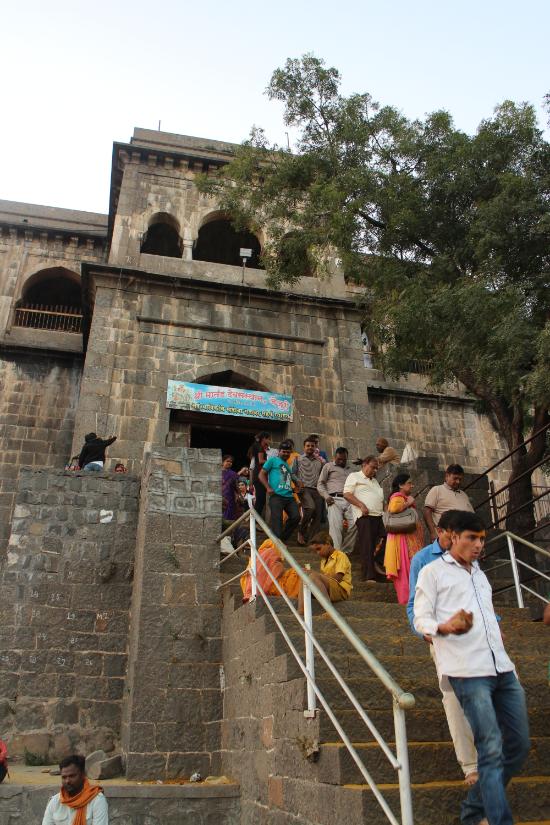
Jejuri
Jejuri, situated roughly 48 km from Pune in Maharashtra, is the primary seat of worship for Lord Khandoba—a fierce, protective manifestation of Lord Shiva.
Affectionately nicknamed Sona-Yachil Jejuri (Golden Jejuri), the town is globally famous for its breathtaking tradition of Bhandara, where millions of devotees cover the entire hill, temple, and town in vibrant yellow turmeric powder.
Historical & Mythological Landscape
1. The Mythological Victory Over Demons
According to the Malhari Mahatmya ancient texts, two demon brothers, Mani and Malla, grew incredibly powerful and terrorized sages and humans across the region. Responding to the prayers of the gods, Lord Shiva took the fierce avatar of Martanda Bhairava (Lord Khandoba), riding a white horse and wielding a massive sword (Khanda). Following a colossal battle on the Jejuri hills, Khandoba defeated the demons, earning the title Malhari (destroyer of Malla).
2. Fortified Maratha Military Architecture (17th–18th Century)
The main temple sits like an imposing fortress atop a small hill. While its origins are ancient, the structured fortifications, massive stone walls, and the 350-plus stone steps leading to the summit were developed during the Maratha Empire.
- The Holkar Influence: Major architectural updates, including the grand protective stone arcades and porches, were commissioned by the Maratha ruler Malhar Rao Holkar and later expanded by Ahilyabai Holkar in the 18th century.
3. The Historic Maratha Treaty Meeting (1754)
Jejuri holds a massive place in secular Maratha political history. In 1754, during a volatile internal power struggle, Peshwa Balaji Baji Rao (Nana Saheb) and Raghuji Bhonsle met inside the sacred premises of the Jejuri temple. To ensure absolute loyalty, they swore a sacred, solemn oath on the Bhandara (holy turmeric) of Lord Khandoba to settle their disputes amicably, cementing the temple as a venue for high-stakes royal diplomacy.