
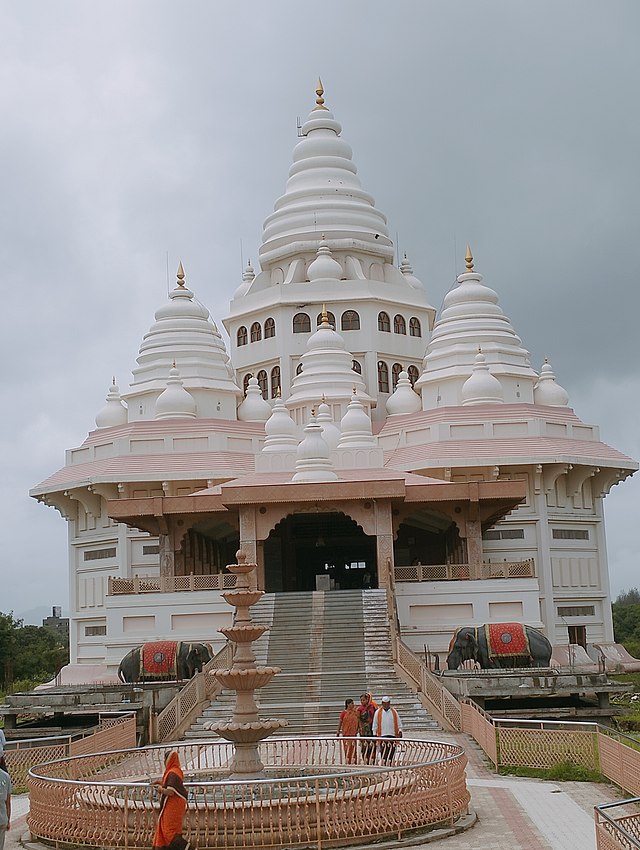
Alandi and Dehu
Alandi and Dehu are twin spiritual towns situated on the banks of the Indrayani River near Pune, Maharashtra. They form the absolute epicenter of the Warkari Bhakti movement (a centuries-old tradition of spiritual devotion centered on Lord Vitthal of Pandharpur).
While Alandi is immortalized by the 13th-century saint-philosopher Sant Dnyaneshwar, Dehu is the birthplace of the revered 17th-century bhakti poet Sant Tukaram.
Historical & Spiritual Tapestry
1. Alandi: The Seat of Sant Dnyaneshwar (13th Century)
Alandi is primarily famous for being the resting place of Sant Dnyaneshwar (1275–1296 CE), who revolutionized Marathi literature by translating the sacred Bhagavad Gita from Sanskrit into everyday Marathi, creating the epic work Dnyaneshwari. This shifted spiritual knowledge away from an elite few and made it accessible to the masses.
- Sanjeevan Samadhi: In 1296, at the young age of 21, Sant Dnyaneshwar voluntarily entered into a state of permanent meditative transition (Sanjeevan Samadhi) under an Ajana tree. The current temple complex was later built over this exact sacred spot by Maratha noblemen and ancestors of the Peshwas.
2. Dehu: The Homeland of Sant Tukaram (17th Century)
Located roughly 15 km away from Alandi, Dehu is seamlessly tied to Sant Tukaram (1608–1649 CE), a householder saint and definitive poet of the Bhakti movement. Tukaram wrote thousands of Abhangas (devotional hymns) that fiercely challenged caste hierarchies and promoted absolute social equality.
- The Miraculous River Manifestation: According to popular history, when orthodox factions forced Tukaram to throw his handwritten manuscripts into the Indrayani River, he went on a fast. It is believed that after several days, the river miraculously floated the pristine, undamaged texts back to the surface.
- The Gatha Mandir: Modern-day Dehu features the striking Gatha Mandir, an architectural monument located right along the riverbanks, where thousands of Tukaram’s verses are carved onto its internal stone walls.
3. The Origins of the Pandharpur Wari (Palkhi)
Historically, the legendary Pandharpur Wari—an annual 250-km walking pilgrimage—originates from these two very towns. Initiated in its modern form during the 1680s by Sant Tukaram’s youngest son, Narayan Maharaj, the procession carries the symbolic footprints (Padukas) of Sant Dnyaneshwar from Alandi and Sant Tukaram from Dehu in decorated chariots (Palkhis) all the way to Pandharpur, drawing millions of pilgrims (Warkaris) every single year.