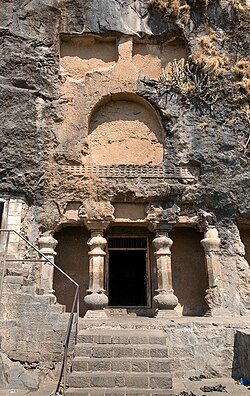
What is unique about the structure of Cave 7?
Cave 7 is an architectural marvel. It features a massive assembly hall measuring roughly 51 feet wide and 57 feet deep, constructed completely without a single central supporting pillar. The entire ceiling remains unsupported, distributing weight perfectly out to the side rock walls. Additionally, 18 small meditation cells flank the sides of the main prayer hall.
How many steps do you have to climb to reach the temple?
Visitors must climb approximately 300 to 307 stone steps to reach Cave 7. The staircase is wide, fully paved, and concrete, but it climbs at a steep angle up the cliff side. For seniors or travelers with mobility difficulties, local operators provide Doli services (wooden sedan chairs carried by local porters) at the base for a fee.
What is unique about the Girijatmaj Ganesha idol?
The idol is a Swayambhu (self-manifested) form, meaning it wasn't sculpted as an independent statue. Instead, it is a low-relief carving protruding directly out of the stone back wall of the cave. It can only be viewed from the front, and devotees traditionally perform prayers from the main hall.
What are the main daily temple timings for Lenyadri?
Because the temple is located within an active Archaeological Survey of India (ASI) protected cave complex, it does not stay open late into the night. The standard visiting hours are from 5:00 AM to 8:00 PM. The main morning Aarti occurs at 6:00 AM, and the evening prayers are held at 6:30 PM.
Are there wild monkeys at Lenyadri, and how should travelers prepare?
Yes, the Lenyadri hills are home to a large population of wild macaque monkeys. They are highly active along the 300 stone steps. To ensure a safe climb, do not carry open bags, food items, plastic bottles, or bright flowers in your hands. Keep all personal belongings sealed securely inside a zipped backpack.
What is the distance between Lenyadri and Ozar?
Lenyadri is located roughly 15 km away from Ozar (Vighneshwar Temple). Because they are so close geographically, travelers can easily visit both in a single morning or afternoon trip from nearby hubs like Narayangaon or Junnar.
Create a scannable 1-day travel itinerary connecting Pune to Ozar and Lenyadri Ganesha temples with transit times?
This family-friendly, 1-day pilgrimage itinerary links Pune to the two northernmost Ashtavinayak shrines: Lenyadri (Girijatmaj) and Ozar (Vighneshwar).
Because Lenyadri involves an outdoor cliffside climb, this schedule positions the physical trek during the cooler morning hours and follows up with a relaxing, flat riverside visit to Ozar in the afternoon. Hiring a private cab or self-driving from Pune is highly recommended for this route.
🗓️ Master Timeline Summary
06:00 AM – 08:30 AM: Transit: Pune to Lenyadri via Pune-Nashik Highway (approx. 2.5 hours)
08:30 AM – 11:00 AM: Climbing Lenyadri Caves & Girijatmaj Darshan
11:00 AM – 11:30 AM: Transit: Lenyadri to Ozar Village (approx. 30 mins)
11:30 AM – 01:30 PM: Ozar Temple Darshan & Trust Maha-Prasad Lunch
01:30 PM – 03:00 PM: Relaxing by the Kukadi River & Local Exploration
03:00 PM – 05:30 PM: Transit: Ozar back to Pune City Center (approx. 2.5 hours)
🏛️ Step-by-Step Itinerary
🚗 Morning Departure & Transit
Departure Time: 06:00 AM from Pune city center.
The Route: Head north along the Pune-Nashik Highway (NH 60) toward Junnar (approx. 95 km).
Tip: Leaving by 06:00 AM ensures you completely bypass the heavy industrial and commuter traffic bottlenecks around Chakan and Bhosari.
Lenyadri Girijatmaj Temple (Cave 7)
Arrive early at Lenyadri Ganesha Temple to tackle the mountain steps before the afternoon sun hits the rock cliff face.
Time Allocation: 08:30 AM – 11:00 AM (2.5 hours for the climb, cave exploration, and descent).
The Step Climb: Walk up the 300-plus concrete steps carved into the hillside to reach Cave 7. Take steady breaks at the built-in rest landings along the way.
What to See: Enter the magnificent, pillarless monolithic Buddhist cave hall. Take in the Swayambhu Ganesha low-relief idol carved directly into the back stone wall. If time permits, step out onto the balcony ledge to view the surrounding green Junnar valleys.
🚗 Inter-temple Transit: Lenyadri to Ozar
Departure Time: 11:00 AM
Duration: Approx. 30 minutes (15 km via the local Junnar-Ozar road).
Family Note: This is a short, flat drive winding through local pomegranate and sugarcane plantations.
Vighneshwar Vinayak Temple, Ozar
Head straight to the fortified Vighneshwar Vinayak Temple complex situated alongside the banks of the Kukadi River.
Time Allocation: 11:30 AM – 01:30 PM (2 hours for darshan and community lunch).
The Darshan: View the striking east-facing Ganesha idol adorned with precious diamonds and emeralds embedded into its eyes and navel. Admire the solid gold temple spire (Shikhara) added by Maratha military commander Chimaji Appa.
Maha-Prasad Lunch (12:30 PM – 01:30 PM): Head to the official temple trust dining hall to sit down together for a traditional, healthy vegetarian Prasad-Bhojan served daily at nominal rates.
🌳 Riverside Relaxation & Afternoon Departure
Time Allocation: 01:30 PM – 03:00 PM
What to Do: Take a leisurely family stroll along the stone ghats of the Kukadi River directly behind the temple complex. It's a peaceful spot with vast stone seating beneath shady trees, perfect for resting before the drive home.
Return Transit (03:00 PM – 05:30 PM): Board your vehicle and head back down NH 60 toward Pune, arriving home safely before the peak evening city rush hour sets in.
💡 Essential Travel Rules for Families
Backpack Rule (Lenyadri): The wild monkeys at Lenyadri are incredibly smart and will aggressively grab items. Do not carry loose plastic bags, flowers, or open snacks. Keep all water bottles, sunglasses, and wallets zipped inside a secure backpack.
Doli Services: For senior citizens or anyone with knee issues, Doli (sedan chairs carried by local porters) are readily available at the base of the Lenyadri steps. Ensure you settle on the round-trip price before making the ascent.
Hydration: Even in the winter months, climbing the stone caves can be tiring. Carry extra electrolyte drinks or stop for fresh sugarcane juice widely sold by local farmers along the roadsides.