
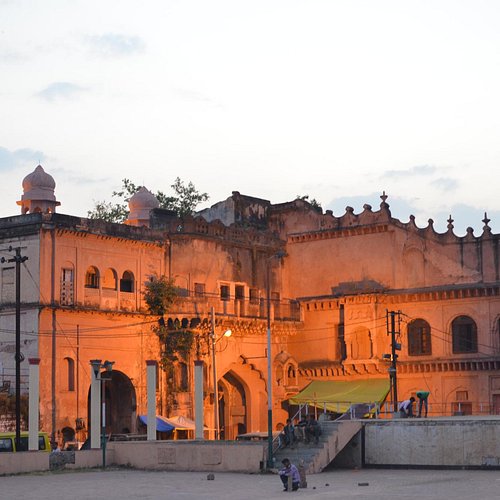
Bhopal
Bhopal, famously known as the “City of Lakes,” has a fascinating and unique history that stretches from medieval Hindu kingdoms to an extraordinary century of female Muslim rule, and into its modern identity as the capital of Madhya Pradesh.
The Historical Narrative of Bhopal
1. Origins and the Legend of Raja Bhoj (11th Century)
The city’s roots trace back to the 11th century, when it was founded by the legendary Paramara King Bhoja of Malwa. Originally named Bhojpal, the name was a combination of the king’s name and “pal” (meaning dam). King Bhoj constructed a massive earthen dam that secured his eastern frontiers and formed the stunning Bhojtal (Upper Lake), which stands today as India’s oldest man-made lake.
2. The Modern Foundation (18th Century)
After the decline of the Paramara dynasty, the region fell into relative obscurity until the early 1700s. The modern city of Bhopal was established in 1707 by Dost Mohammad Khan, a Pashtun soldier of fortune from the Mughal army.
- He leased territories in the Malwa region and helped the Gond queen, Rani Kamlapati, protect her kingdom from rivals.
- Following her death, Khan took complete control, built the Fatehgarh Fort, and laid the groundwork for the independent princely State of Bhopal.
3. The Golden “Era of the Begums” (1819–1926)
One of the most remarkable chapters in Indian royalty is Bhopal’s century-long rule by four successive female rulers, known as the Begums. During a time when women rarely held formal political power, these rulers transformed Bhopal into a progressive, architecturally magnificent state.
- Qudsia Begum (Gohar Begum): The first female ruler, who took the throne in 1819. She refused to accept purdah (seclusion) customs, rode horses, and commissioned the famous Gohar Mahal palace.
- Sikandar Jahan Begum: A brilliant administrator who modernized the military, restructured the revenue system, and successfully navigated relations with the British East India Company.
- Shah Jahan Begum: A passionate patron of arts and architecture. She began construction on the Taj-ul-Masajid (one of the largest mosques in Asia) and built an entire new township called Jehangirabad.
- Sultan Jahan Begum: The last of the female line, she focused heavily on public health, established a modern municipal system (1907), built the city’s railway and postal networks, and championed girls’ education.
4. Integration into India & Modern Era
After India gained independence in 1947, the last Nawab, Hamidullah Khan, initially resisted joining the Indian Union. However, local public agitations forced his hand, and he signed the Instrument of Accession on April 30, 1949.
In 1956, following the reorganization of Indian states, Bhopal was selected over Indore to become the capital of the newly formed state of Madhya Pradesh due to its central location and robust infrastructure.
The 1984 Industrial Tragedy: Tragically, Bhopal’s modern history is also marked by the Bhopal Gas Tragedy on the night of December 2–3, 1984. A toxic methyl isocyanate (MIC) gas leak from the Union Carbide pesticide plant caused thousands of immediate deaths and left a multi-generational health and environmental impact on the city.