Where did the famous tourism tagline "God's Own Country" come from?
The tagline was coined in 1989 by the Kerala Tourism Development Corporation (KTDC) during an aggressive marketing campaign to position the state as a peaceful, eco-friendly alternative to busier Indian destinations. The phrase beautifully captures the lush, pristine landscape and the deep-seated spiritual heritage of the region.
When is the best time of year to visit Kerala?
The peak tourist season runs from September to March, when the weather is comfortably cool and less humid—ideal for exploring the tea plantations of Munnar, cruising the Alleppey backwaters, or walking through heritage sites. However, the monsoon season (June to August) has become highly popular for traditional Ayurvedic rejuvenation treatments, as the cool, damp weather is medically considered ideal for these therapies.
What is the historical significance of the "Chinese Fishing Nets" in Kochi?
Locally called Cheena Vala, these massive shore-operated lift nets are synonymous with Kochi's shoreline. Historically, they are believed to have been introduced to the Malabar Coast by Chinese traders from the court of Emperor Kublai Khan in the 14th century, standing as a visual reminder of ancient global trade connections.
How many days are typically required for a comprehensive Kerala heritage and nature tour?
A standard, well-paced itinerary generally requires 7 to 9 days. This timeline allows travelers to comfortably experience colonial history in Kochi, spend a couple of days in the high-altitude tea gardens of Munnar, experience a night on a backwater houseboat in Alappuzha, and conclude with the coastal heritage of southern or northern Kerala.
Create a detailed 7-day travel itinerary focused purely on historical and heritage sites in Kerala, including travel times?
This specialized 7-day heritage itinerary traces the historical footprints of Kerala, taking you through ancient trade capitals, colonial naval bases, royal palaces, and historic backwater routes.
Day 1: Arrival & The Colonial Crucible of Fort Kochi
Morning: Arrive in Kochi. Head straight to the historic neighborhood of Fort Kochi, the first European township in India.
Mid-Day: Visit St. Francis Church (built in 1503), the oldest European church in India and the original burial place of Vasco da Gama. Walk over to Fort Emmanuel, a ruined Portuguese bastion along the beach, and view the iconic Chinese Fishing Nets, active since the 14th century.
Afternoon: Explore the Dutch Cemetery and wander through the old spice warehouses of Bazaar Road, observing how ancient trading structures have been repurposed into art galleries and heritage hotels.
Evening: Attend a traditional Kathakali dance-drama performance at a local heritage theater to witness classical storytelling traditions dating back to the 17th century.
Day 2: Royal Legacies & The Jewish Quarter (Mattancherry)
Travel Time: 15–20 minutes from Fort Kochi to Mattancherry (Auto-rickshaw or walking).
Morning: Visit the Mattancherry Palace (Dutch Palace). Built by the Portuguese in 1555 as a gift to the King of Cochin and later renovated by the Dutch, it houses some of the most remarkable mythological murals in India, alongside royal weapons and palanquins.
Mid-Day: Walk to neighboring Jew Town. Explore the Paradesi Synagogue (built in 1568), featuring hand-painted Chinese porcelain floor tiles, a Belgian glass chandelier, and copper plates gifted by ancient Chera kings.
Afternoon: Browse the antique shops along Jew Town Road, which specialize in colonial furniture, old maritime artifacts, and traditional brass items.
Evening: Take a historic harbor cruise from the Ernakulam boat jetty to see the shipping channels that replaced ancient ports.
Day 3: Unearthing the Ancient Lost Kingdom (Muziris Archeological Circuit)
Travel Time: Kochi to Kodungallur/Pattanam – Approx. 1.5 hours (40 km north via highway).
Morning: Travel north to the Muziris Heritage site. Begin at the Pattanam Excavation Site & Museum, where archaeologists continue to uncover Roman amphorae, Egyptian beads, and ancient pottery from the legendary trade hub.
Mid-Day: Visit the Cheraman Juma Masjid in Kodungallur. Originally built in 629 CE, it is widely recognized as the oldest mosque in the Indian subcontinent. Nearby, explore the Keezhthali Siva Temple, which was a prominent cultural temple during the second Chera Empire.
Afternoon: Visit the Paliam Palace at Chendamangalam, the traditional residence of the Paliath Achans (the hereditary Prime Ministers to the Kings of Cochin). The adjacent Paliam Nalukettu showcases classic multi-courtyard architectural engineering.
Evening: Return to Kochi for your overnight stay.
Day 4: Deep into the Spice Hills (Munnar's Colonial Plantations)
Travel Time: Kochi to Munnar – Approx. 4 hours (130 km eastward winding uphill).
Morning: Depart early for the high-altitude hills of Munnar, passing along the historic trade paths once used to transport wild cardamoms down to the coast.
Mid-Day: Check into a heritage plantation bungalow.
Afternoon: Visit the Tata Tea Museum (Nullatanni Estate). This venue archives the history of Munnar's transformation from an dense jungle into a massive commercial plantation zone by British pioneers in the late 19th century. View century-old tea processing machinery, old office logs, and colonial-era memorabilia.
Evening: Walk through the old Munnar town, visiting the Christ Church (consecrated in 1910), constructed using sturdy stone blocks and featuring beautiful stained-glass windows erected in memory of early British planters.
Day 5: The Historic Highways (Munnar to Alappuzha Backwaters)
Travel Time: Munnar to Alappuzha (Alleppey) – Approx. 4.5 hours (170 km descending to the coast).
Morning: Drive down from the hills toward the southern plains, heading directly to the "Venice of the East."
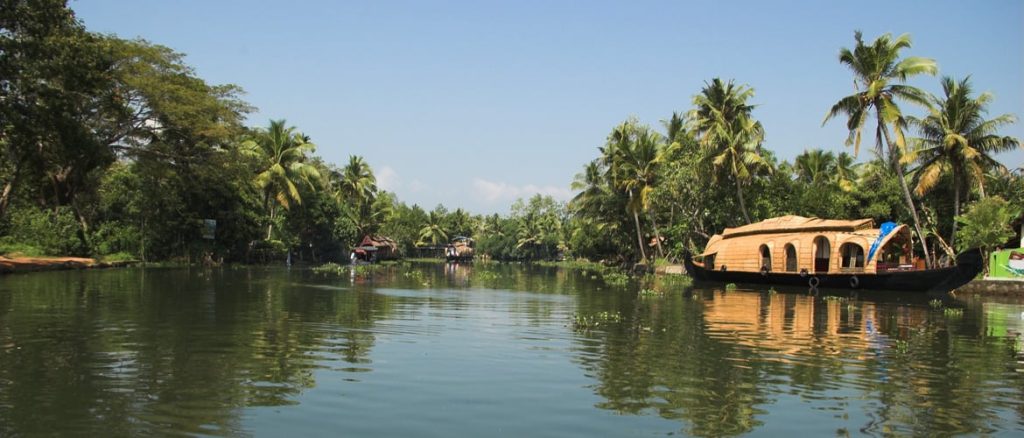
Mid-Day: Board a traditional Kettuvallam (Luxury Houseboat) at the Punnamada Jetty.
Afternoon: Cruise the historic water highways of Kuttanad. Your crew will explain the history of these cargo boats, which carried spices and grain through the shallow backwaters for centuries before modern road infrastructure. Pass by Champakulam Valia Pally (St. Mary's Forane Church), established around 427 CE and historically supported by the local royal families.
Evening: Overnight stay on the water, experiencing the tranquil lifestyle of the backwater settlers.
Day 6: The Royal Capital of Travancore (Thiruvananthapuram)
Travel Time: Alappuzha to Thiruvananthapuram – Approx. 3.5 hours (150 km south via coastal highway/rail).
Morning: Disembark the houseboat and travel south to the capital city of Kerala.
Mid-Day: Tour the iconic Kuthira Malika (Horse Palace), built by the legendary polymath King Swathi Thirunal Rama Varma. The palace features 122 carved wooden horses supporting its roof and contains priceless royal collections, Belgian mirrors, and crystal chandeliers.
Afternoon: Pay a visit to the exterior grounds and surrounding heritage street forts of the magnificent Sree Padmanabhaswamy Temple, the spiritual heart of the old Travancore Kingdom. Afterward, visit the Napier Museum (built in 1880), an architectural masterpiece showcasing a distinct blend of Gothic, Mughal, and traditional Kerala design elements.
Evening: Take a relaxing walk along the historic Kovalam beach, observing the old Vizhinjam light-house area, an ancient port site that dates back to the Ay dynasty.
Day 7: The Wooden Marvel of Padmanabhapuram & Departure
Travel Time: Thiruvananthapuram to Padmanabhapuram Palace – Approx. 1.5 hours (55 km southeast).
Morning: Take a short excursion just across the state border to Padmanabhapuram Palace, the magnificent former seat of the Travancore Kingdom.
Mid-Day: Explore this world-renowned 16th-century wooden palace complex. It represents the absolute pinnacle of traditional Kerala wooden architecture (Tachushastra), featuring intricate floral carvings on ceilings, black glossy floors made from a unique historic mixture of charcoal, lime, and coconut water, and a dedicated council chamber (Mantrasala).
Afternoon: Return to Thiruvananthapuram (1.5 hours transit back).
Evening: Head to the Thiruvananthapuram International Airport or Central Railway Station for your onward departure, concluding your 7-day journey through the history of Kerala.
Tell me about the history of Munnar's tea plantations and how they transitioned into a tourism destination?
The history of Munnar is a fascinating tale of transformation. It evolved from an impenetrable, wild jungle inhabited by indigenous tribes into one of the world's most organized commercial tea production centers, before ultimately transitioning into a globally recognized tourism destination.
Phase 1: The Colonial Discovery and "The Great Clearing" (Late 19th Century)
Before the late 1800s, the High Ranges of Munnar were a pristine wilderness, home to wild elephants, tigers, and the native Mudhuvans (hill tribes).
The modern history of Munnar began in 1877, when John Daniel Munro, a British lawyer and resident for the Travancore government, visited the hills to settle a border dispute. Captivated by the vast, rolling terrain and the cool climate, he realized its immense agricultural potential.
The Royal Lease: Munro approached the Royal Family of Travancore (Poonjar Chief) and secured a lease for roughly 580 square kilometers of land in the High Ranges.
The Pioneer Planters: Munro formed the North Travancore Land Planting & Agricultural Society. In 1878, European pioneers like A.W. Turner and H.G. Turner arrived. They faced incredible hardships—clearing thick jungles, dealing with tropical diseases, and battling wild animals to carve out the first agricultural clearings.
Phase 2: From Coffee to "Black Gold" (The Tea Boom)
Initially, the British didn't plant tea; they experimented with coffee, cinchona (used to make quinine for malaria), and sisal.
However, in the early 1880s, a devastating leaf-blight disease wiped out almost all the coffee plantations across South India. The planters desperately needed a hardy alternative.
The Shift to Tea: In 1879, a pioneer named A.H. Sharp planted the very first tea sapling on a 50-acre clearing called Parvathi (now part of the Sevenmallay Estate).
The Corporate Takeover: Seeing the immense success of the tea crop, a major Scottish trading company, James Finlay & Co., stepped in during 1897 and bought up 20 separate estates, consolidating the production. They established the Amalgamated Tea Estates Company to manage the massive scale.
Engineering Innovations: The British built a massive infrastructure network to transport the tea down to the plains. They engineered a Monorail system in 1902, which was later upgraded to a Kundala Valley Light Railway in 1908. Ropeway systems were strung across valleys to carry tea leaves directly over steep cliffs to processing factories.
Phase 3: Post-Independence and Nationalization
When India gained independence in 1947, the British planters slowly began selling their shares.
In 1964, an industrial partnership formed between the Finlay group and India's Tata Group, creating Tata-Finlay Ltd.
By 1983, Tata took over completely, forming Tata Tea Limited, making Munnar home to one of the largest integrated tea management systems in the world.
In 2005, a unique restructuring occurred: Tata Tea divested its direct ownership of the fields and handed the operational management over to the workers themselves, forming the Kannan Devan Hills Plantations (KDHP) Company, which remains the dominant force in Munnar today.
Phase 4: The Transition Into a Tourism Destination (Late 20th Century)
For nearly a century, Munnar was strictly an industrial plantation town. Outsiders needed special permits just to enter the estate roads. However, starting in the late 1980s and 1990s, Munnar transitioned into a major tourism hub due to a few key factors:
1. The Legacy of the "Summer Retreat"
During the Raj, British officials used Munnar as a summer resort to escape the scorching heat of the coastal plains. They built beautiful stone bungalows, manicured lawns, golf courses, and the Munnar Club (established 1910). When tourism picked up, these sprawling, century-old colonial bungalows were opened up to the public as heritage plantation stays, offering travelers a taste of old-world charm.
2. The Neelakurinji Phenomenon
Munnar captured the global imagination due to a rare ecological marvel: the Neelakurinji (Strobilanthes kunthiana). This unique shrub grows on the high grasslands of Munnar and blooms only once every 12 years, blanketing the entire hillside in a vibrant sea of blue/violet. The massive influx of global travelers tracking this bloom in 1994 and 2006 permanently cemented Munnar on the international tourism map.
3. The Tata Tea Museum
Recognizing that travelers were deeply curious about how the vast green carpet of tea leaves was processed, Tata established the Tata Tea Museum at the Nullatanni Estate in 2003. It became a focal tourism point, archiving old photographs, original monorail weights, colonial furniture, and allowing visitors to watch the exact step-by-step processing of tea from leaf to powder.
4. Eco-Tourism & Protected Areas
To protect the unique biodiversity around the plantations, the government and conservationists set aside nearby areas. The creation of Eravikulam National Park (home to the endangered Nilgiri Tahr mountain goat) and Anamudi Peak (the highest peak in South India) turned Munnar into an eco-tourism paradise, drawing trekkers, photographers, and nature enthusiasts alongside casual vacationers.
Today, the seamless blend of industrial heritage and breathtaking natural landscapes makes Munnar a perfect example of a working plantation ecosystem doubling as a world-class travel destination.