
Thekkady
Thekkady is one of India’s most fascinating destinations, blending ancient history, colonial engineering, and world-class wildlife conservation.
The Historical Journey of Thekkady
1. Ancient Roots and Tribal Sovereignty
Before it became a globally renowned tourist hub, the dense evergreen forests of the Periyar valley were inhabited primarily by indigenous tribal communities (including the Mannans and the Palians). For centuries, these communities lived in harmony with the wilderness, relying on traditional forest produce and hunting.
Up until the 12th century, the region fell under the cultural and political influence of the Pandya Dynasty, who ruled from Madurai. Later, the territory became part of the local kingdoms, notably the Thekkumkoor Kingdom (centered around nearby Kumily, then known as Kuzhumoor) and eventually came under the governance of the Poonjar Kings.
2. The Turning Point: The Mullaperiyar Dam (1895)
The modern geography and history of Thekkady were forever altered in the late 19th century under British rule. To divert water from the west-flowing Periyar River to the drought-prone regions of Madurai in Tamil Nadu, the British administration constructed the Mullaperiyar Dam in 1895.
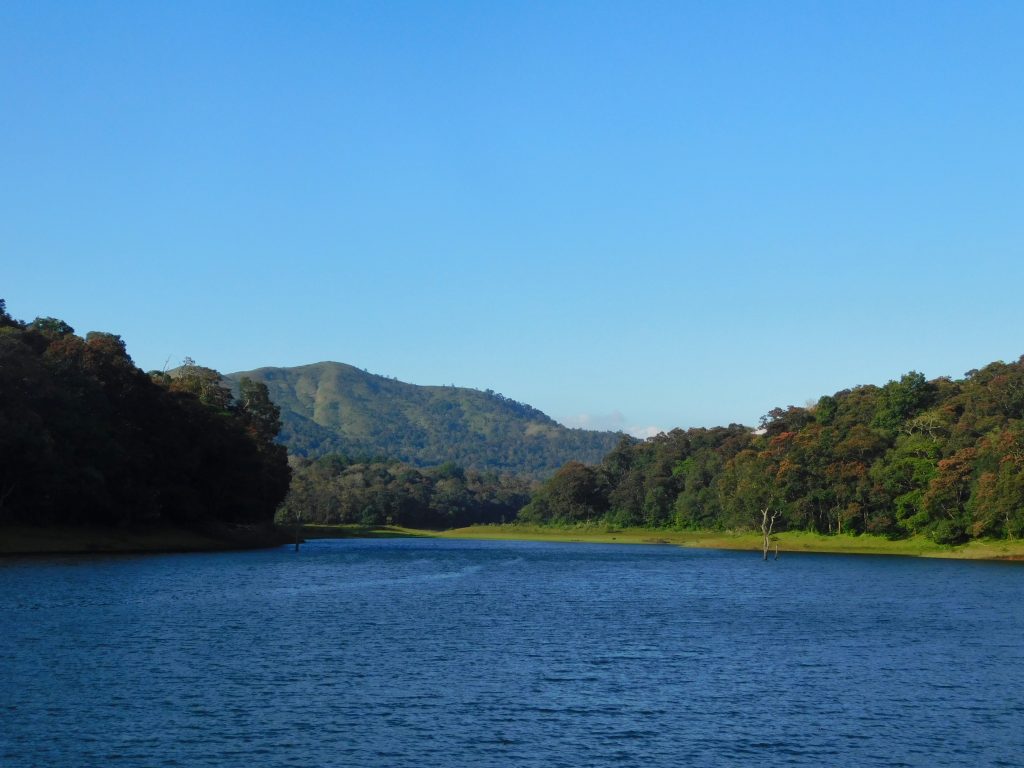
- This massive engineering project flooded a portion of the forest valley, creating the iconic, sprawling Periyar Lake.
- The submerged trees, whose skeletal remains still pierce the water’s surface today, created a highly unique ecosystem that drew wildlife down to the water’s edge.
3. The Royal Sanctuary and Project Tiger (1934–1978)
Recognizing the rapid influx of hunters and the wealth of the local fauna, the Maharaja of Travancore, Chithira Thirumal Balarama Varma, took progressive steps to protect the zone:
- 1934: The region was declared a private royal game reserve named the Nellikampathy Sanctuary.
- 1950: After India’s independence, it was expanded and renamed the Periyar Wildlife Sanctuary.
- 1978: The sanctuary achieved global conservation prominence when it was integrated into India’s Project Tiger, officially transforming it into the Periyar Tiger Reserve.