
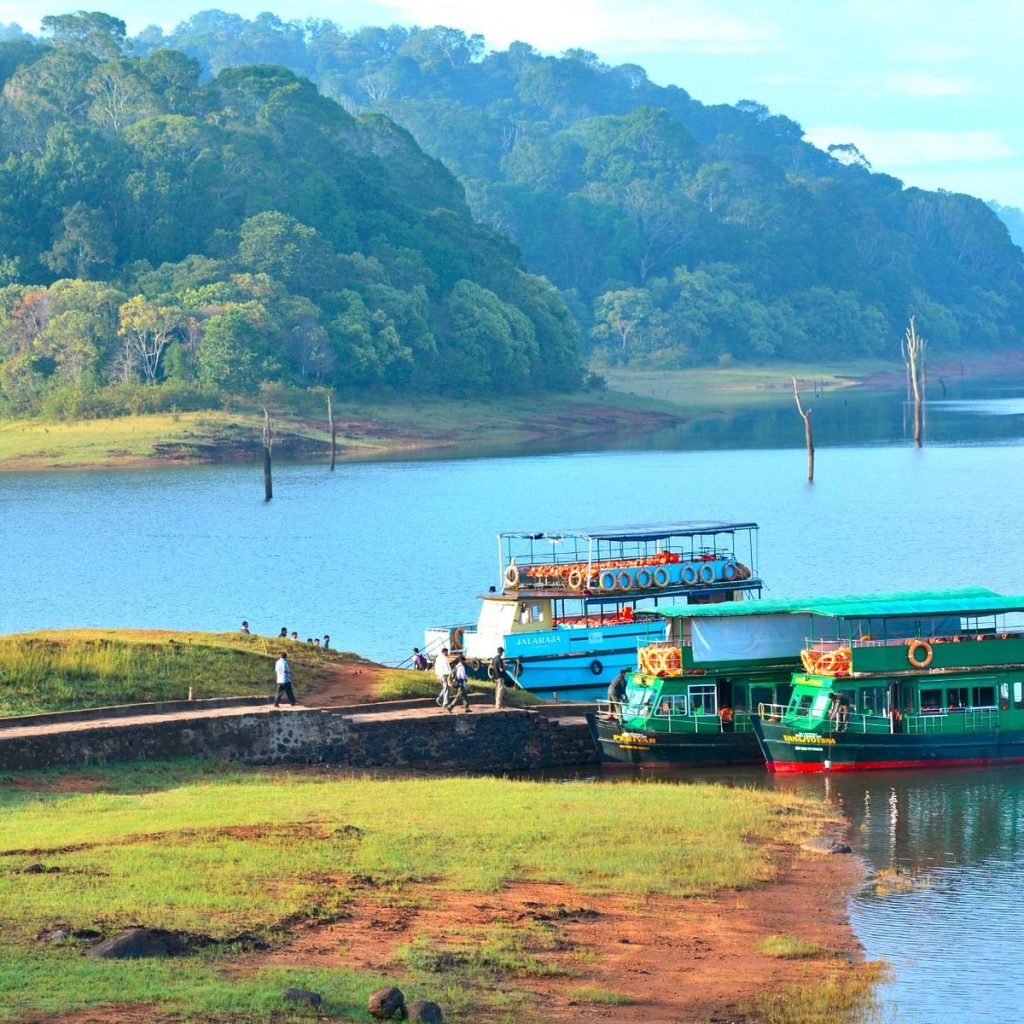
Periyar Lake

Periyar Lake

Prior to this, the local communities relied heavily on forest exploitation, illegal cinnamon bark harvesting, and poaching.
​The forest department successfully turned these local poachers and woodcutters into reformed eco-guides. By giving the local tribal communities ownership over tourist programs, Periyar became a globally celebrated model for community-driven conservation.

The Historical Evolution of Tourism in Periyar

​1. The Royal and Colonial Retreat Era (Early 1900s)

​Long before regular travelers set foot in Periyar, it was the exclusive playground of kings and colonial rulers. In the early 20th century, the Maharaja of Travancore constructed a royal summer retreat, the Edapalayam Lake Palace, situated on a secluded island-like promontory deep inside the lake reservoir.

  • ​This palace hosted royal hunting parties and served as a quiet, isolated escape for British Viceroys and Governor-Generals.


  • Guests would spend their days observing herds of elephants and wild gaurs right from the palace windows. Today, this historic property is managed by the Kerala Tourism Development Corporation (KTDC) as the ultra-exclusive Lake Palace Resort, accessible only by a 20-minute boat ride.


The Birth of Organized Public Tourism (1950s–1970s)

​After independence, the transition from royal exclusivity to public tourism began:

  • The KTDC Initiative: To showcase Kerala’s unique water-based wildlife viewing, KTDC launched public boat safaris on Periyar Lake.
  • ​Landmark premium properties like Aranya Nivas were established right at the water’s edge inside the sanctuary gates to cater to the first wave of international nature enthusiasts.

​3. The Eco-Development Revolution (1996)

​The defining moment for Periyar’s tourism occurred in 1996 with the launch of the India Eco-Development Project (IEDP).

  • ​Prior to this, the local communities relied heavily on forest exploitation, illegal cinnamon bark harvesting, and poaching.
  • ​The forest department successfully turned these local poachers and woodcutters into reformed eco-guides. By giving the local tribal communities ownership over tourist programs, Periyar became a globally celebrated model for community-driven conservation.

FAQs

What are the official eco-tourism programs available, and how do they work?
​Unlike traditional parks where you only do jeep safaris, Periyar offers immersive, community-led activities managed directly by the Periyar Tiger Conservation Foundation: ​Nature Walk / Green Walk: A 3-hour guided interpretive daytime trek along regular nature trails. Jungle Scout: An adventurous 3-hour night-patrolling trek inside the reserve, accompanied by armed guides. Bamboo Rafting: A full-day or half-day package combining hiking through deep woods and rafting on the scenic lake. Periyar Tiger Trail: An intensive 1-night or 2-night deep-jungle trekking and camping program for hard-core wildlife enthusiasts.
How can tourists ensure they get tickets for the famous Periyar boat ride?
​The boat safaris are highly popular and seats are capped for environmental protection. ​The Best Method: Always book online well in advance via the official Periyar Tiger Reserve portal. Key Timings: There are usually 5 daily trips (07:30 AM, 09:30 AM, 11:15 AM, 01:45 PM, and 03:30 PM). ​Reporting: If you are staying outside the sanctuary gates, you need to factor in time to pay the standard Sanctuary Entry Fee at the forest checkpost before proceeding to the boat jetty.
Can you stay inside the actual Periyar Tiger Reserve?
​Yes! There are very select, regulated accommodation options inside the forest boundaries: ​Premium Heritage: KTDC Aranya Nivas (located at the mainland entry) and KTDC Lake Palace (deep inside the reservoir). ​Eco-Lodges: Government-managed Bamboo Grove (eco-friendly cottages amidst bamboo thickets) and Jungle Inn (a secluded watchtower cottage at Kokkara, perfect for solitude). Highly rated private spice-village style resorts and homestays are located just outside the sanctuary gates in Kumily town.
What is the significance of the Mangala Devi Temple inside the reserve?
​The Mangala Devi Kannagi Temple is an ancient stone temple built in the traditional Kerala style, tucked deep within the dense woods at an altitude of 1,337 meters. It is believed to be over 2,000 years old. Due to its location in the core zone of the tiger reserve, it is closed to the general public all year round except for a single day during the Chitra Pournami festival (usually around April/May). Visiting requires special permission from the Wildlife Warden.
What are the golden rules for a responsible tourist visiting Periyar?
​Zero Plastic: Periyar enforces a strict plastic-free policy. Carry reusable water bottles. ​No Feeding/Teasing: The monkeys (bonnet macaques and Nilgiri langurs) near the parking zones are wild; feeding them breaks their natural foraging habits. ​Arrive Early: The main sanctuary entrance gates close by 05:00 PM. Make sure your transit schedules align so you don't miss check-ins or pre-booked evening programs.

Price From : ₹400/-

Address

Near Avaloormadam temple, thathampally po, pin code 688013, Alleppey, Kerala, India