
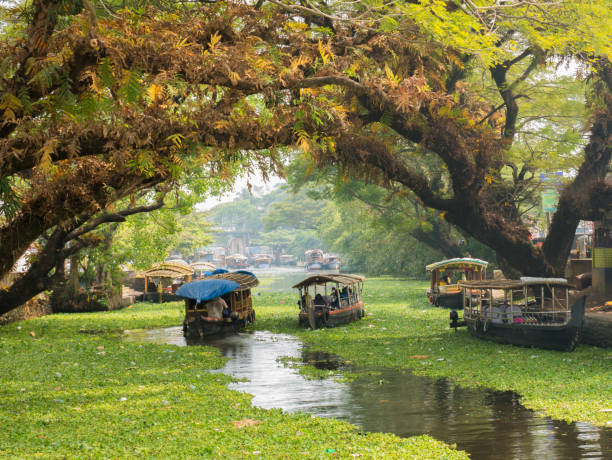
Infrastructure Facilities In Alappuzha’s backwaters

Infrastructure Facilities In Alappuzha’s backwaters

Alappuzha’s backwaters are a masterful blend of nature and human engineering. Long before it became the global capital of houseboat tourism, this intricate network of canals, lakes, and lagoons served as the economic backbone of the Kingdom of Travancore.

Historical Context & Infrastructure Development

​Alappuzha’s transformation from a secluded coastal region into a bustling commercial hub is credited to Raja Kesavadas, the visionary Diwan (Prime Minister) of Travancore in the late 18th century. Recognizing the strategic value of the geography—wedged perfectly between the Arabian Sea and the vast Vembanad Lake—he laid the groundwork for the region’s first major infrastructure boom.

  • The Canal Network (1780s): Diwan Raja Kesavadas constructed parallel artificial waterways, including the Commercial Canal and the Vadaicanal. These were specifically designed to connect the deep inland backwaters directly to the coast. This network allowed large cargo vessels to transport spices, timber, and coir from the interior hinterlands straight to the shoreline for export.
  • Alappuzha Port & Pier (1762): Opened to facilitate international trade, the port made Alappuzha the financial nerve center of Travancore. To ease the loading of cargo onto large ocean liners, a historic iron pier was constructed, stretching out into the sea.
  • The Kuttanad Bund System: Part of Alappuzha’s backwater system includes Kuttanad, famous for its below-sea-level farming (ranging from 2.5 to 3 meters below the sea). The infrastructure here relies on an intricate system of man-made bunds (mud and stone embankments) and canals designed to keep the saltwater out and manage irrigation for vast tracts of paddy fields.
  • Evolution of the Kettuvallam: The iconic houseboats of today were originally called Kettuvallams (meaning “tied boats”). These massive, eco-friendly wooden vessels were crafted from jackwood planks bound tightly together with coir ropes—completely without the use of a single iron nail. Historically, they were purely logistical infrastructure, used as cargo barges to ferry tons of rice and wild spices across the shallow backwaters before modern roads existed.

FAQs

What historical infrastructure earned Alappuzha the title "Venice of the East"?
​The title was popularized by Lord Curzon, the Viceroy of India, during his visit in the early 20th century. He was captivated by the dense, crisscrossing network of artificial commercial canals, multiple stone and wooden bridges, and the water-centric lifestyle where boats—rather than wheeled transport—served as the primary means of moving goods and people.
How did the traditional Kettuvallams transform into modern luxury houseboats?
​With the development of modern roads, bridges, and motorized land transport in the mid-20th century, the traditional cargo Kettuvallams lost their utility and faced extinction. In the late 1980s and early 1990s, creative tourism pioneers retrofitted these massive wooden hulls with bedrooms, modern en-suite bathrooms, and kitchens, transforming structural cargo vessels into luxurious floating villas.
What modern infrastructure routes do houseboats follow today?
​Modern houseboats primarily navigate the expansive, calm waters of Vembanad Lake and its connected rivers (like the Pamba River). Popular scenic routes include the Punnamada Lake area (famed for the Nehru Trophy Boat Race), the narrow canals of Kainakary, the open waters of Marthandam, and routes heading toward Kumarakom or Thottappally.
How does the backwater infrastructure handle environmental waste management?
​To protect the fragile freshwater ecosystem of Vembanad Lake, modern houseboats are required to adopt strict eco-friendly infrastructures. This includes the installation of biotech toilets (specialized aerobic/anaerobic bacterial tanks that treat human waste safely on board) and onboard purified water systems. Additionally, strict local regulations prevent the dumping of solid waste or kitchen refuse directly into the canals, requiring operators to discharge waste at designated land-based collection points.
What is the best time of year to experience the Alappuzha backwaters?
​The peak season runs from October to March, when the weather is pleasantly cool, less humid, and ideal for day cruises or overnight stays. However, visiting during the monsoon months (June to September) offers a distinctly lush, tropical experience and aligns with the legendary Nehru Trophy Snake Boat Race, which takes place annually on the second Saturday of August on the Punnamada Lake.

Price From : ₹400/-

Address

Near Avaloormadam temple, thathampally po, pin code 688013, Alleppey, Kerala, India