
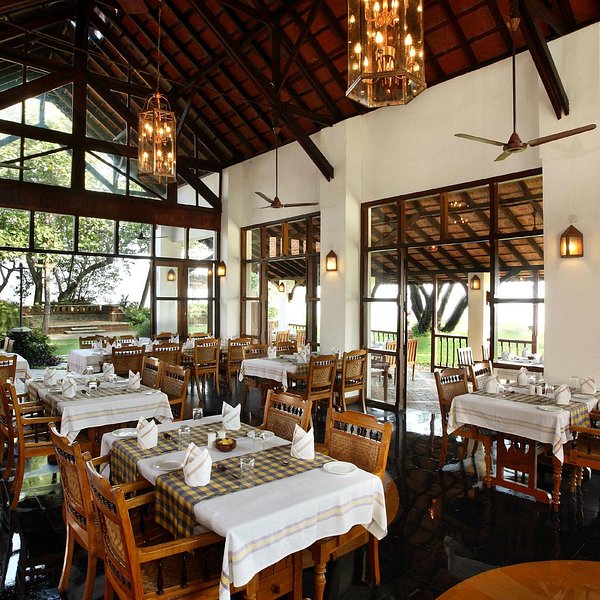
Infrastructure Facilities In Restaurants
Setting up or upgrading a restaurant within the Cherthala Municipality or surrounding Panchayaths in the Alappuzha district involves balancing standard Kerala state tourism norms with specific local urban town planning rules. Because Cherthala sits right along the busy NH 66 corridor and serves as a major gateway for tourists moving toward Alleppey backwaters or Marari Beach, local governance strictly monitors commercial parking, waste disposal, and hygiene infrastructure.
Infrastructure Facilities for Restaurants in Cherthala
1. Mandatory Parking & Access (Kerala Municipality Building Rules – KMBR)
- Off-Street Parking Sizing: For a restaurant (classified under Group F – Commercial/Mercantile), every single designated car parking space must measure at least 5.5\text{ m} \times 2.7\text{ m} (15\text{ sq. metres}).
- Capacity Ratios: According to KMBR provisions for commercial eating facilities, you must provide one dedicated car parking space for every 30\text{ sq. metres} of dining carpet area (or for every 20 seats of dining accommodation).
- Two-Wheeler Buffer: In Cherthala’s busy market or highway zones, an additional 25% of the total calculated car parking area must be set aside exclusively for two-wheelers (scooters/bikes) and cycles.
- Loading/Unloading Bays: If the restaurant building is part of a larger commercial complex exceeding 700\text{ sq. metres} of floor area, a separate 30\text{ sq. metre} loading bay is mandatory for supply trucks.
2. Kitchen & Hygiene Infrastructure (FSSAI & Health Department)
- Flooring & Wall Tiling: Kitchen floors must be smooth, non-absorbent, and non-slippery (typically heavy-duty matte ceramic tiles). Walls must be finished with light-colored, washable tiles up to a minimum height of 2\text{ metres} to ensure grease and soot can be easily scrubbed off.
- Water Purification: Given the coastal water table in the Alappuzha district, a certified commercial Reverse Osmosis (RO) or UV water filtration system must be installed. Water testing certificates from a government-approved lab must be updated annually.
- Waste Water Treatment (Effluent Control): Restaurants cannot discharge kitchen sink waste directly into public drains. An underground Grease Trap (oil and grease separator) must be integrated into the plumbing line before wastewater reaches the municipal drainage system or soak pits.
3. Public Toilets & Guest Amenities
- Layout Segregation: Restrooms for ladies and gentlemen must be entirely separate, well-lit, and ventilated. Crucially, the guest entrance to the washrooms must never cut through or provide a direct view into the kitchen/food preparation area.
- Sanitary Fixtures: Each toilet must feature non-porous ceramic fittings, continuous running water, a washbasin, liquid soap dispensers, and covered dustbins. Hand-drying infrastructure (paper towels or automated air dryers) is required for high-volume highway restaurants.
4. Solid Waste Management (Cherthala Municipal Norms)
- Source Segregation: Restaurants must maintain colored bins inside the kitchen and public areas to isolate biodegradable (wet food waste) from non-biodegradable (plastics, cans) items.
- Organic Waste Disposal: The local body strongly encourages commercial bulk waste generators to establish an in-house source-level waste treatment system (like a small biogas plant or organic waste composting pit) if the plot size permits, or contract out daily disposal to recognized green agencies (like the Haritha Karma Sena for dry waste).