
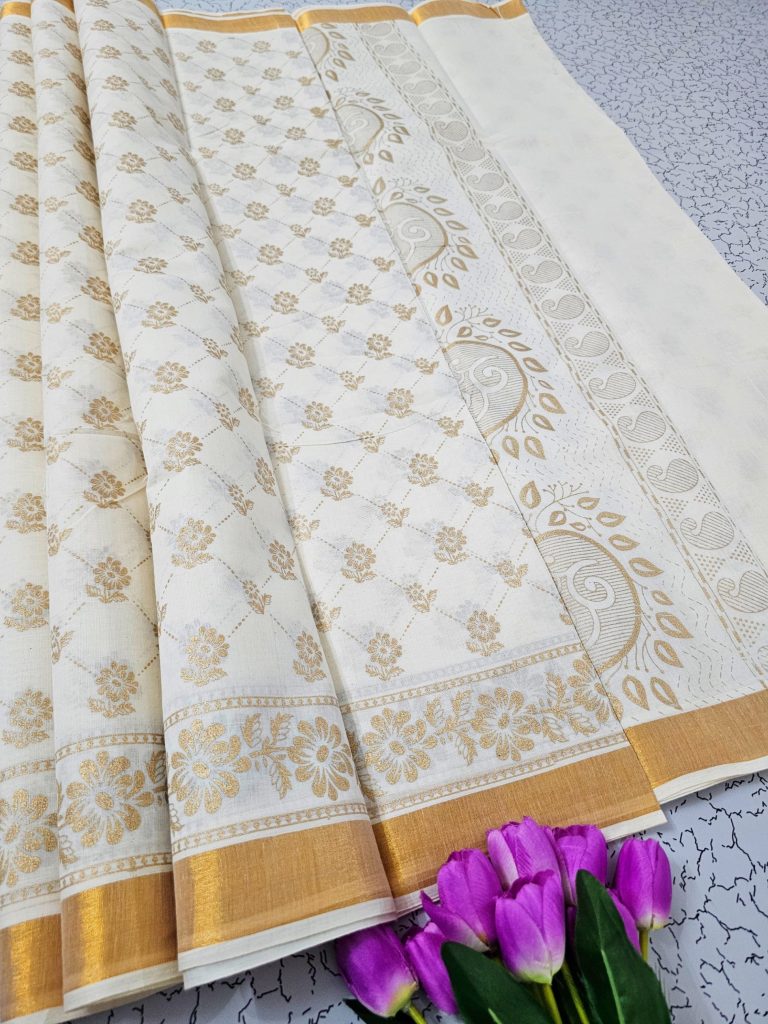
Kerala Kasavu saree / zari
The Kerala Kasavu saree is more than just a garment; it is an enduring symbol of elegance, minimalism, and the rich cultural heritage of Kerala. Known for its pristine off-white or cream body contrasted by a rich golden border, this traditional attire captures the very essence of Malayali identity.
The Rich History of Kasavu zari
The history of the Kasavu saree spans thousands of years, evolving from a simple ancient wrap into the sophisticated silk and cotton drapes we see today.
1. Ancient Origins (The Buddhist & Graeco-Roman Influence)
The roots of the attire go back to the Buddhist era. Originally, it was worn as a two-piece garment called the Mundum Neriyathum. This style drew minor structural inspiration from Graeco-Roman attire known as Palmyrene, which featured long draped fabrics with distinct borders.
Historically, people in the region wore a simple mundu (lower garment) without covering the upper body due to local climate conditions and social norms. Over time, the neriyathu (upper cloth) was added, draped carefully over the left shoulder.
2. The Spices-for-Gold Barter
When European traders, including Vasco da Gama, arrived on the shores of Kerala, they traded immense quantities of gold in exchange for the region’s prized spices. The local nobility and upper classes cleverly utilized this abundance of gold by having artisans melt it down and draw it into fine threads. These genuine gold threads were then woven directly into the borders of the cotton garments, giving birth to the true Kasavu (which literally refers to the metallic gold or silver zari used).
3. Royal Patronage and the Handloom Revolution
In the early 19th century, His Highness Maharaja Balaramavarma of the Travancore Kingdom, along with his chief minister Ummini Thampi, systematically revolutionized the handloom industry. They officially invited master weavers from the Saliya (or Chaliyan) community of Nagercoil (Tamil Nadu) to settle in Kerala. The royals granted them special status, and in return, these artisans created ultra-fine hand-woven cotton and silk garments exclusively for the royal family.
Defining Characteristics
- The Color Palette: The pristine cream or off-white base represents purity, simplicity, and a harmonious connection with nature, while the golden border mirrors the bright rays of the sun across Kerala’s landscapes.
- The Material Evolution: While traditionally woven from fine, starched cotton to handle the hot, humid tropical weather, the modern evolution introduced Kasavu Silk and Tissue Silk, combining the luxury of pure Mulberry silk with high-grade gold zari for an opulent, fluid drape perfect for weddings.
- Geographical Indication (GI) Clusters: Authentic Kerala Kasavu is primarily handwoven across three famous heritage clusters in the state, each holding a GI tag:
-
- Balaramapuram: Known for ultra-fine thread counts (up to 120s) and pristine, traditional pure gold zari.
-
- Chendamangalam: Famous for its incredibly structured pre-weaving starching process and clean lines.
-
- Kuthampully: Famous for integrating intricate jacquard borders and structural motifs like peacocks, temples, and swans into the gold