
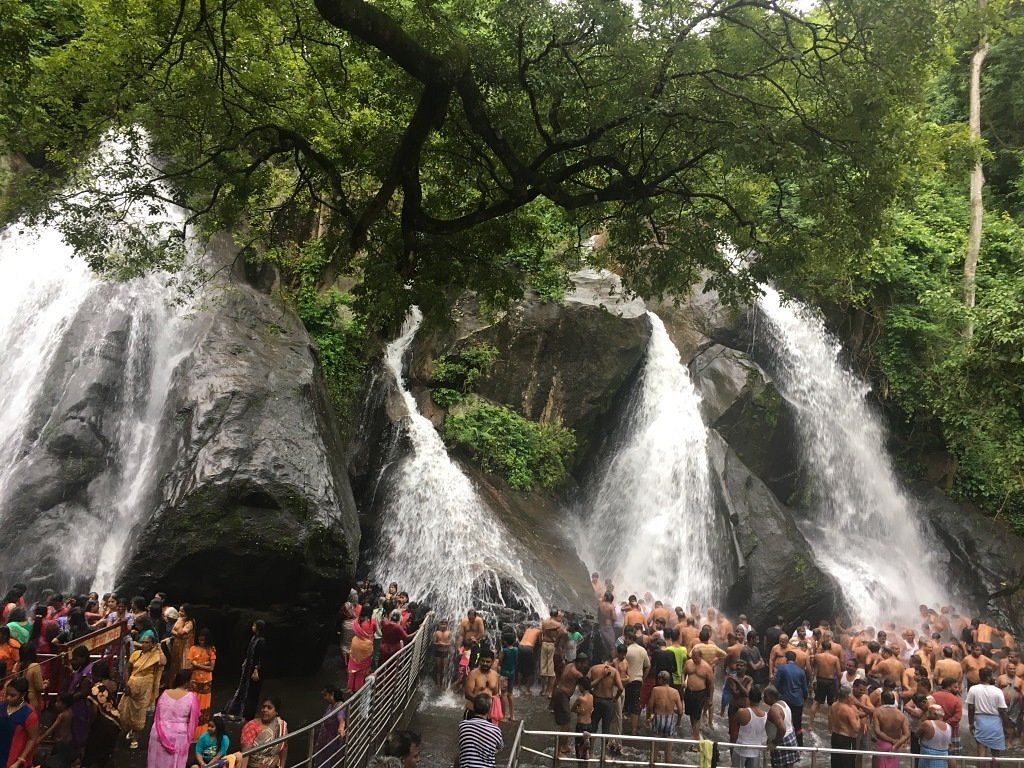
Courtallam (Kutralam)
Courtallam (Kutralam), famously celebrated as the “Spa of South India,” is a lush panchayat town nestled in the foothills of the Agasthyamalai biosphere within the Western Ghats (Tenkasi District, Tamil Nadu). Its historical tapestry seamlessly blends ancient Tamil Sangam literature, deep-rooted Shaivite-Vaishnavite legends, royal patronage, and a transition into a colonial health resort.
Historical & Mythological Content
1. The Mythological Legend of Sage Agastya
The most prominent historical folktale of Courtallam explains how it transitioned from a Vaishnavite temple to a Shaivite one.
- The Cosmos in Imbalance: According to the Puranas, when the celestial wedding of Lord Shiva and Goddess Parvati took place in the Himalayas, the massive gathering of gods caused the Earth’s axis to dangerously tilt north.
- Balancing the South: Lord Shiva instructed Sage Agastya (one of the Saptarishis and the father of Tamil literature) to travel south to restore cosmic equilibrium.
- The Divine Metamorphosis: Upon arriving at Courtallam, Agastya found a prominent temple dedicated to Lord Vishnu. Blocked from entering by local worshippers, Agastya used his mystic powers to enter, shrunk the massive image of Vishnu, and physically reshaped it into a Shivalingam. Legends state his physical fingerprints are still visible on the central deity of the Thirukutralanathar Temple, and because he pressed down hard on the head of the idol, the deity is said to have a permanent headache, requiring a daily evening abhishekam (anointing) with a cooling paste made of 64 medicinal herbs.
2. Sangam Literature & Cultural Evolution
- The Sangam Era (500 BCE – 300 CE): Known originally as Thenoor (“City of Honey”) in ancient Tamil Sangam records, its pristine, herb-infused mountain waters were frequently compared to pure, natural beauty.
- The Chitra Sabha (The Hall of Paintings): Courtallam houses one of the five cosmic dance halls (Pancha Sabhas) where Lord Shiva is believed to have performed his cosmic dance (Ananda Tandavam). The roof of this ancient structure is lined with copper plates, and the interior walls feature exquisite murals created entirely out of natural herbal dyes.
- Thirukutrala Kuravanji: In the early 18th century, the famous Tamil poet Thirikooda Rasappa Kavirayar composed this masterpiece poem, immortalizing the local culture, geography, and the spiritual grandeur of Courtallam’s cascades.
3. Royal & Colonial History
- Imperial Inscriptions: The Thirukutralanathar Temple houses nearly 89 historic stone inscriptions (Kalvettukal). Early records from the Chola kings (Parakesarivarman and Parantaka I) refer to the deity as Thirukkutrala Perumal (reflecting the Vaishnavite phase), while subsequent Pandya inscriptions from the Tenkasi Pandyas transition into terms like Kutralathevan. These inscriptions document vast donations of gold, land, and livestock.
- The British Climatic Resort: In the mid-19th century, British East India Company officials recognized the extreme therapeutic potential of the region. The rivers (such as the Chittar) flow over hundreds of indigenous Ayurvedic herbs before cascading into waterfalls. The British constructed European-style bungalows and pathways, turning Courtallam into a seasonal health resort for colonial administrators escaping the plains’ blistering summer heat.