
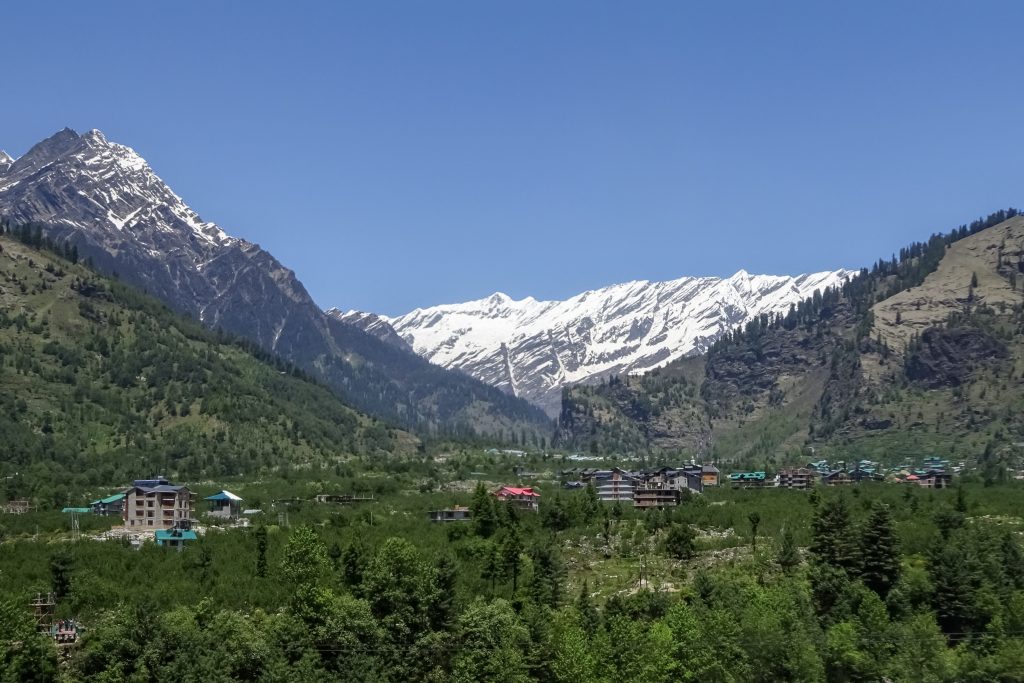
Himachal Pradesh

Himachal Pradesh

Himachal Pradesh, beautifully known as Dev Bhoomi (the Land of Gods), possesses a deeply rich history that scales from ancient Vedic republics to a strategic colonial summer retreat, and finally to its evolution as a full-fledged Indian state.

Himachal Pradesh—traditionally called the Dev Bhumi or “Land of the Gods”—boasts a rich historical narrative that scales back to pre-historic times, deeply intertwined with epic Indian mythology, fierce independent hill chiefdoms, and structural colonial shifts.

Here is a curated overview of the historical milestones of Himachal Pradesh, followed by highly relevant FAQs optimized for clarity and competitive knowledge.

​🏛️ Chronological History of Himachal Pradesh

​1. Ancient Roots & Janapadas (Pre-History to 7th Century CE)

  • Early Tribes: The earliest inhabitants of the region were the Kols, Kiratas, Dasas, and Khasas.
  • **The Vedic Republics (Janapadas): According to ancient texts like the Mahabharata, the region was divided into multiple small, independent tribal republics. Prominent among them were:
    • Trigarta: Located in the foothills drained by three rivers (Ravi, Beas, and Satluj), primarily centered around modern-day Kangra.
    • Kuluta: Situated in the upper Beas valley (the modern-day Kullu Valley).
    • Audumbras & Kulindas: Powerful clans ruling areas near Pathankot and the Shimla/Sirmaur hills respectively.
  • Imperial Overlords: Empires like the Mauryas and Guptas held loose suzerainty over these hills. Emperor Ashoka introduced Buddhism to the region, constructing several stupas, including one in the Kullu Valley.

​2. Medieval Hill Kingdoms & Foreign Invasions (8th – 18th Century CE)

  • Rise of Princely States: After the decline of central empires, the region fractured into various independent princely states ruled by Rajput chieftains, such as Chamba (founded by Maru Varman/Sahil Varman), Kangra (Katoch Dynasty), Mandi, and Sirmaur.
  • Plunder and Fortresses: The region’s staggering wealth drew invaders. In 1009 CE, Mahmud of Ghazni launched a massive invasion, plundering the legendary Kangra Fort. Later, rulers of the Delhi Sultanate (like Muhammad bin Tughlaq) and the Mughals exercised varying degrees of control, though local kings retained a fair amount of domestic autonomy.
  • The Kangra Golden Age: Under Maharaja Sansar Chand (1775–1823), the Katoch dynasty restored great power to Kangra, turning it into a brilliant center for the famous Kangra miniature painting style.

​3. The Tug of War: Gorkhas, Sikhs, and the British (19th Century)

  • The Gorkha Invasion: In the early 1800s, the Gorkhas of Nepal expanded westward, conquering Shimla and Sirmaur, and laying a fierce siege to Kangra Fort.
  • Sikh Alliance: Maharaja Sansar Chand allied with Maharaja Ranjit Singh of the Sikh Empire to successfully push the Gorkhas out in 1809.
  • British Paramountcy: The British East India Company eventually clashed with the Gorkhas in the Anglo-Gorkha War (1814–1816). Following the Treaty of Sugauli (1816), the British expelled the Gorkhas and established dominant control over the Shimla Hill States.
  • The Imperial Summer Capital: Attracted by the cool mountain air, Shimla was officially declared the Summer Capital of British India in 1864 by Viceroy Lord John Lawrence. Significant infrastructure followed, including the historic Kalka-Shimla Railway completed in 1903.

4. Road to Modern Statehood (Post-1947)

Chief Commissioner’s Province
April 15, 1948
Himachal Pradesh is formally created by integrating 30 petty princely states of the western Himalayas.
Part ‘C’ State
January 26, 1950
With the implementation of the Indian Constitution, Himachal becomes a Part ‘C’ state, leading to its first general elections in 1952.
Merger of Bilaspur
July 1, 1954
The neighboring princely state of Bilaspur is dissolved and officially merged into Himachal Pradesh as a new district.

Union Territory Status
November 1, 1956
Under the States Reorganization Act, Himachal Pradesh transitions into a Union Territory under central governance.
The Punjab Reorganization
November 1, 1966
The hilly regions of Punjab—including Kangra, Kullu, Shimla, Lahaul-Spiti, and Nalagarh—are officially merged into Himachal Pradesh, vastly expanding its territory.
Full Statehood
January 25, 1971
The State of Himachal Pradesh Act is enacted. Himachal emerges as the 18th State of the Indian Union, with Dr. Yashwant Singh Parmar serving as its first Chief Minister.

FAQs

Who is known as the "Father of Himachal Pradesh"?
​Answer: Dr. Yashwant Singh Parmar (Y.S. Parmar) is revered as the Father of Himachal Pradesh. He was a brilliant leader who spearheaded the political integration of the princely states, led the movement against intense bureaucratic control as a Union Territory, and served as the state's very first Chief Minister.
What was the ancient name of Kangra and Nurpur?
​Kangra was anciently known as Trigarta or Nagarkot. Nurpur was known historically as Dhameri (it was renamed Nurpur in honor of the Mughal Empress Nur Jahan).
Which treaty established British rule over the Shimla Hill States?
The Treaty of Sugauli, signed in 1815–1816 between the British East India Company and the Kingdom of Gorkha (Nepal), concluded the Anglo-Gorkha War and marked the arrival of the British as the supreme power in the region.
In which year was Shimla declared the summer capital of British India?
Shimla was declared the official summer capital in 1864 by Viceroy Lord John Lawrence. It remained the summer capital until Indian Independence in 1947
What is the indigenous architectural style of Himachal Pradesh called?
It is known as Kath-kuni architecture. This traditional building technique utilizes interlocking horizontal wooden beams alternating with dry stone masonry layers without using mortar, making the structures highly earthquake-resilient.
Who is called the "Pahari Gandhi"?
Baba Kanshi Ram was given the title of "Pahari Gandhi" by Jawaharlal Nehru in 1937 for his fierce participation in the freedom struggle within the hills. He wore only black clothes from 1931 onwards as a protest vow until India achieved independence.
Provide a detailed historical account of the Kangra Fort, its rulers, and the major invasions it faced?
Perched majestically at the confluence of the Manjhi and Banganga rivers, Kangra Fort is the largest fort in the Himalayas and widely considered one of the oldest surviving forts in India. For centuries, an old regional proverb perfectly captured its strategic weight: "He who holds the Kangra Fort, holds the hills." 👑 The Founding Rulers: The Katoch Dynasty ​The fort was constructed by the Katoch Dynasty, a Rajput royal clan that traces its mythological lineage directly to the Mahabharata. ​According to historical lore and local tradition, the fort was founded by Maharaja Susharma Chandra, who fought on the side of the Kauravas in the Kurukshetra War. Following their defeat, he moved his base from Multan (modern-day Pakistan) to the foothills of the Himalayas, establishing the kingdom of Trigarta and building Nagarkot (the original name of Kangra Fort) to secure his territory. ​⚔️ The Chronology of Major Invasions ​The primary draw for foreign invaders wasn't just the fort's impregnable position, but the unimaginable treasure hoarded within its vaults, heavily contributed to by the adjacent Brajeshwari Temple. 1. Mahmud of Ghazni (1009 CE) The First Great Plunder The Turkish ruler Mahmud of Ghazni targeted the fort entirely for its legendary riches. He breached the defenses, slaughtered the garrison, and reportedly carried away over 700,000 gold dinars, 28 tons of silver blocks, and hundreds of pounds of precious jewels. 2 2. Muhammad bin Tughlaq & Firoz Shah Tughlaq (14th Century) Delhi Sultanate Rule In 1337, Sultan Muhammad bin Tughlaq successfully captured the fort. Though the Katoch rulers managed to regain partial control later, Firoz Shah Tughlaq launched another massive siege in 1360, forcing Raja Rup Chand to submit to his authority. 3. The Mughal Conquest (1620 CE) Akbar's Failure and Jahangir's Success Emperor Akbar attempted to seize the fort 52 times but failed. It was his son, Jahangir, who successfully conquered it in 1620 after a brutal 14-month siege that starved out the garrison. To celebrate the victory, Jahangir built the Jahangiri Darwaza inside the fort complex. 4 4. Maharaja Sansar Chand's Resurgence (1789 CE) The Golden Age Retaken As the Mughal empire waned, the brilliant Katoch ruler Maharaja Sansar Chand II successfully reclaimed his ancestral fort in 1789. Under his rule, Kangra flourished as a powerful regional state and a thriving hub for Pahari miniature 5. Gorkhas & The Sikh Annexation (1805–1809 CE) The Final Shift of Power The Gorkha commander Amar Singh Thapa invaded the valley and besieged the fort for four years. Desperate, Sansar Chand forged an alliance with Maharaja Ranjit Singh of the Sikh Empire. The Sikhs drove out the Gorkhas in 1809, but as payment, Ranjit Singh took permanent possession of the fort. 🏚️ The Final Fall: The 1905 Earthquake ​Following the Anglo-Sikh wars, control of the fort transferred to the British Raj in 1846, who maintained a military garrison there. ​However, what centuries of elite armies, cannon fire, and lengthy sieges could not do, nature accomplished in minutes. On April 4, 1905, a devastating earthquake of 7.8 magnitude struck Kangra, destroying the massive stone structures, towering palaces, and ancient temple shrines within the fort. ​Today, the majestic ruins are protected and managed by the Archaeological Survey of India (ASI), standing as a quiet monument to thousands of years of Himalayan geopolitical struggle.
What is the history of the Kalka-Shimla toy train and how did it achieve UNESCO World Heritage status?
The Kalka-Shimla Toy Train is a brilliant marvel of 19th-century mountain engineering. Spanning a 96-kilometer narrow-gauge track, it snakes through the rugged Shivalik foothill range, transitioning commuters from the plains of Haryana up to the high-altitude ridges of Shimla. ​🚂 The Historical Origin: Why it Was Built ​When Viceroy Lord John Lawrence officially designated Shimla as the Summer Capital of British India in 1864, the entire imperial administration had to migrate from the scorching plains of Calcutta (and later Delhi) up into the hills twice a year. ​Initially, this treacherous trek up the mountains relied on slow, expensive tongas (horse-drawn carriages), bullock carts, and camels along the old "Hindustan-Tibet Road." As Shimla grew into a bustling imperial hub, a faster, high-capacity transport link became an absolute necessity. ​The Construction Milestones ​The Mastermind: In 1898, the project contract was awarded to the Delhi-Ambala-Kalka Railway Company. The construction was meticulously planned and supervised by Chief Engineer H.S. Harington. ​The Inauguration: Against steep geographical odds, the line was completed and formally inaugurated by the Viceroy, Lord Curzon, on November 9, 1903. 🛠️ Engineering Marvels of the Route ​The sheer technical complexity of building a railway line through unstable mountain terrain without modern machinery remains astonishing. The line climbs from an altitude of 656 meters (2,152 ft) at Kalka to a soaring 2,076 meters (6,811 ft) at Shimla. ​The Tunnels: The line originally featured 107 tunnels, though 102 remain active today. The longest is the Barog Tunnel (Tunnel No. 33), stretching 1,143 meters. Local lore states that the initial engineer, Colonel Barog, miscalculated and dug from both sides of the hill but failed to meet in the middle. Fined by the government, he committed suicide in despair. Harington completed it successfully by shifting the alignment slightly. ​The Bridges: The route boasts 869 bridges, mostly designed as classic Roman-style multi-tiered stone arch aqueducts. The most famous is the multi-storied arch gallery bridge at Kanoh. ​The Curves: To safely manage the steep, vertical incline without gears, the train snakes through a whopping 919 sharp curves, the sharpest being a 48-degree bend. ​🏛️ Achieving UNESCO World Heritage Status ​On July 7, 2008, UNESCO formally inscribed the Kalka-Shimla Railway as a World Heritage Site, adding it to the existing "Mountain Railways of India" collective group (which also includes the Darjeeling Himalayan Railway and Nilgiri Mountain Railway). ​UNESCO conferred this prestigious status based on specific criteria: ​Outstanding Tech Achievement: It stands as an exceptional example of a bold, ingenious engineering solution to the problem of establishing an effective rail link across a deeply rugged, mountainous terrain. ​Preservation of Authentic Integrity: The line retains its original 2-foot-6-inch (762 mm) narrow gauge framework, historic station buildings, traditional token-based signaling systems, and vintage maintenance workshops. ​Socio-Cultural Impact: The railway completely transformed the social, political, and economic landscape of the isolated Himalayan hill communities, firmly linking them to the rest of the subcontinent.

Price From : ₹400/-

Address

Near Avaloormadam temple, thathampally po, pin code 688013, thathampally po, Alleppey, Kerala, India