Is there a Metro train system currently running in Prayagraj?
No, not yet. The Prayagraj Metro is currently in the planning and pre-construction phase. The project was recently upgraded from a Metrolite to a full 65 km rapid transit metro network. The Uttar Pradesh Metro Rail Corporation (UPMRC) is overseeing its design, and physical work is expected to commence soon.
How far is Prayagraj Airport from the main city, and what flights operate there?
Prayagraj Airport (IXD) is located in Bamrauli, which is roughly 12 km west of the city center. It is primarily connected to major domestic hubs like Delhi, Mumbai, Bengaluru, Hyderabad, and Ahmedabad. Standard operations are handled by carriers like IndiGo and Alliance Air.
What major expressways connect to Prayagraj?
Prayagraj is highly integrated into the regional expressway grid. It has direct highway connectivity to the Purvanchal Expressway and is linked to the Ganga Expressway project (which connects eastern UP directly to the Delhi-NCR region). There are also structural alignments in progress to link the city's southern corridors directly with the Bundelkhand Expressway.
How has the Kumbh Mela impacted the city's permanent infrastructure?
Major religious gatherings have acted as a massive catalyst for permanent development. While temporary tent cities (Mahakumbh Nagar) are dismantled, the events have left behind permanent assets including:
The massive expansion of the permanent civil airport terminal.
Over a dozen newly built permanent flyovers, underpasses, and railway overbridges (ROBs).
Permanent solid-waste management units and modernized sewage treatment plants (STPs) along the rivers.
Beautifully developed permanent river ghats and widened, well-lit arterial roads.
Is Prayagraj a safe city for tourists and commercial operations?
Yes. The implementation of the Smart City ICCC network has drastically modernized the surveillance of the city. Over 2,300 high-definition, AI-powered security cameras monitor the public spaces, traffic crossings, and ghats, making Prayagraj one of the most closely monitored and secure tier-2 cities in northern India.
What are the upcoming real estate hotspots and property price trends in Prayagraj due to infrastructure expansion?
Driven by rapid structural improvements, the Maha Kumbh Mela groundwork, and massive multi-city connectivity policies across Uttar Pradesh, the real estate market in Prayagraj (Allahabad) has experienced a significant transformation. Speculative growth has largely shifted toward value-led, long-term infrastructure-backed appreciation.
The upcoming real estate hotspots, the key infrastructure drivers behind them, and the prevailing property price trends highlight a vibrant landscape.
🚀 Top Upcoming Real Estate Hotspots
1. Jhusi
The Infrastructure Driver: Positioned on the eastern side of the Ganga river, Jhusi is highly valued because it serves as the terminal interchange station for Line 2 of the newly upgraded 65-km Prayagraj Metro network. Furthermore, its proximity to the Ganga Expressway terminal point makes it a primary logistics and residential gateway.
Investment Profile: Investors look here primarily for independent residential plots, land parcels, and upcoming low-to-mid-rise gated township societies.
Price Trend: Average residential property pricing floats around ₹6,000 to ₹7,700 per sq. ft., demonstrating consistent double-digit growth as metro land acquisitions finalize.
2. Naini (Saraswati Hi-Tech City Corridor)
The Infrastructure Driver: Located 25 km south of the urban core, Naini is anchored by the Integrated Manufacturing Cluster (IMC) under development at Saraswati Hi-Tech City. This 352-acre cluster has drawn massive capital commitments for E-mobility/EV manufacturing, logistics, and readymade garments. It also boasts excellent connectivity to the New Karchana EDFC (Eastern Dedicated Freight Corridor) station.
Investment Profile: Exceptional destination for commercial real estate, industrial plots, warehousing, and affordable apartment complexes targeted at working professionals moving into the manufacturing zones.
Price Trend: Core plots average roughly ₹14,000 to ₹16,000+ per sq. yard depending on road widths, while residential multi-story apartments range between ₹4,500 and ₹5,500 per sq. ft.
3. Phaphamau / Shantipuram
The Infrastructure Driver: Benefiting significantly from inner-city decentralization, Phaphamau sits squarely on the upcoming Northern Metro extension route and bridges access toward Lucknow.
Investment Profile: It has evolved from a distant suburb into a premium emerging residential belt featuring a high volume of new housing launches.
Price Trend: Phaphamau has recorded a sharp +35% to 38% year-on-year capital appreciation trend, with average residential apartment rates firmly occupying the ₹7,200 to ₹7,900 per sq. ft. bracket.
4. Jhalwa & Bamrauli Area
The Infrastructure Driver: Driven heavily by the massive civil terminal expansion of the Prayagraj Airport and the inclusion of an airport link in the revised Metro Detailed Project Report (DPR).
Investment Profile: High demand for mid-income apartments and premium independent villas.
Price Trend: Mid-segment apartments range from ₹5,800 to ₹7,200 per sq. ft., backed by a strong surge in high-profile developer launches.
📊 Property Price Trends in Established Locations
While outer hubs are growing rapidly, the traditional upscale zones in the urban core maintain strict demand barriers due to premium liveability and scarce inventory.
Civil Lines (Central Business District): The heart of commercial activity and the highly searched residential core. Driven by high connectivity, modern complexes, and the upcoming Parade Ground central metro interchange, property prices average between ₹10,300 and ₹11,500 per sq. ft., with select luxury pockets seeing up to a 40% appreciation trend over a 3-year loop.
George Town: Retains its spot as one of the most premium, luxury-apartment-heavy locations. It commands average property prices scaled up to ₹11,500 to ₹13,000 per sq. ft.
Tagore Town & Lukarganj: Settled premium-residential localities heavily populated with ready-to-move 3 BHK configurations. Prices hold highly steady, tracking between ₹8,100 and ₹9,200 per sq. ft.
🎯 Key Takeaways for Buyers & Investors
The "Expressway Effect": The operational growth of the Ganga Expressway—connecting Prayagraj directly to the Delhi-NCR network—is creating massive warehousing, hospitality, and secondary housing demands along its interchanges, pushing micro-market land values up by an estimated 12–15% annually.
Metro Transit-Oriented Development (TOD): The decision to shift from a "Light Metro" to a full-scale 65-km heavy metro system means properties situated within 500 meters of planned tracks/stations (especially the Parade Ground hub) are fetching significant rental and commercial premium projections.
Institutional Stability: Backed by strict UP RERA enforcement, buying property in the city has moved away from speculative unorganized transactions toward safe, predictable, and legally secure institutional assets.
What is a recommended 2-day travel itinerary for Prayagraj covering the Sangam, historic temples, and monuments?
This curated 2-day itinerary for Prayagraj is designed to give you a perfect balance of spiritual energy, rich Mughal and colonial history, and local heritage.
🌅 Day 1: Spiritual Core & Imperial Fortresses
The journey begins early in the morning at the Triveni Sangam, the sacred confluence of the Ganga, Yamuna, and mythical Saraswati rivers. Witnessing the sunrise from a wooden boat where the pale green waters of the Yamuna merge with the muddy Ganga is a deeply serene experience.
Boat Rides: Hire a traditional shared or private boat from the Qila Ghat to take you right to the center platform where the waters meet.
Holy Dip: A wooden platform is built at the confluence point for pilgrims wanting to take a holy dip.
Migratory Birds: During the winter months, the area is filled with Siberian gulls that feed directly from your hands.
Prayagraj Fort
Triveni Sangam
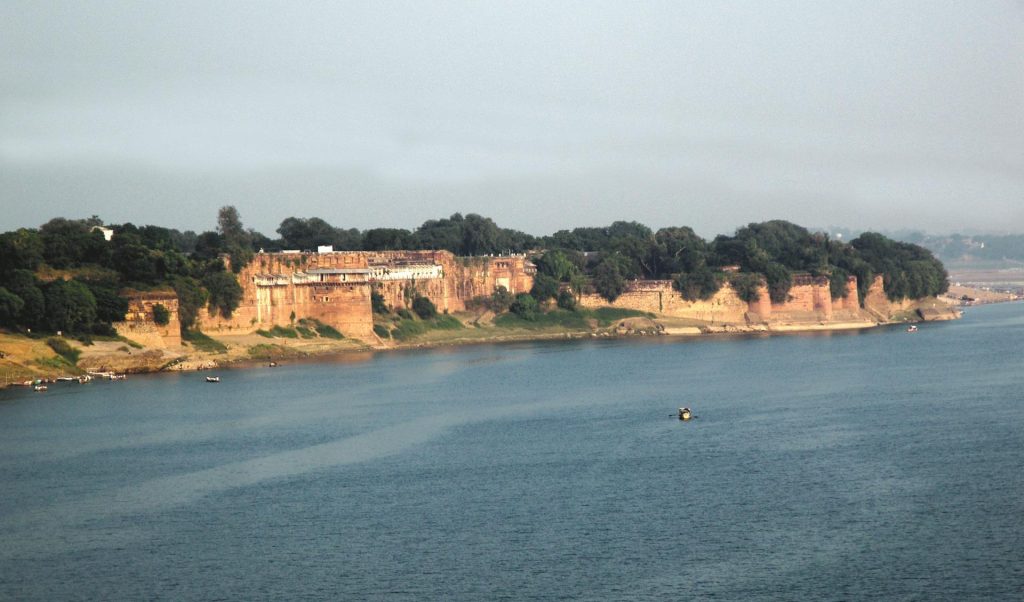
Just a short distance from the river banks stands the massive Prayagraj fort (also known as Akbar Fort), built by the Mughal Emperor Akbar in 1583. Overlooking the river confluence, this imposing sandstone structure houses immense archaeological and religious treasures.
Akshaya Vat: See the indestructible, sacred banyan tree inside the fort complex, which is deeply revered in Hindu mythology.
Saraswati Koop: Explore the ancient well inside the fort premises, believed to be the source of the mythical Saraswati River.
Patalpuri Temple: Visit the underground temple housed within the fort, containing an array of intricately carved deities.
Shri Bade Hanuman Ji Mandir
Located right near the outer walls of the fort is the unique Shri Bade Hanuman Ji Mandir. This is the only temple in the world featuring a massive 20-foot idol of Lord Hanuman in a reclining (lying down) posture, which becomes completely submerged in water when the Ganga rises during the monsoon.
Reclining Deity: The orange-hued stone idol lies below ground level, surrounded by beautiful floral decorations and traditional lamps.
Red Flags: The outer courtyard is constantly adorned with flying red flags offered by devotees seeking blessings of strength.
Alop Shankari Devi Shakti Peeth Mandir
Conclude your spiritual day by heading to the Alop Shankari Devi Shakti Peeth Mandir in the Alopi Bagh area. This highly unusual temple is one of the 51 sacred Shakti Peeths, celebrated because it does not house a physical idol or image of any deity.
The Wooden Chariot: Instead of an idol, devotees worship a small wooden chariot (Jhula) positioned over a flat marble platform.
Sacred Pond: The temple sits on a peaceful platform featuring a small water tank, steeped in local folklore and spiritual legends.
🏛️ Day 2: Colonial Landmarks, Museums & Grand Mausoleums
Anand Bhawan Museum
Start your second day at the Anand Bhawan Museum, the grand two-story mansion that served as the ancestral home of the Nehru-Gandhi family. Preserved beautifully as a national museum, it houses important archives, books, and personal belongings that played a pivotal role in India’s freedom struggle.
Swaraj Bhawan: Stroll over to the adjacent Swaraj Bhawan, the older, original family mansion where Indira Gandhi was born.
Jawahar Planetarium: Watch a sky show at the planetarium housed inside the same sprawling, green garden complex.
Historic Rooms: Peer through glass panes into preserved rooms where Mahatma Gandhi, Jawaharlal Nehru, and other freedom fighters held historic meetings.
Amar Shaheed Chandrashekhar Azad Park.
Spend your midday at the Amar Shaheed Chandrashekhar Azad Park (historically known as Alfred Park), the largest public park in the city. The park is a lush, sprawling sanctuary that combines tragic colonial-era history with beautiful Gothic-style architecture.
Azad Memorial: Visit the exact spot marked by a majestic statue under an old banyan tree where the revolutionary leader Chandrashekhar Azad fought his final battle.
Victoria Memorial: Admire the grand white canopy structure dedicated to Queen Victoria, located in the heart of the park.
Thornhill Mayne Memorial: View the stunning British-era public library building within the park, featuring striking Gothic-Revival architecture.
Khusro Bagh
Head west toward the historic old railway station area to visit Khusro Bagh, a large walled garden that showcases classic Mughal-style design. The park serves as a serene, tranquil space housing three spectacular sandstone mausoleums.
Mughal Tombs: View the grand tombs of Jahangir's eldest son Prince Khusrau, his mother Shah Begum, and his sister Nithar Begum.
Intricate Frescoes: Walk inside the tombs to see beautifully preserved floral patterns, Persian inscriptions, and ceiling frescoes.
Mango Orchards: The garden surrounding the tombs is highly famous for its dense, heritage mango orchards that are centuries old.
All Saints' Cathedral
Finish your itinerary in the upscale Civil Lines area at the All Saints' Cathedral, commonly known to locals as Patthar Girja. This 19th-century Anglican cathedral is widely praised as one of the finest examples of Gothic Revival architecture in Asia.
Stained Glass Panels: Step inside to admire the towering high-vaulted ceilings and the breathtakingly colorful stained-glass windows.
Alabaster Altar: View the highly detailed, intricately carved marble and alabaster altar designed by famed British architect Sir William Emerson.
Peaceful Ambience: Enjoy the quiet, tranquil interior that provides a sharp contrast to the bustling markets of Civil Lines right outside.
Would you like some recommendations on where to try the best local street food (like Hari Ram's famous samosas or netram's kachoris) during this 2-day trip?