
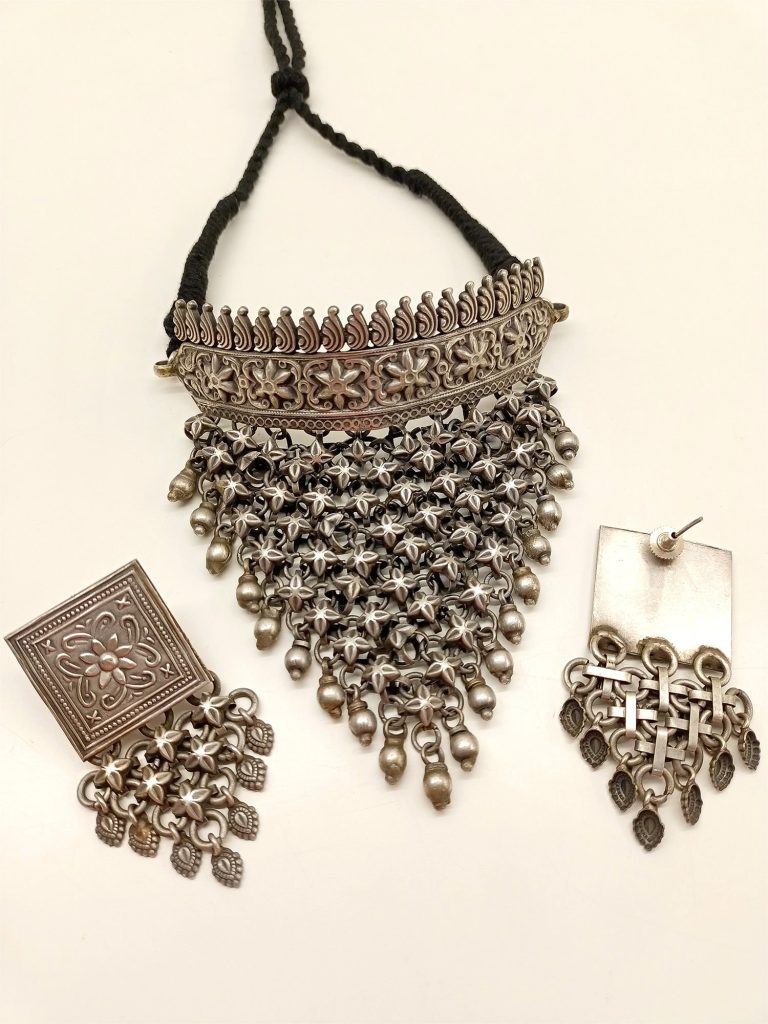
Oxidized Ornaments New collections
When people discuss “oxidized ornaments infrastructure facilities,” they are referring to the manufacturing, processing, and treatment facilities used to mass-produce or finish oxidized jewelry (often called antique silver or black-metal ornaments).
Oxidized jewelry is created by treating sterling silver or base metals (like brass and copper) with chemical compounds (typically liver of sulfur or potassium sulfide) to intentionally speed up the tarnishing process, giving it a classic, matte-black antique look.
Here is a breakdown of the industrial infrastructure required to manufacture these ornaments, followed by frequently asked questions.
Infrastructure Facilities for Oxidized Ornaments Manufacturing
To set up a commercial production line for oxidized ornaments, a facility requires specialized zones equipped for metalworking, chemical treatment, and safety:
1. Design & Casting Section
CAD/CAM Workstations: Where modern, intricate 3D designs are constructed.
3D Printers / Wax Injectors: Used to create highly detailed wax replicas of the jewelry.
Induction Melting Furnaces: High-temperature furnaces used to melt silver or base alloys smoothly before casting.
Vacuum Casting Machines: Essential for pouring molten metal into the plaster molds without capturing air bubbles, ensuring the detailed textures mandatory for oxidized styles.
2. Metal Finishing & Stamping
Hydraulic Pressing/Stamping Machines: Used for flat or repetitive tribal-style components.
Magnetic Tumblers & Rotary Vibrators: These use stainless steel pins, water, and compounding liquids to polish and deburr raw castings before the oxidation process.
3. The Oxidation & Chemical Treatment Line
Chemical Dipping Baths: Temperature-controlled stainless steel or heavy-duty plastic tanks containing the oxidizing agent (commonly Potassium Sulfide or Liver of Sulfur mixed with water).
Neutralizing and Rinsing Stations: Multiple water baths to stop the chemical reaction instantly once the desired darkness is achieved.
Industrial Exhaust & Scrubbers: Because the chemical reaction releases hydrogen sulfide gas (which smells like rotten eggs), massive ventilation systems with air scrubbers are mandatory to protect workers and the environment.
4. Relieving & Highlighting Area
Polishing Lathes with Buffing Wheels: Once the piece is completely blackened, specialized abrasive buffs are used to rub away the black coating only from the raised surfaces. This leaves the deep, recessed crevices dark, creating the signature 3D antique contrast.
Ultrasonic Cleaners: Final-stage wash tanks to remove leftover polishing compounds and rogue chemical residues.
Anti-Tarnish Lacquer/Coating Stations: Spray booths or dip tanks where a micro-thin, clear protective seal is applied to keep the finished look stable during shipping and storage.