
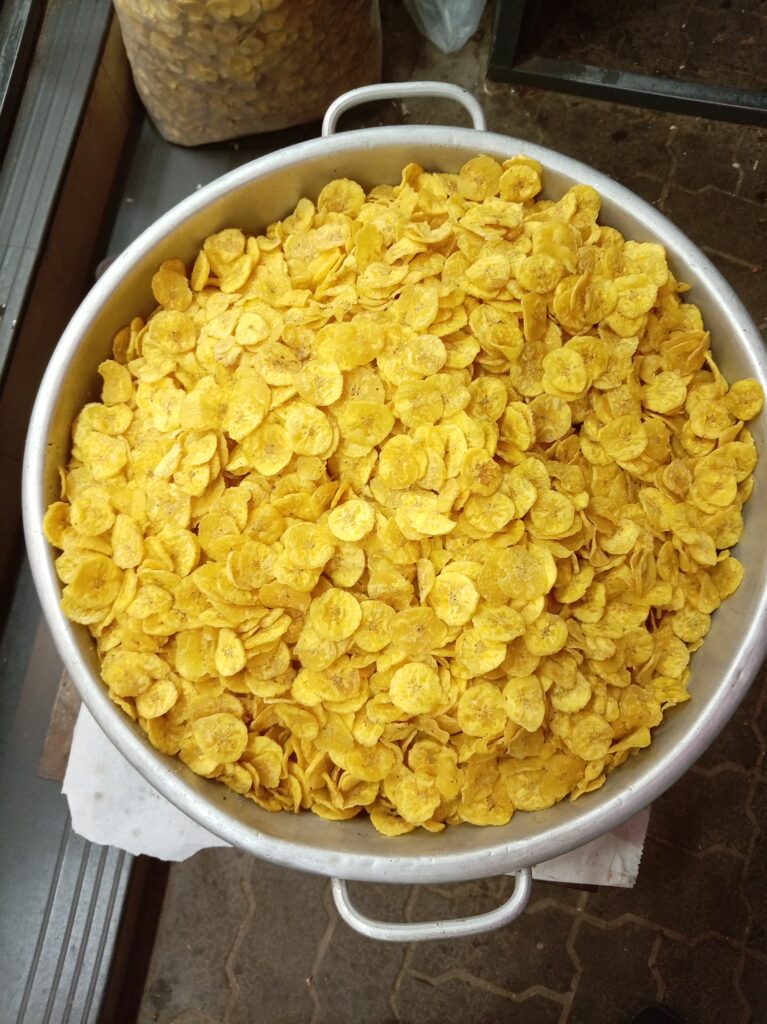
Kerala Nendran Banana Chips / Kerala Upperi
Here is a complete breakdown of Kerala Nendran Banana Chips (Upperi / Sharkara Upperi), including production infrastructure details and frequently asked questions.
🍌 Kerala Nendran Chips Overview
Nendran Chips are Kerala’s most iconic crispy snack, traditionally made using raw Nendran plantains (a firm, high-starch banana variety grown across Kerala).
Core Ingredients: Unripe raw Nendran bananas, pure cold-pressed coconut oil, rock salt, and turmeric water.
Texture & Profile: Thick-cut, super crunchy, light-golden yellow with a savory coconut aroma.
Key Variants:
Plain Salted (Upperi): Classic thin or quartered rounds seasoned with salt water.
Jaggery Coated (Sharkara Upperi): Thick-cut banana cubes coated in caramelized jaggery, cardamom, and dry ginger powder (chku).
Spiced / Pepper: Salted rounds tossed in freshly ground black pepper or red chili powder.
🏭 Manufacturing & Infrastructure Facilities
Whether for artisanal batch production or large-scale commercial units, a modern Nendran chip manufacturing setup relies on structured processing zones and specialized equipment:
1. Key Machinery & Processing Equipment
Peeling & Pre-Processing Stations: Ergonomic stainless steel (SS 304) tables for manual skin stripping and anti-browning water bath immersion.
Motorized Mandoline Slicers: High-speed slicers with adjustable blades to maintain uniform thickness (1.5 mm to 2 mm) for even frying.
Deep Frying Units / Tilting Kettles: Temperature-controlled stainless steel fryers powered by gas, steam, or induction to hold oil precisely at 160°C–180°C.
Centrifugal Oil Extractor (De-oiler): High-speed spinners that remove excess surface coconut oil to keep chips non-greasy and extend shelf life.
Batch Seasoning Drums: Rotary drums used to coat fried chips with pepper, chili, or salt evenly without breaking the slices.
2. Facility Standards & Hygiene Controls
Food Safety Certification: Processing units operate under FSSAI guidelines, ISO 22000, or HACCP standards.
Packaging Zone: Nitrogen-flushed Automated Form-Fill-Seal (FFS) machines to replace oxygen in pouch packs, preserving crunch and preventing coconut oil rancidity.
Storage & Cold Room Facilities: Temperature-controlled dry storage for raw Nendran bunches to regulate natural ripening cycles.
❓ Frequently Asked Questions (FAQs)
Q1. Why are Nendran bananas uniquely suited for chips?
Nendran plantains have higher starch content, firmer flesh, and lower water content compared to sweet dessert bananas. This structure prevents the chips from getting mushy or absorbing excessive oil, giving them their characteristic firm crunch.
Q2. Why is coconut oil preferred over standard vegetable oil?
Coconut oil has a high smoke point and contains natural medium-chain fatty acids. It gives authentic Kerala chips their signature aroma and clean taste. Standard oils can be used, but they change the traditional flavor profile completely.
Q3. How is salt applied evenly during deep frying?
Traditional makers sprinkle a mixture of salt dissolved in water (often with a pinch of turmeric) directly into the hot coconut oil while the chips are mid-fry. The water boils off instantly, leaving an even layer of salt bonded to the crisp surface.
Q4. What is the average shelf life, and how should they be stored?
When sealed in moisture-proof, nitrogen-flushed packaging, they remain fresh for 60 to 90 days. Once opened, transfer them to an airtight container stored in a cool, dry place to keep them crispy for 30 to 45 days. Avoid refrigeration, as moisture condensation softens the chips.
Q5. Are Nendran chips gluten-free and vegan?
Yes! Authentic plain salted Nendran chips contain only raw bananas, pure coconut oil, salt, and turmeric, making them naturally gluten-free and 100% vegan.