
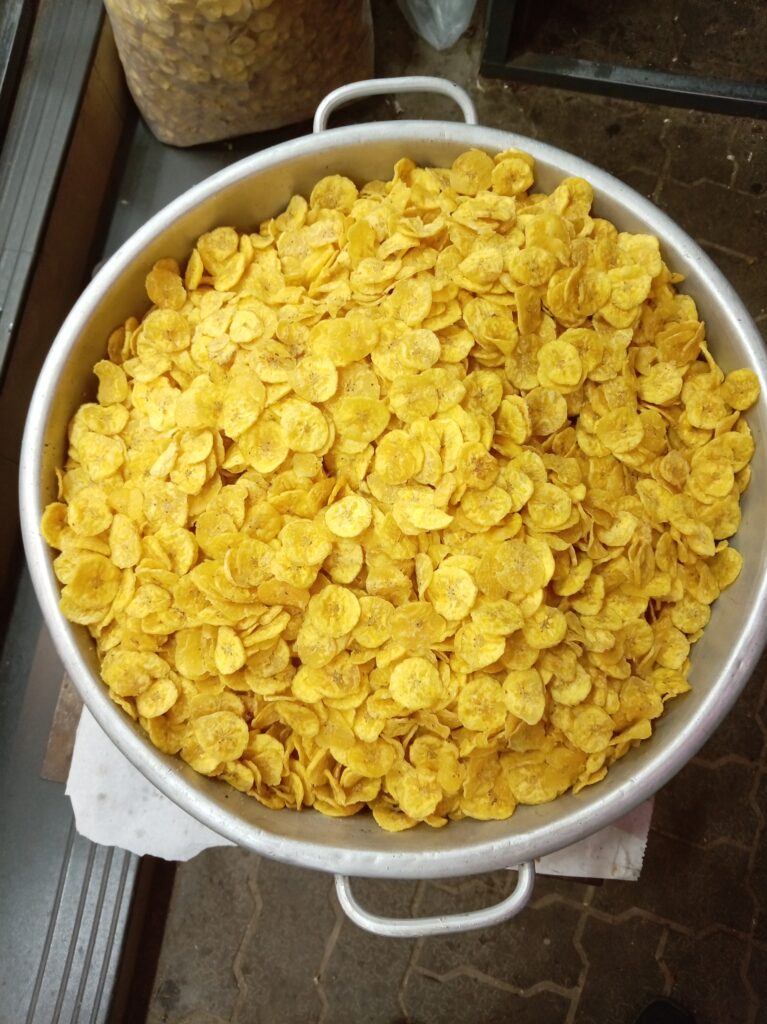
Kerala fresh chips—most famously Nendran Banana Chips (Upperi/Ethakka Upperi)
Kerala fresh chips—most famously Nendran Banana Chips (Upperi/Ethakka Upperi)—are one of the most iconic culinary exports of South India. Known for their golden color, distinct crunch, and aromatic flavor, they are a staple during festivals like Onam and an everyday tea-time favorite.
🍌 Key Details & Popular Varieties
1. Nendran Banana Chips (Classic)
Raw Material: Made strictly from unripe, raw Nendran plantains (Ethakka), which have a dense structure and natural starchy sweetness.
Frying Medium: Traditionally deep-fried in pure cold-pressed coconut oil, giving them their distinct signature aroma and crisp texture.
Preparation Style: Sliced paper-thin using mandoline cutters directly into hot oil. Sprinkled with a light salt-and-turmeric water solution while frying to achieve uniform seasoning and color.
2. Other Popular Regional Variants
Ripe Banana Chips (Pazham Upperi): Sweet and savory chips made from slightly ripe Nendran bananas.
Four-Cut / Jaggery Chips (Sarkara Upperi): Thick, quartered banana pieces fried and coated in boiled jaggery, dried ginger (chukku), and cardamom.
Tapioca Chips (Kappa Chips): Thin round or stick-cut cassava roots fried in oil with salt and chili seasoning.
Jackfruit Chips (Chakka Upperi): Seasonal specialty made from firm, unripe jackfruit bulbs.
🏭 Infrastructure & Production Facilities
Modern commercial snack production in Kerala balances traditional preparation methods with hygienic, industrial-scale infrastructure:
Core Infrastructure Components
Raw Material Storage: Temperature and humidity-controlled storage units to keep green Nendran plantains and tapioca roots fresh without premature ripening.
Prep & Peeling Stations: Stainless steel (SS 304 grade) prep stations with manual and semi-automated peeling equipment to process raw plantains cleanly.
Precision Slicing Machinery: Industrial rotary and mandoline slicers capable of cutting uniform 1mm–2mm slices at high speed to ensure even frying.
Automatic Deep Fryers: Continuous or batch-type deep fryers with digital temperature controllers (keeping oil steadily at 170°C–180°C) to prevent oil degradation and ensure consistent crunch.
Hydro De-oiling Centrifuges: Centrifugal oil-extractor machines that spin off excess surface oil from freshly fried chips, lowering fat content and extending shelf life.
Quality Assurance & Testing Labs: In-house QA setups testing for moisture levels, oil quality (Free Fatty Acids / FFA monitoring), and crispness before packing.
Nitrogen-Flush MAP Packaging: Automatic Form-Fill-Seal (FFS) machines that package chips in multi-layer foil pouches flushed with food-grade Nitrogen gas to maintain freshness without added preservatives.
❓ Frequently Asked Questions (FAQs)
Q1: Why do Kerala banana chips taste different from regular banana chips?
Answer: Authentic Kerala chips use Nendran bananas (a specific plantain variety native to the region) fried exclusively in pure coconut oil. Regular commercial banana chips often use dessert banana varieties fried in refined palm or sunflower oil.
Q2: What is the average shelf life of Kerala fresh chips?
Standard packaging: 2–3 months when sealed.
Nitrogen-flushed foil packs: 6–9 months without preservatives.
Once opened: Up to 2–3 weeks if stored in a clean, airtight glass or plastic container.
Q3: Are Kerala banana chips healthy?
Answer: Raw Nendran bananas are high in fiber, potassium, and resistant starch. Coconut oil contains medium-chain triglycerides (MCTs). However, because they are deep-fried, they remain a calorie-dense snack best enjoyed in moderation.
Q4: How are salt and turmeric applied during frying?
Answer: Instead of dusting powdered salt on cold chips, traditional makers add a brine solution (water, salt, and turmeric) directly into the hot frying oil right before removing the chips. The water evaporates instantly, binding the salt evenly to every slice.
Q5: How do manufacturers prevent chips from becoming soggy during export?
Answer: Exporters rely on de-oiling centrifuges to eliminate surface grease, low-moisture frying controls, and multi-layer aluminum foil pouches filled with nitrogen gas to prevent oxidation and moisture ingress during shipping