
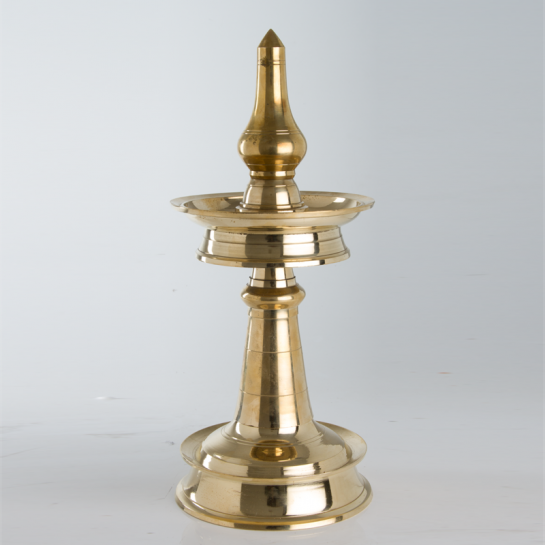
Kerala Traditional Nilavilakku – Home Decor
The Nilavilakku (literally “ground lamp” or “standing oil lamp”) is arguably the most sacred and recognizable symbol of Kerala’s culture. Lighting the Nilavilakku at dawn and dusk marks the beginning of daily household prayers, auspicious occasions, cultural performances (like Kathakali and Koodiyattam), and housewarmings.
1. Cultural & Historical Context
Etymology: Derived from Malayalam “Nila” (ground/floor) and “Vilakku” (lamp), differentiating it from hanging lamps (Thookkuvilakku) or small handheld lamps.
Symbolism of Light: In Kerala tradition, light represents knowledge (Jnana), purity, and the destruction of ignorance (Tamas). Lighting the lamp invites the presence of Goddess Lakshmi (abundance and prosperity).
Cross-Cultural Presence: While deeply rooted in Hindu rituals, the ceremonial lighting of the Nilavilakku has transcended religion in Kerala—it is widely used in Syrian Christian family rituals, secular state functions, and housewarmings across all communities.
2. Infrastructure, Crafting & Structural Anatomy
The major centers of traditional metal casting for Nilavilakkus are Mannar (Alappuzha), Nadavaramba (Thrissur), and Payyanur (Kannur), where master artisans use lost-wax and sand-casting methods.
Structural Components
Traditional lamps are designed to be disassembled into four modular threaded sections:
Paadam (Base Plate): A broad, heavy circular pedestal that provides stability and catches any stray oil drips.
Thandu (Pillar / Stem): A ribbed, hand-lathed central column connecting the base to the oil bowl.
Thattu (Oil Basin): The central shallow bowl with grooves or notches (usually 5 or 7) designed to hold the cotton wicks (Thiri) pointing outward.
Koombu (Crown / Finial): The pointed top section screwed into the center of the bowl, symbolizing the flame element or spiritual crown.
Materials
Brass (Pithala): Most common for residential home decor and daily worship due to its high golden shine and ease of maintenance.
Bronze / Bell Metal (Odu): Used in temples and heritage homes; heavier, more durable, and develops a deep antique patina over time.
3. Frequently Asked Questions (FAQs)
Q1: How many wicks (Thiri) should be lit in a Nilavilakku?
Daily Home Worship: Lighting two wicks facing opposite directions (typically East and West) is standard for evening household prayers.
Special Ceremonies / Festivals: Lighting five wicks (Ainthu Thiri) representing the five elements (Pancha Bhootas), or lighting all grooves around the perimeter for auspicious events.
Q2: What type of oil and wick is best to use?
Oils: Sesame oil (Nallenna) is traditionally preferred for spiritual purity and a clean burn. Coconut oil (Velichenna) is also widely used for a sweet aroma. Ghee is reserved for special temple rituals.
Wicks: Fresh cotton wicks (Pautthu Thiri) provide the cleanest, most consistent flame.
Q3: What is the ideal Vastu placement for a Nilavilakku in a home?
Place the lamp in the Northeast corner (Ishan Kon) or facing the East (to promote health and knowledge) or West (for harmony). Avoid placing the lit lamp facing directly towards the South.
Q4: How do you clean and remove oil buildup from a brass Nilavilakku?
Degreasing: Wipe off excess oil with paper towels, then wash with warm water and mild dish soap.
Polishing: Apply Pitambari powder or a natural paste of tamarind and salt to restore the bright golden luster. Avoid abrasive scrubbers that scratch the turned metal surface