
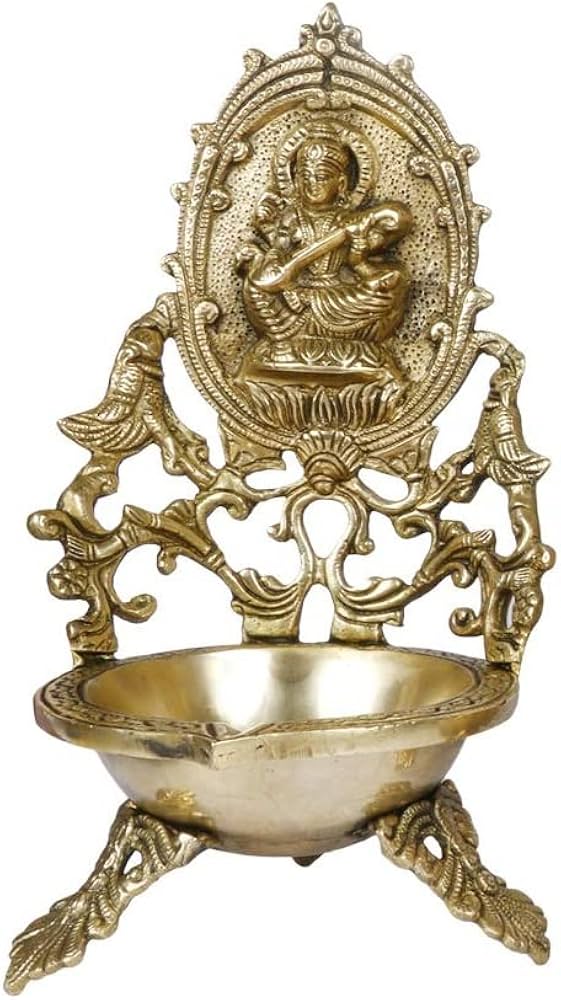
Saraswati Vilakku – Home Decor
The Saraswati Vilakku is a sacred brass or bell-metal oil lamp dedicated to Goddess Saraswati, the deity of wisdom, knowledge, music, arts, and speech (Vidya and Kala). Revered for both its spiritual significance and refined metalwork, it is a treasured addition to study rooms, traditional altars, cultural institutes, and home decor across Kerala.
The Saraswati Vilakku is a specialized, highly revered brass and bronze lamp in Kerala’s traditional metalworking tradition. Named after Goddess Saraswati—the deity of knowledge, wisdom, music, and the arts—it features an iconographic representation of the Goddess or her symbolic motifs (such as the Veena, Hamsa or swan, and lotus) mounted prominently above or within the lamp’s structure.
1. Cultural & Historical Context
Embodiment of Enlightened Knowledge: While the Lakshmi Vilakku is lit to invoke wealth and prosperity, the Saraswati Vilakku is lit to dispel the darkness of ignorance (Tamas) and invite intellectual clarity, creative expression, and focus.
Iconographic Symbolism: The crest of the lamp traditionally features Goddess Saraswati seated in a serene pose on a lotus pedestal, holding her key divine emblems:
Veena: Symbolizing the harmony of mind, speech, and the cosmic arts.
Akshamala (Rosary Beads): Representing spiritual discipline and concentration.
Pustaka (Palm-Leaf Manuscript/Book): Representing worldly and sacred knowledge (Vidya).
Hamsa (Swan) / Peacock: Symbolic of spiritual discrimination—the ability to separate wisdom from illusion.
Role in Vidyarambham: In Kerala tradition, this lamp plays a central role during Navratri and Vidyarambham (the formal initiation of young children into learning and writing), as well as in traditional Gurukuls, music schools, and dance academies.
2. Infrastructure, Crafting & Materials
Saraswati Vilakkus are hand-cast using ancient lost-wax or sand-casting techniques by traditional metal casting communities in Mannar (Alappuzha), Nadavaramba (Thrissur), and Payyanur (Kannur).
Structural Design & Variations
Iconic Standing Saraswati Lamp:
Pedestal Base (Paadam): Heavy, circular or lotus-shaped base ensuring balance.
Lathe-Turned Stem (Thandu): Smooth, contoured brass pillar leading up to the main basin.
Oil Bowl (Thattu): A shallow dish directly beneath the deity figure with 1, 3, or 5 wick spouts.
Deity Crest: A detailed, hand-chiselled relief image or statuette of Goddess Saraswati encircled by a floral arch (Prabhavali).
Standard / Decorative Saraswati Vilakku (Maddalam/Hourglass Design):
Some traditional Kerala brass lamps bear the regional name Saraswati Vilakku due to their elegant, tapered neck resembling a musical instrument or hourglass, crowned with a smooth, pointed finial (Koombu) rather than a full deity figurine.
Materials
Brass (Pithala): Most common for residential study areas and home decor due to its warm golden glow and intricate detail retention.
Bronze / Bell Metal (Odu): Preferred for heirloom temple lamps and heritage spaces for its extreme durability and rich antique patina over time.
3. Frequently Asked Questions (FAQs)
Q1: Where should a Saraswati Vilakku be placed in a house?
Study Rooms & Workspaces: Placed on a desk, bookshelf, or side console in children’s study rooms, home offices, or libraries to foster focus and intellectual growth.
Pooja Room / Altar: Kept alongside the central deity lamps, especially facing East or North (directions associated with learning and intellectual energy according to Vastu Shastra).
Q2: When is the most auspicious time to light this lamp?
Daily Practice: Lit during morning study hours or evening prayer time (Sandhyavela).
Special Occasions: During the 9 days of Navratri (especially Saraswati Puja and Vidyarambham), exam preparation periods, or prior to starting new artistic, musical, or academic endeavors.
Q3: What type of oil and wicks work best?
Oil: Pure sesame/gingelly oil (Nallenna) or ghee (Neyyu) is recommended for a clean, long-burning flame that releases minimal soot over the deity sculpture.
Wicks: Fresh, clean cotton wicks (Pautthu Thiri) pointed outward from the basin spouts.
Q4: How do you clean soot and oil from the detailed deity sculpture?
Soaking: Soak the lamp briefly in lukewarm water with mild dish soap to loosen dried oil residue.
Gentle Cleaning: Apply Pitambari powder or a traditional natural paste of tamarind and salt using a soft toothbrush to reach into the intricate details of the Veena and Prabhavali.
Drying: Rinse thoroughly with water and dry completely with a clean microfiber cloth to prevent water spots on the brass surface.