
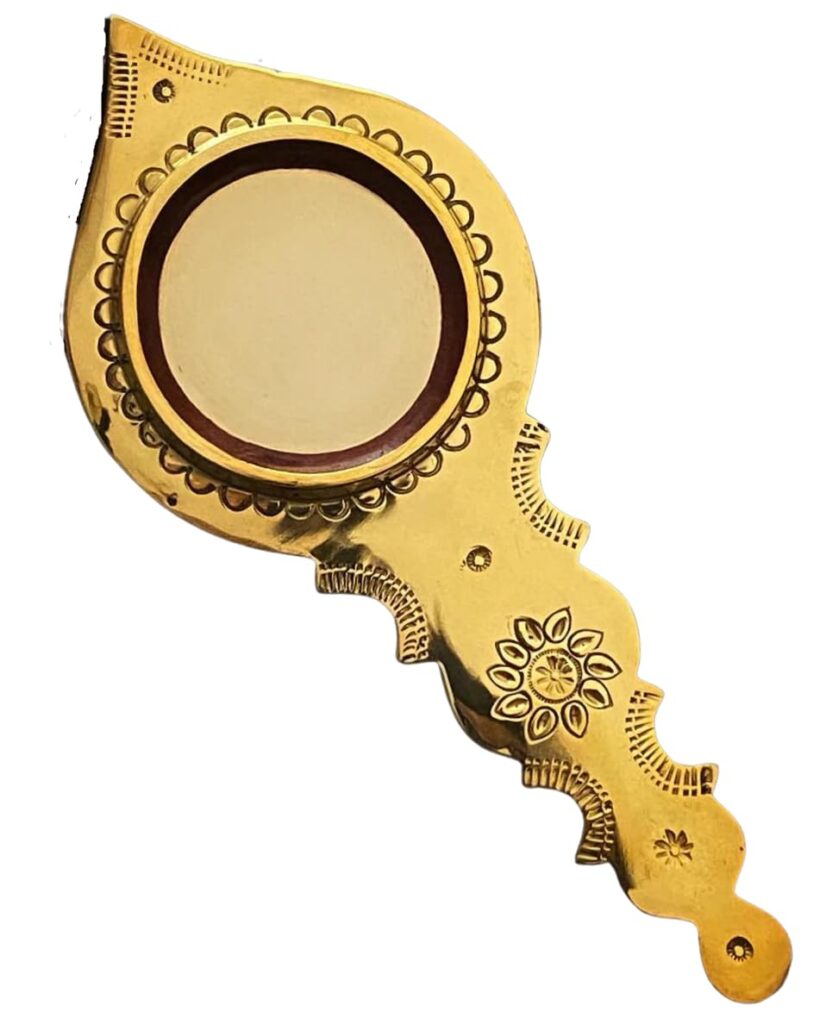
Valkannadi – Home Decor
The Valkannadi (literally “mirror with a tail or handle”) is one of Kerala’s most mystical and iconic traditional ornaments. Best known through the world-famous Aranmula Kannadi lineage, this metal-alloy mirror is renowned because, unlike modern glass mirrors, it produces a front-surface reflection with absolute clarity and zero secondary refraction.
1. Cultural & Historical Context
Etymology: Derived from Malayalam “Val” (tail or handle) and “Kannadi” (mirror).
The Aranmula Legend: The origin of the metal mirror dates back several centuries to the Aranmula Parthasarathy Temple in Pathanamthitta district. Legend holds that a royal patron brought skilled artisans from Tamil Nadu to craft temple ornaments. After initial casting failures, the craftspeople received divine inspiration to mix a unique ratio of copper and tin, creating a brilliant, distortion-free reflective metal surface.
Ashtamangalya Sacred Symbol: The Valkannadi is one of the Ashtamangalyam—the eight auspicious items essential for traditional Kerala Hindu ceremonies, weddings (Kalyanam), and the New Year arrangement (Vishukkanani).
Geographical Indication (GI): Authentic Aranmula Valkannadis hold a prestigious Geographical Indication (GI) tag, protected by a close-knit guild of traditional artisan families in Aranmula.
2. Metallurgy, Crafting & Scientific Unique Feature
Crafting a genuine Valkannadi is an intense, secret-laden process that takes days of precise handiwork using ancient clay-molding techniques.
Front-Surface Reflection (Metal vs. Glass Mirror)
Glass Mirrors: Light travels through a glass sheet, reflects off a silver coating at the back, and refracts back through the glass—creating a tiny gap or double reflection between an object and its image.
Valkannadi Metal Mirror: Reflection happens directly on the outer metallic surface. When a fingernail touches the mirror, there is zero gap between the tip and its reflected image.
Crafting Steps
Secret Alloy Formulation: High-purity copper and tin are melted in specific proportions known only to master artisans.
Mud Molding: The molten metal is poured into handcrafted clay molds made from local soil along the Pamba River banks.
Manual Polishing: Once cooled, the disc is manually polished for hours using velvet, burlap, and oil pastes until a mirror finish emerges.
Brass Frame Assembly: The polished metal disc is mounted onto an ornate hand-carved brass frame featuring a long handle (Val).
3. Frequently Asked Questions (FAQs)
Q1: What is the spiritual significance of keeping a Valkannadi at home?
It is believed to attract divine grace, prosperity, and emotional purity while driving away evil eyes and negative energies. It is traditionally presented to brides during weddings as a symbol of lifelong good fortune (Soubhagyam).
Q2: How can you identify an authentic Aranmula Valkannadi?
The Gap Test: Touch the tip of a pencil or fingernail to the mirror surface. In a real metal mirror, the tip and its reflection touch directly without any glass gap.
No Glass Component: It contains no silvered glass; the entire reflective surface is polished solid metal.
Weight & Sound: It is noticeably heavier than a regular glass mirror of the same size.
Q3: How do you clean and maintain a Valkannadi to prevent tarnishing?
Keep Dust-Free & Dry: Never expose the mirror to moisture, water, or fingerprint oils, which cause oxidation.
Polishing: Clean exclusively with a dry, soft velvet cloth. To remove minor tarnish, apply a tiny drop of special oil-based polish (or a drop of brasso/pete oil recommended by the artisan) and rub gently in vertical strokes.
Avoid Chemicals: Never use glass cleaners (like Colin), alcohol, or water on the metal mirror face.
Q4: What is the difference between a Valkannadi and a Stand Kannadi?
Valkannadi: Features an extended lower handle (Val), designed to be held by hand during rituals, bridal adornment, or hung gracefully on walls/pooja altars.
Stand Kannadi: Designed with a flat, circular base or pedestal to stand unsupported on tables or console desks.