
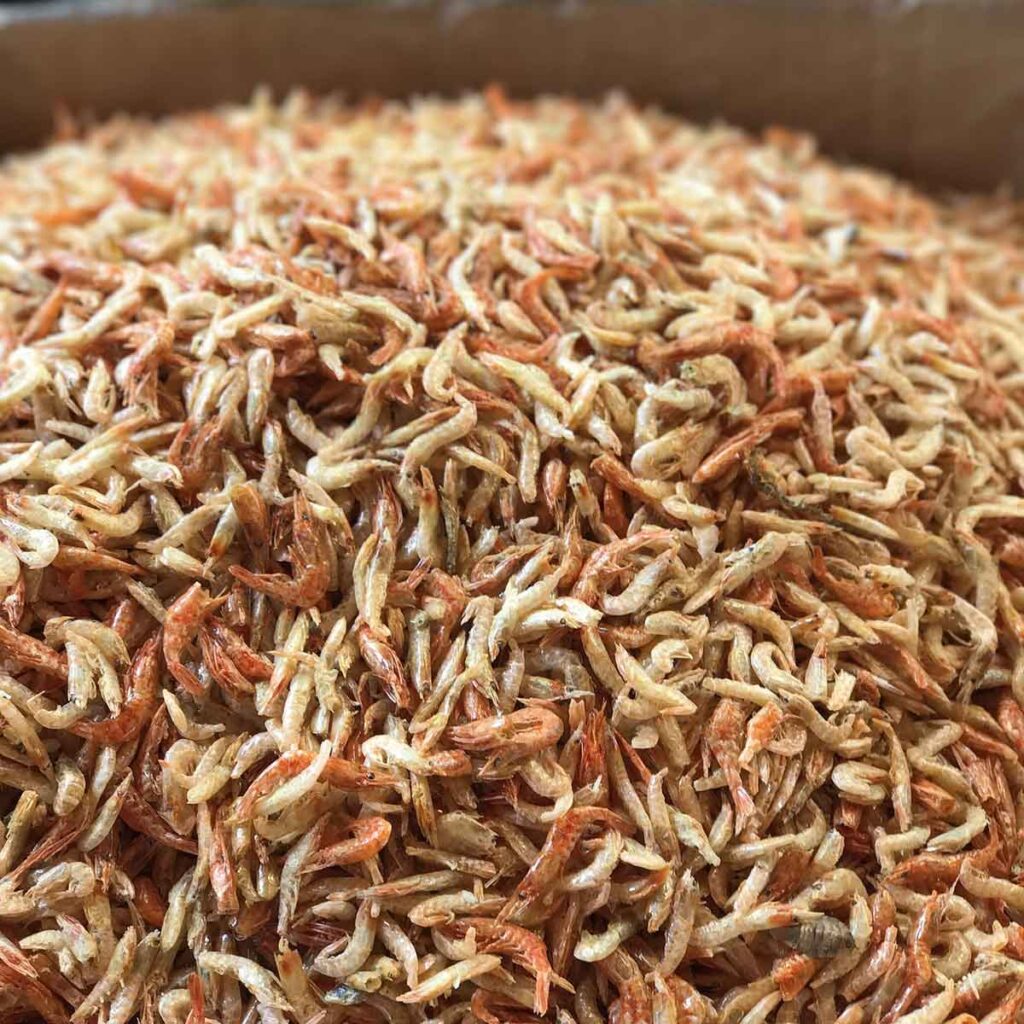
Dry prawns (Unakka Chemmeen – Dry Shrimp
Processing dry prawns (Unakka Chemmeen / ഉണക്ക ചെമ്മീൻ) sourced from Kerala’s Vembanad Lake involves blending centuries-old backwater preservation techniques with modern seafood quality standards.
Vembanad Lake—India’s longest backwater—produces distinct endemic species like Pettakalan (Metapenaeus dobsoni) and Thamrakalan (Penaeus indicus). The brackish ecosystem gives these prawns a naturally sweet, rich umami flavor profile highly prized in traditional Kerala cuisine.
1. Step-by-Step Processing Workflow
Lake Catch (Padal/Veeshu Vala)] ──> [Washing & De-sanding] ──> [Brining / Blanching]
│
[Grading & Packaging] <── [Deshelling (Kottiya Chemmeen)] <── [Controlled Drying]
Harvesting & Sorting: Freshly caught brackish-water prawns are sorted immediately upon arrival at backwater landing centers (such as Kumarakom, Vaikom, and Alleppey) to separate debris, mud, and unwanted fish.
Washing & Salt Treatment: Prawns are washed in potable/RO water to strip away estuarine silt and sand. They are briefly dipped in or boiled with a light salt solution (3–5% brine), which firms up the prawn meat, accents its natural reddish color, and destroys surface microbes.
Dehydration (Drying Phase):
Traditional Method: Sun-drying on raised bamboo nets or multi-tier stainless steel drying tables off the ground to prevent soil contamination.
Modern Method: Utilizing commercial solar-tunnel dryers or heat-pump dryers at 50°C–60°C to achieve a target moisture content below 15% without exposure to rain or insects.
Deshelling (Shell Separation): Once fully dried and crisp, the prawns undergo winnowing or mechanical hulling to remove the brittle shell, head, and tail, leaving pure dried prawn meat (Chemmeen Parippu / Kottiya Chemmeen).
Grading & Moisture-Proof Packing: Sorted by size into small, medium, and large grades before being packed into nitrogen-flushed or vacuum-sealed 100g/250g multi-layer poly pouches to maintain long-term crispness and prevent rancidity.
2. Infrastructure & Facility Setup
A compliant dry prawn processing unit operating in the Vembanad region requires specific operational infrastructure:
Facility ZoneRequired Equipment / InfrastructurePrimary Function
Raw Material ReceivingStainless steel (SS 304) washing tubs, ice storage chests, clean water filtration (RO system).Cleans raw catch and halts spoilage before drying begins.
Pre-treatment / CookingSteam-jacketed kettles, brine mixing tanks.Standardizes salt absorption and enhances shelf appearance.
Hygiene Drying ZoneEnclosed Solar Tunnel Dryers or Multi-deck Heat-Pump Dryers.Protects prawns from atmospheric dust, rain, and insects while ensuring uniform moisture removal.
Processing & HullingAir-blast shell separators, stainless steel winnowing trays, vibratory grading sieves.Efficiently separates outer hulls/heads from the dried prawn meat.
Packaging & StorageHeavy-duty vacuum sealers, dehumidified cold storage rooms.Locks in aroma, prevents pest infestation, and extends shelf life up to 12 months.
3. Frequently Asked Questions (FAQs)
Q1: Why are Vembanad dry prawns distinct compared to sea-dried prawns?
A: Vembanad prawns thrive in a unique estuarine mix of freshwater rivers and marine tides. The species found here (Metapenaeus dobsoni / Penaeus indicus) feature thinner shells and sweeter, tender meat compared to deep-sea varieties, yielding a more intense umami taste when dried.
Q2: What is the yield ratio when processing raw prawns into dry prawns?
A: Raw prawns consist of approximately 75–80% moisture. After complete drying and shell removal, the final dry recovery rate ranges from 18% to 22% (e.g., 100 kg of fresh Vembanad raw catch yields around 18–22 kg of cleaned dried prawn meat).
Q3: Should dried prawns be washed before cooking?
A: Yes. Even hygienically processed dry prawns should be rinsed briefly in cold water or soaked in warm water for 5–10 minutes before cooking. This softens the texture and removes any excess surface salt.
Q4: How long do dry prawns last, and how should they be stored?
A: Properly dried and vacuum-sealed prawns have a shelf life of 6 to 12 months at room temperature. For long-term storage in tropical climates like Kerala, keeping them in an airtight container inside the refrigerator preserves their bright color and prevents oil oxidation.
Q5: What safety certifications are required to sell or export processed dry prawns?
A: Commercial processors in India require an FSSAI license for domestic sales. Exporting processed dried seafood requires MPEDA (Marine Products Export Development Authority) registration alongside HACCP compliance and approval from the Export Inspection Council (EIC).