
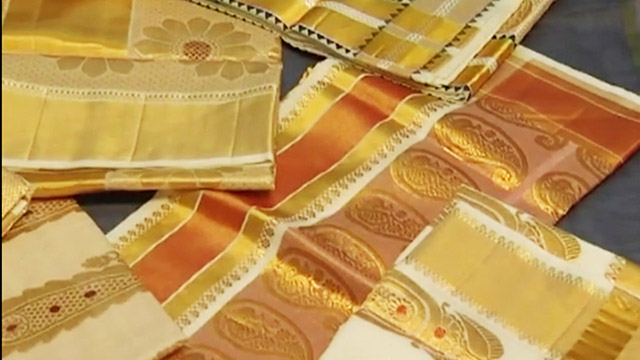
Chendamangalam Handloom zari Items – Kerala Kasavu Sarees
Chendamangalam (located in Paravur taluk, Ernakulam district, Kerala) is one of Kerala’s most renowned weaving clusters. Historically patronized by the noble Paliam family (the hereditary Prime Ministers of the Kingdom of Cochin), Chendamangalam handlooms received official Geographical Indication (GI) status in 2011.
The cluster is distinguished by its high-count, fine cotton weaving, exceptional soft texture, and its signature Puliyilakkara (tamarind leaf motif) selvage lines.
1. Popular Chendamangalam Handloom Items
Chendamangalam Kasavu Sarees: Woven with fine cotton (80s, 100s, and 120s counts) featuring unbleached or off-white body panels, paired with elegant Kasavu (zari) borders. Signature designs feature thin, delicate colored strips along the border.
Set Mundu (Mundum Neriyathum): The traditional two-piece attire worn by Kerala women. It includes a lower wrap (Mundu) and an upper drape (Neriyathu) with matching Kasavu and Puliyilakkara borders.
Chendamangalam Dhotis (Mundu): Premium, lightweight, unbleached cotton dhotis for men. Known for their breathability, subtle colored selvedges, or pure gold/silver zari borders.
Thorthu (Handloom Bath Towels): Highly absorbent, loose-weave pure cotton towels woven on traditional frame looms.
Contemporary Handloom Wear: Shirtings, dress materials, dupattas, and home textiles created in partnership with modern designers using eco-friendly natural dyes.
2. Infrastructure & Production Facilities
The Chendamangalam handloom ecosystem operates through primary weaver cooperative societies and decentralized home workshops:
Infrastructure FacilityEquipment & Technical SetupFunctional Role
Yarn Pre-processing & SizingStreet-sizing setups, starch immersion vats (kanji paste), wooden beaters, and oil coating trays.Raw cotton yarn is boiled, bleached, and stretched outdoors. It is dressed with a rice starch paste and smoothed with coconut oil to increase warp strength before loom mounting.
Weaving MachineryTraditional frame looms and pit looms fitted with treadles, fly-shuttles, and heald shafts.Allows manual tension control. The tightly controlled hand-beating process ensures uniform thread density and a soft hand-feel.
Cooperative SocietiesChendamangalam Handloom Weavers’ Co-operative Societies (H47, H175, etc.) and Hanttex/Hanveev networks.Provides certified raw yarn, authentic Kasavu threads, wage security, and centralized distribution for member artisans.
Dyeing & Bleaching UnitsManual immersion dye vats using eco-friendly and vat dyes.Manages small-batch yarn dyeing to prevent chemical degradation of delicate cotton fibers.
GI Certification & Quality TestingGI Tag Labeling and Handloom Mark authentication.Guarantees that the fabric is genuinely handwoven in the Chendamangalam cluster using authentic counts and traditional methods.
3. Frequently Asked Questions (FAQs)
Q1: How do I identify a Chendamangalam saree or dhoti?
A: The defining visual characteristic of Chendamangalam handloom is the Puliyilakkara border—a thin, delicate colored line running along the edge parallel to the main border. Additionally, the fabric uses high-count yarn (80s to 120s), giving it a light, supple texture compared to heavier power-loom alternatives.
Q2: What is the main difference between Chendamangalam, Kuthampully, and Balaramapuram handlooms?
Chendamangalam: Renowned for subtle elegance, high thread counts, delicate border stripes (Puliyilakkara), and a lighter, softer feel.
Kuthampully: Famous for ornate Jacquard zari work, heavy gold motifs (butis), peacocks, and temple borders.
Balaramapuram: Known for pure unbleached grey-cotton bases with double-sided gold zari work woven straight into the fabric structure.
Q3: How should Chendamangalam handloom garments be washed and maintained?
A: Wash in cold water using a mild liquid detergent or soap-nut solution. Avoid harsh scrubbing, bleaching, or wringing. To maintain the crispness without damaging fibers, starch lightly after washing and iron on medium heat while slightly damp. For heavy Kasavu (zari) pieces, dry cleaning is recommended.
Q4: Is Chendamangalam handloom production eco-friendly?
A: Yes. Handloom weaving uses minimal water and zero electricity during the actual weaving process. Chendamangalam weavers predominantly use natural rice-starch sizing and eco-compliant dyes, making the production process environmentally sustainable.