
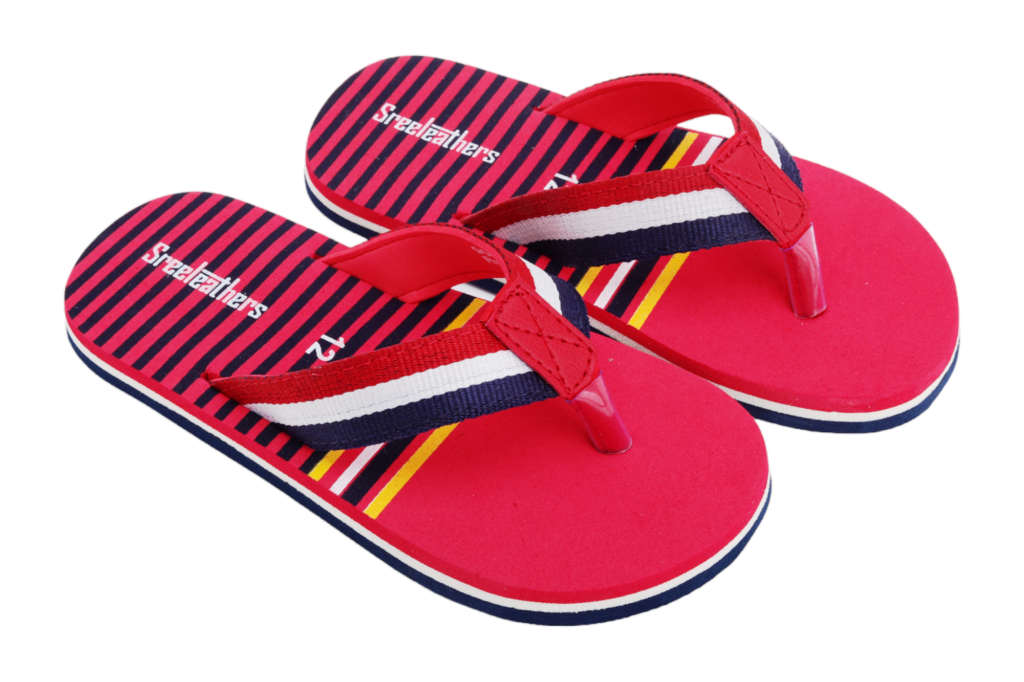
Chappal Manufacturers – Wholesalers and Retailers Across In India
The chappal (slippers, flip-flops, and slip-on sandals) industry represents one of the highest-volume segments in the footwear market. It ranges from mass-market rubber Hawai chappals to direct-injection Polyurethane (PU) slides and ergonomic/orthopedic daily wear.
1. Chappal Manufacturers
Production is segmented by material type: Natural Rubber / Rubber-EVA Hawai, Direct Injection PU (Polyurethane), and Compression Molded EVA / PVC.
Major Brands & Manufacturers
Polyurethane (PU) & Casual Chappal Leaders:
Paragon Footwear: Market leader in durable PU, PVC, and EVA daily-wear sandals and chappals.
VKC Pride (Veekesy Foot Care): Pioneer in the popularization of affordable PU footwear across India.
Walkaroo International: High-volume producer of ergonomic PU and EVA slippers.
Lunar Rubbers & Relaxo (Flite/Bahamas): High-capacity manufacturers of stylish casual flip-flops and daily sliders.
Classic Rubber Hawai Chappal Manufacturers:
Rubco Hawai Chappal Factory (Kerala Rubber Co-operative): Modern automated rubber Hawai manufacturing unit.
Bata (Hawaii range) & Sparx (Relaxo): High-volume daily-wear rubber and synthetic flip-flops.
Regional Manufacturers: Breezy Footwear Industries, Lehar Footwears, and SS Industries.
2. Wholesale & Retail Channels
Channel TypePrimary FunctionsKey Regional Markets / Platforms
B2B Wholesale HubsHigh-volume bulk procurement for distributors, retail shops, and street vendors.• Kozhikode & Ernakulam (Kerala): Major South Indian distribution hub
• Bahadurgarh & Narela (Delhi NCR): Rubber Hawai and EVA wholesale cluster
• Jalandhar (Punjab) & Agra (UP): North Indian footwear trade hubs
Digital B2B MarketplacesDirect factory-to-retailer ordering with low MOQs and mixed-size assortments.IndiaMART, TradeIndia, Udaan, Bijnis.
Organized Retail (MBOs & EBOs)Brand-exclusive showrooms and multi-brand footwear stores catering to family footwear needs.Paragon Footwear Outlets, VKC Stride Stores, Reliance Trends Footwear, Bata Stores, local footwear retailers.
E-Commerce & D2CRapidly growing segment for branded slides, orthopedic chappals, and comfort wear.Amazon, Flipkart, Ajio, Meesho, along with D2C brands (e.g., Doctor Extra Soft, Solethreads).
3. Infrastructure Facilities & Industrial Clusters
Chappal production requires continuous rubber compounding, sheet vulcanization, die-cutting, or automated liquid PU injection machinery.
Key Manufacturing Clusters
Kozhikode & Malappuram Footwear Hub (Kerala): Known as the “Footwear Capital of India” for non-leather and PU chappals, housing hundreds of small and medium units.
Bahadurgarh Footwear Park (Haryana): A massive industrial cluster dedicated to non-leather footwear, rubber Hawai, and synthetic slipper molding.
Narela & Tikri Kalan (Delhi NCR): Major centers for rubber strap molding, Hawai sheet pressing, and cheap daily-wear slippers.
Jalandhar (Punjab): Established industrial base for rubber compounding, Hawai chappal sheets, and strap manufacturing.
Machinery & Technical Infrastructure
Rubber Compounding Mills & Kneaders: Mixes natural rubber, synthetic polymers, and blowing agents.
Hydraulic Vulcanizing Presses: Converts rubber compounds into microcellular Hawai foam sheets.
Automated PU Rotary Injection Machines: Directly injects liquid Polyurethane into molds to bond upper straps with cushioned soles in a single continuous process.
Strap Insertion & Clicker Presses: Automated cutting presses for shaping soles from sheets and pneumatic tools for inserting straps into sole holes.
4. Frequently Asked Questions (FAQs)
FAQ 1: What is the structural difference between Rubber Hawai, EVA, and PU chappals?
Answer:
Rubber Hawai: Made from natural rubber blends; heavy, highly slip-resistant, flexible, and extremely durable.
EVA (Ethylene-Vinyl Acetate): Extremely lightweight, soft, and shock-absorbing, but wears down faster on rough outdoor surfaces.
PU (Polyurethane): Highly durable, offers superior arch support and cushioning, and ideal for long daily wear without losing sole shape.
FAQ 2: What machinery is required to set up a small-scale Hawai chappal manufacturing unit?
Answer: A basic micro-enterprise requires:
Sole Cutting Press (Manual or Hydraulic): To punch out chappal shapes from pre-made rubber microcellular sheets.
Grinding/Buffing Machine: For smoothing sole edges and drilling strap holes.
Strap Insertion Machine: Pneumatic or foot-operated tool to insert rubber/PVC straps.
Screen Printing Table: For applying logos and graphics onto the sole surface.
FAQ 3: What is the typical Minimum Order
Quantity (MOQ) when sourcing from chappal factories?
Answer:
Ready Stock / Standard Designs: 50 – 100 pairs (usually sold in master cartons containing standard size ratios, e.g., sizes 6 to 10).
Custom Brand Printing / Custom Colorways: 500 – 1,000 pairs per color combination.
Custom PU Outer Mold Creation: 3,000 – 5,000 pairs to offset initial steel mold tooling expenses.
FAQ 4: Which Quality Standards (BIS) apply to chappals in India?
Answer: Under the Quality Control Orders (QCO) issued by the Ministry of Commerce and Industry, slippers and footwear must comply with BIS standards:
IS 10702: Specification for Rubber Hawai Chappal.
IS 6721: Specification for PVC Sandals and Slippers.
IS 15844: Specification for Sports Footwear and Casual Slip-ons.