
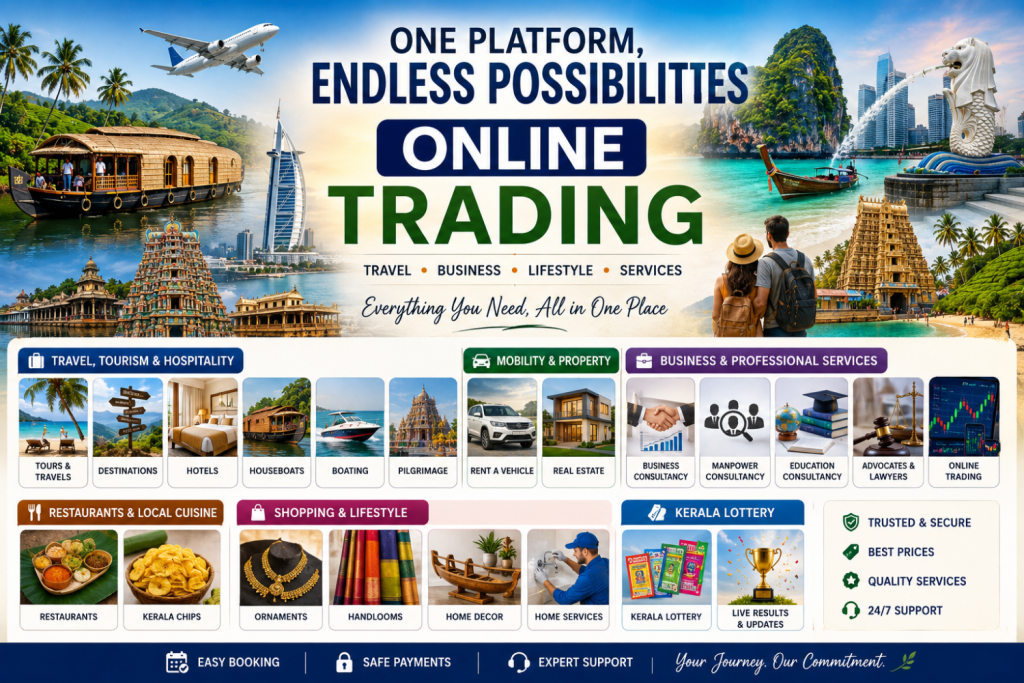
B2B (Business-to-Business), B2C (Business-to-Consumer ) Manufacturers/Farmers to Consumer trading platform.
Online trading encompasses digital platforms where goods, services, or financial assets are exchanged electronically. In commerce and digital marketing, B2B (Business-to-Business), B2C (Business-to-Consumer), and hybrid B2B2C (Business-to-Business-to-Consumer) DMC, OTA, API/GDS Platform, define the core transaction models.
Core Trading Models Explained
- B2B (Business-to-Business): Transactions occurring directly between two commercial entities (e.g., a manufacturer selling raw materials to a wholesaler or a software company selling tools to enterprises).
- B2C (Business-to-Consumer): Direct sales from a business to individual end-consumers (e.g., buying retail products on Amazon or booking a hotel online).
- B2B2C (Business-to-Business-to-Consumer): An integrated model where Company A sells products or services through Company B directly to the end consumer (e.g., e-commerce platforms hosting independent sellers or food delivery apps connecting restaurants with eaters).
Model Comparison
| Feature | B2B Trading | B2C Trading | B2B2C Hybrid Model |
|---|---|---|---|
| Primary Audience | Companies, wholesalers, retailers | Individual consumers | End consumers via partner networks |
| Order Volume | Bulk / High-value orders | Single items / Retail quantities | Mixed (Retail scale with wholesale backend) |
| Sales Cycle | Long (Involves negotiations & approvals) | Short (Impulsive or immediate purchasing) | Medium (Quick for consumer, structured for partners) |
| Pricing Structure | Dynamic, volume-based, custom quotes | Fixed retail pricing, universal discounts | Fixed for consumer, commission-based for partners |
| Payment Terms | Credit terms (Net 30/60), POs, wire transfers | Instant (Credit Cards, UPI, Wallets, COD) | Instant gateway payments split automatically |
Frequently Asked Questions (FAQs)
Q: What is the main advantage of a B2B2C online trading platform?
A: It allows primary manufacturers or service providers (Business 1) to tap into established customer bases and distribution infrastructure of digital platforms (Business 2) without building their own direct retail reach from scratch.
Q: How do payment gateways differ between B2B and B2C platforms?
A: B2C gateways focus on instant single-payment authorization (cards, digital wallets, UPI). B2B gateways support complex transactions like deferred payments, credit line checks, ACH transfers, and partial invoicing.
Q: Can a single business operate both B2B and B2C online models?
A: Yes. Many companies run hybrid portals (often called B2B/B2C dual platforms) where wholesalers can log in to view discounted bulk rates using corporate accounts, while guest retail shoppers see standard consumer pricing.
Q: What are key technical essentials for building a B2B trading platform?
A: Critical features include custom catalog visibility, tiered wholesale pricing, bulk ordering forms, automated quote requests (RFQ), ERP/CRM integration, and multi-user corporate accounts with approval workflows.
🌍 Travel, Tourism & Hospitality
Tours & Travels
Description:
Experience unforgettable journeys with our customized domestic and international tour packages. From Kerala’s scenic landscapes to popular global destinations, we offer hassle-free travel planning, guided tours, transportation, accommodation, and personalized itineraries to suit every budget.
Destinations
Description:
Explore the world’s most captivating destinations with detailed travel guides, local insights, and must-visit attractions. Discover Kerala, the UAE, Singapore, Thailand (Bangkok), Malaysia, Sri Lanka, and many more destinations for your next memorable vacation.
Hotels
Description:
Book comfortable stays ranging from budget hotels and fresh-up rooms to premium resorts and luxury accommodations. Compare top-rated properties, enjoy exclusive offers, and experience seamless online hotel booking.
Houseboats
Description:
Sail through the enchanting backwaters of Alleppey and Kumarakom aboard traditional Kerala houseboats. Choose from standard, deluxe, and luxury cruises while enjoying authentic Kerala cuisine, breathtaking scenery, and overnight stays.
Boating
Description:
Discover Kerala’s serene waterways with exciting boating experiences. Enjoy speedboat rides, motorboats, shikara cruises, canoe trips, and family-friendly water adventures across picturesque lakes and rivers.
Pilgrimage
Description:
Embark on meaningful spiritual journeys with professionally organized pilgrimage tour packages. We provide transportation, accommodation, guided temple visits, and seamless travel arrangements to India’s most sacred destinations.
🚗 Mobility & Property
Rent a Vehicle
Description:
Rent well-maintained cars, SUVs, luxury vehicles, and two-wheelers for business or leisure. Enjoy affordable pricing, flexible rental plans, and reliable self-drive or chauffeur-driven services.
Real Estate
Description:
Buy, sell, or rent residential and commercial properties with confidence. Explore verified listings of apartments, villas, independent homes, commercial spaces, plots, and even Kerala houseboats from trusted property experts.
💼 Business & Professional Services
Business Consultancy
Description:
Accelerate business growth with professional consulting services. We specialize in company registration, market research, industrial project reports, financial planning, startup mentoring, and strategic business development.
Manpower Consultancy
Description:
Connecting talented professionals with leading employers across India and overseas. We provide recruitment and staffing solutions for IT, healthcare, engineering, hospitality, construction, and other industries.
Education Consultancy
Description:
Achieve your academic goals with expert educational guidance. Receive complete support for career counseling, university admissions, student visas, scholarships, and overseas education opportunities.
Advocates & Lawyers
Description:
Access experienced legal professionals specializing in corporate law, civil litigation, property matters, family disputes, documentation, and legal consultation services across India.
Online Trading
Description:
Trade confidently in global financial markets with secure online trading solutions. Access real-time market data, advanced trading tools, educational resources, and expert insights for stocks, commodities, forex, mutual funds, and cryptocurrencies.
🍽️ Restaurants & Local Cuisine
Restaurants
Description:
Discover the finest restaurants serving authentic Kerala cuisine, Indian specialties, international dishes, vegetarian, non-vegetarian, seafood, homemade meals, and traditional local delicacies for every taste.
Kerala Chips
Description:
Enjoy freshly prepared Kerala banana chips, jackfruit chips, tapioca chips, and traditional snacks made using pure coconut or sunflower oil. Authentic flavors delivered fresh to your doorstep.
💍 Shopping & Lifestyle
Ornaments
Description:
Explore an elegant collection of traditional and contemporary jewellery, including gold, silver, oxidized jewellery, lightweight ornaments, bridal collections, jhumkas, earrings, rings, bangles, necklaces, and handcrafted designer pieces.
Handlooms
Description:
Celebrate Kerala’s rich weaving heritage with premium handloom products, including Kasavu sarees, traditional silk fabrics, cotton shirts, dhotis, ethnic wear, and handcrafted textiles made by skilled local artisans.
Home Decor
Description:
Enhance your interiors with handcrafted home décor inspired by Kerala’s culture. Shop wooden houseboat models, coir products, wall décor, indoor plants, orchids, handcrafted furniture, flower baskets, and unique decorative accessories.
Home Services
Description:
Book trusted professionals for all your household needs, including plumbing, electrical work, painting, deep cleaning, appliance repairs, carpentry, pest control, and complete home renovation services.
Kerala Lottery
Description:
Stay updated with the latest Kerala State Lottery draws, bumper lotteries, winning numbers, prize charts, and official result announcements through our reliable online lottery information platform.
Online platforms bridging B2B (Business-to-Business) and B2C (Business-to-Consumer) connect farmers, agricultural collectives, and manufacturers directly with end consumers, businesses, and retailers. This hybrid approach—often referred to as B2B2C or D2C (Direct-to-Consumer)—eliminates multiple layers of middlemen, allowing producers to capture higher margins while offering buyers competitive pricing.
Core Platform Models & Workflows
- Direct Farmer-to-Consumer / Farm-to-Fork (B2C & B2B2C): Farmers or Farmer Producer Organizations (FPOs) list produce on e-commerce applications. Consumers purchase individual units (B2C), while local restaurants, kirana stores, or hotels place bulk daily orders (B2B).
- Manufacturer-to-Consumer (D2C / B2B2C): Industrial and consumer goods manufacturers set up digital storefronts. Retail buyers procure wholesale quantities directly, while individual consumers purchase single items at factory prices.
- Marketplace Integrations: Platforms like IndiaMART, TradeIndia, and Udaan enable manufacturers and aggregators to manage dual channels—handling bulk B2B leads as well as smaller direct consumer shipments.
Key Operational Components
| Component | B2B Operations | B2C Operations |
|---|---|---|
| Order Volume | Bulk quantities, recurring contracts | Single items, smaller basket size |
| Pricing Model | Dynamic, tiered wholesale pricing | Fixed retail pricing / dynamic discounts |
| Logistics | Freight, palletized cargo, bulk transport | Courier, parcel delivery, last-mile hyper-local |
| Payment Terms | Credit lines, net-30/60 days, bank transfers | Upfront digital payments, COD |
Frequently Asked Questions (FAQs)
- What is the difference between B2B2C and pure D2C for producers? In pure D2C, a manufacturer or farmer sells only to end consumers. In B2B2C, the platform facilitates transactions with both intermediate businesses (resellers, local shops) and direct retail customers simultaneously through unified inventory management.
- How do farmers handle last-mile delivery and cold storage logistics? Perishable farm produce relies on integrated 3PL logistics networks, localized cold chain hubs, or specialized tech-enabled fulfillment partners (e.g., Locus, Ninjacart) to manage temperature-controlled routing and quick deliveries.
- How do platforms prevent conflict between wholesale buyers and direct retail consumers? Systems use tier-based access: logged-in business accounts view wholesale volume rates and MOQ (Minimum Order Quantity) constraints, while anonymous or guest retail users see retail MSRP pricing.
- What are the primary tech stack requirements for a B2B2C trading platform? A viable platform requires multi-vendor catalogue management, automated invoice generation with tax engines, dynamic multi-tier pricing, inventory synchronization across channels, and integrated payment/credit gateways.
- What are the main risks involved in direct selling for small-scale producers? High Customer Acquisition Costs (CAC), managing return-to-origin (RTO) rates on retail orders, initial infrastructure investments in packaging, and handling customer service directly without retail intermediaries.
The travel technology ecosystem relies on four core pillars—DMC, OTA, API, and GDS. They work together to aggregate content, automate bookings, and deliver travel services globally.
Core Concepts Overview
| Entity | Full Form | Primary Role | Target Audience | Example Companies |
|---|---|---|---|---|
| DMC | Destination Management Company | Provides localized on-ground travel services (transfers, tours, local logistics). | B2B Travel Agencies, OTAs, Tour Operators | Destination Asia, Kuoni Tumlare, Abercrombie & Kent |
| OTA | Online Travel Agency | Web platform allowing end-consumers or agents to search and book travel products. | B2C Consumers & B2B Sub-Agents | Booking.com, Expedia, MakeMyTrip, Trip.com |
| API | Application Programming Interface | Middleware code connecting booking portals to inventory suppliers in real-time. | Developers, OTAs, Travel Portals | Hotelbeds, Rapid API, TBO Holidays |
| GDS | Global Distribution System | Massive computer network aggregating real-time flight, hotel, and car inventory globally. | OTAs, Travel Agents, Airlines, Corporations | Amadeus, Sabre, Travelport (Galileo/Worldspan) |
Detailed Breakdown
- DMC (Destination Management Company): Local experts who manage ground logistics at specific travel destinations. They curate tours, manage local transport, handle events, and supply unique local hotel contracting to larger OTAs or tour operators.
OTA (Online Travel Agency): Customer-facing platforms that combine multiple travel products into a single interface. They generate revenue through markup pricing, commission models, or subscription fees.
API (Application Programming Interface): The technical “bridge” allowing an OTA or travel platform to pull live rates, availability, and instant booking capabilities directly from suppliers (hotels, airlines, DMCs, or GDS networks).
GDS (Global Distribution System): The backbone of global travel inventory. A GDS connects service providers (e.g., airlines) to distributors (e.g., OTAs/agents) to deliver real-time seat/room availability, pricing, PNR creation, and automated ticketing.
Frequently Asked Questions (FAQs)
Q1: What is the difference between a GDS and a travel API?
A GDS is the primary database/network containing millions of travel inventories. A Travel API is the software bridge that allows your web application to communicate with that GDS database to fetch rates and execute bookings.
Q2: Can I build an OTA without integrating a GDS?
Yes. If you only sell specific hotel inventory or regional packages, you can directly integrate third-party hotel APIs (like Hotelbeds) or local DMC APIs without needing a full GDS integration. However, for comprehensive global flight booking, a GDS (or NDC aggregator) is usually necessary.
Q3: How do DMCs feed their inventory into OTAs?
DMCs usually connect to OTAs using direct B2B APIs or through travel technology platforms that export XML/JSON inventory feeds. This allows the OTA to sell local tours, transfers, and resort packages automatically.
Q4: How much does it cost to implement a GDS API?
Integration costs vary depending on complexity and the provider. Standard flight API integrations generally cost between $8,000 to $25,000+, while comprehensive multi-GDS and full-scale B2B/B2C systems can range from $25,000 to $50,000+ in development and certification expenses.