
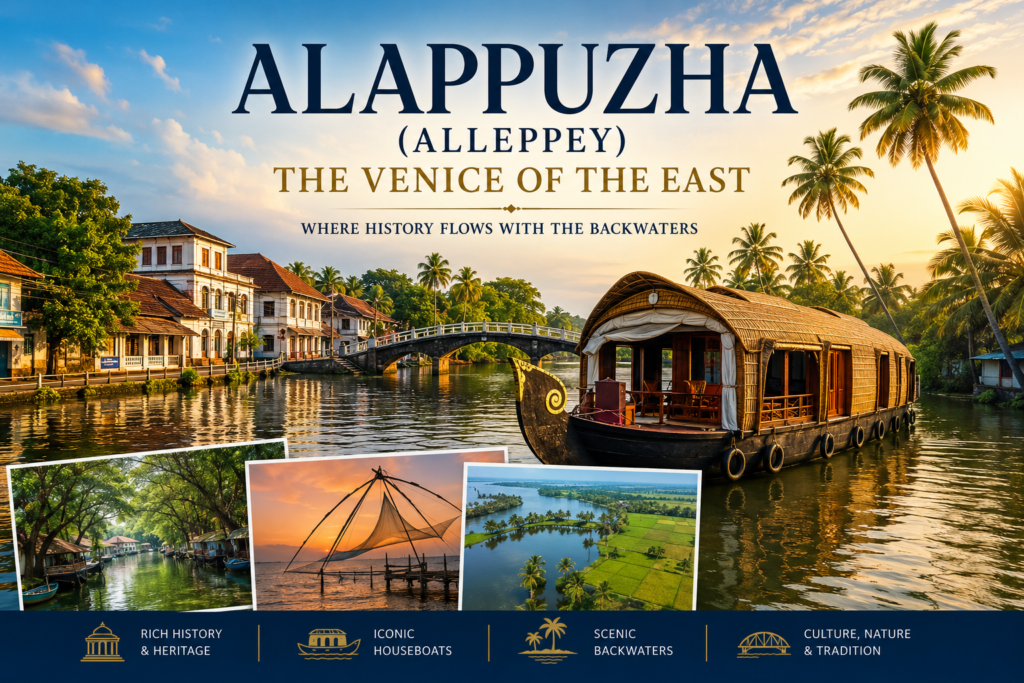
Alappuzha, historically known as Alleppey, is one of Kerala’s most iconic destinations, where an intricate network of backwaters, canals, lakes, and lagoons has shaped its history, culture, and economy for centuries. Nestled between the Arabian Sea and the majestic Vembanad Lake, Alappuzha is celebrated for its tranquil waterways, traditional houseboats, vibrant coir industry, and rich maritime heritage. Today, it stands as one of India’s most sought-after tourist destinations, offering visitors a perfect blend of history, nature, and culture.
The Birth of Alappuzha
Although the fertile Kuttanad region has been inhabited since the Sangam period (300 BCE–300 CE) and played a significant role in the ancient spice trade with Greece and Rome, the modern town of Alappuzha was established during the 18th century under the visionary leadership of Raja Kesavadas.
Raja Kesavadas – The Visionary Founder
During the 1760s, Raja Kesavadas, the Diwan (Prime Minister) of the Kingdom of Travancore, envisioned Alappuzha as a thriving port city that would strengthen international trade in spices, coir, timber, and agricultural products while reducing the kingdom’s dependence on neighboring ports.
Engineering a Canal City
To bring this vision to life, Raja Kesavadas developed an extensive network of man-made canals connecting the inland backwaters to the Arabian Sea. Roads were constructed alongside these waterways, creating an efficient transportation system that greatly enhanced trade and communication throughout the region.
A Flourishing Commercial Hub
To encourage economic growth, merchants and traders from Gujarat, Rajasthan, Surat, Mumbai, and Kutch were invited to establish businesses in Alappuzha. Their arrival transformed the town into one of South India’s busiest trading centers and significantly boosted its commercial importance.
The “Venice of the East”
In the early 20th century, Lord Curzon, then Viceroy of India, visited Alappuzha and was captivated by its picturesque canals, charming bridges, and serene waterways. Struck by its resemblance to the famous Italian city, he referred to Alappuzha as the “Venice of the East,” a title that continues to define its global identity.
Kerala’s Historic Water Highway
The backwaters of Alappuzha form an extensive network of interconnected lakes, rivers, canals, and lagoons that have served as Kerala’s primary transportation system for centuries.
Long before the development of roads and railways, these waterways connected remote villages with major trading ports. Farmers transported rice harvested from the below-sea-level paddy fields of Kuttanad, along with coconuts, spices, coir products, and other agricultural goods, using traditional country boats that navigated these natural waterways.
Today, these historic backwaters have evolved into one of Kerala’s most treasured tourist attractions, offering visitors unforgettable cruises through lush coconut groves, peaceful villages, and breathtaking landscapes.
The Story of Kerala’s Famous Houseboats
One of Alappuzha’s most celebrated attractions is its luxurious houseboats, which evolved from traditional cargo vessels known as Kettuvallams.
The Traditional Kettuvallam
The word Kettuvallam comes from the Malayalam words “Kettu” (to tie) and “Vallam” (boat).
These remarkable boats were masterpieces of traditional engineering, built entirely without nails or screws. Skilled craftsmen joined sturdy jackfruit wood planks using strong coir ropes made from coconut fibers, demonstrating Kerala’s exceptional indigenous boat-building techniques.
The wooden hulls were waterproofed using natural resin extracted from cashew nut shells, while bamboo poles and woven palm leaves formed durable roofs that protected cargo from tropical rain and heat.
Many Kettuvallams stretched nearly 100 feet in length and could carry up to 30 tons of cargo, transporting rice, spices, coconuts, coir, and other agricultural products between the villages of Kuttanad and the bustling port of Alappuzha.
From Cargo Boats to Luxury Houseboats
With the expansion of modern roads, railways, and motorized transportation during the mid-20th century, the traditional water-based cargo trade gradually declined, leaving many Kettuvallams abandoned.
Recognizing their historical and cultural significance, Kerala’s tourism industry and local entrepreneurs restored these magnificent vessels and transformed them into luxurious floating accommodations.
While preserving the traditional bamboo and wooden exterior, the interiors were redesigned with modern amenities, including:
- Spacious air-conditioned bedrooms
- Attached bathrooms
- Comfortable dining areas
- Fully equipped kitchens
- Open sun decks
- Premium hospitality services
Today, these beautifully restored houseboats offer one of the world’s most unique eco-tourism experiences. Visitors can glide through Kerala’s tranquil backwaters, savor authentic local cuisine, witness breathtaking sunsets, observe vibrant birdlife, and experience the timeless charm of village life—all from the comfort of a floating home.
A Timeless Destination
Alappuzha is more than just a scenic destination; it is a living testament to Kerala’s rich maritime history, engineering ingenuity, and cultural heritage. From its historic canals and bustling trading legacy to its world-famous houseboats and serene backwaters, every corner of Alappuzha tells a story of innovation, resilience, and natural beauty.
Whether you’re seeking relaxation, cultural exploration, or an unforgettable journey through Kerala’s waterways, Alappuzha truly lives up to its reputation as the “Venice of the East.”