
Alibaug
Alibaug (also spelled Alibag), located just across the harbor from Mumbai in the Raigad district, is famously dubbed the “Goa of Maharashtra.” While it is celebrated today for its expansive beaches and luxury celebrity villas, Alibaug boasts a deep maritime history. It served as the strategic naval headquarters of the Maratha Empire and has an ancient multicultural heritage.
The History of Alibaug: The Shield of the Konkan Coast
1. The Peculiar Etymology: Eli’s Garden
The origin of the name “Alibaug” is surprisingly multicultural. In the centuries following the destruction of the Second Temple in Jerusalem, a group of Jewish people fleeing Roman persecution shipwrecked near Navgaon village (just south of Alibaug). Known as the Bene Israel community, they settled across the Konkan coast.
In the 17th century, a wealthy Bene Israelite named Eli (Elisha) owned massive, lush plantations of mangoes, coconuts, and orchards in the area. The local Marathi-speaking population began calling the area “Eli-cha-Bagh” (Eli’s Garden). Over generations, the pronunciation naturally shifted to Alibaug.
2. The Maratha Navy & Kanhoji Angre (Late 1600s – 1700s)
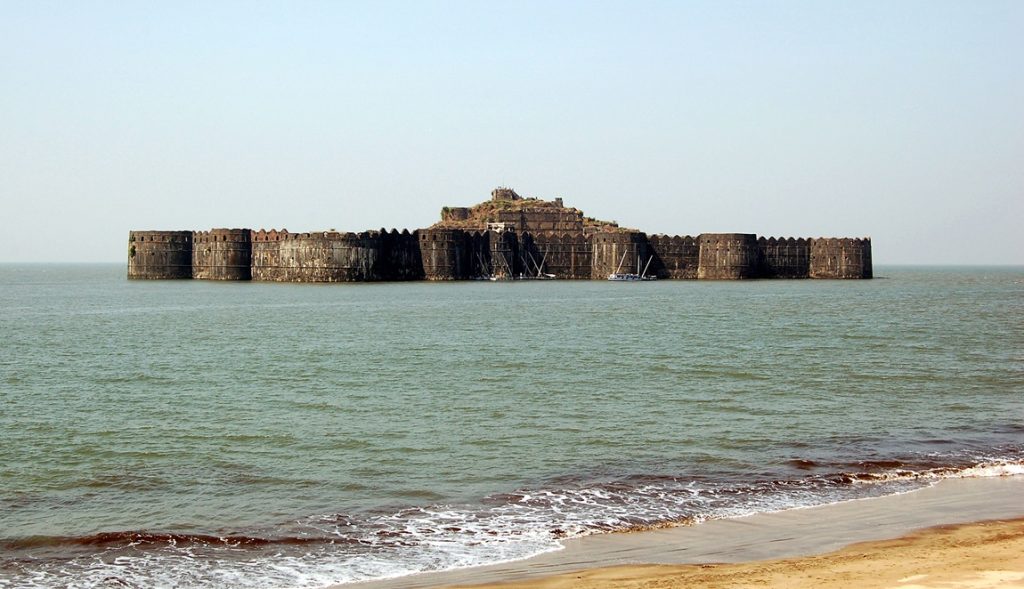
Alibaug’s true geopolitical rise began under Chhatrapati Shivaji Maharaj, who recognized the coast’s vulnerability to foreign powers like the Siddis of Janjira, the Portuguese, and the British. In 1680, Shivaji Maharaj ordered the construction of Kolaba Fort, a massive sea fort located a kilometer off the Alibaug shoreline.
The golden era of Alibaug belongs to Sarkhel Kanhoji Angre (1669–1729), the legendary Admiral of the Maratha Navy, often called the “Shivaji of the Arabian Sea.” Angre made Alibaug his principal naval headquarters. He redeveloped the settlement into a fortified, prosperous town, building docks, arsenals, and temples.
The Invincible Admiral: Under Kanhoji Angre’s command, the Maratha fleet successfully defended the Konkan coast against multiple combined European assaults. In 1722, a massive, joint multi-ship attack by the British East India Company and the Portuguese navy to capture Kolaba Fort was soundly defeated by Angre’s defensive tactics. The British, frustrated by his ability to levy taxes on all merchant ships entering Bombay harbor, labeled him a “pirate,” but he remained completely undefeated at sea until his death.
3. British Era and the Magnetic Milestone (1800s – 1947)
Following the decline of the Angre dynasty, the British East India Company officially annexed the region in 1839. In 1904, Alibaug was chosen for a highly specific scientific mission: the establishment of the Alibaug Geomagnetic Observatory. Built completely out of non-magnetic Porbandar sandstone to avoid disrupting delicate instruments, it became part of a vital international network tracking global variations in the Earth’s magnetic field—a function it still serves today.
Key Historical Monuments in Alibaug
- Kolaba Fort: A 300-year-old fort standing out in the sea. It features 25-foot stone walls, 17 massive bastions, historical cannons, and a stunning architectural marvel: a deep freshwater well (Apsara Talao) right in the middle of a saltwater ocean fort.
- Kanhoji Angre Samadhi: Located right in the heart of Alibaug town, this peaceful memorial park houses the burial shrine and a statue dedicated to the invincible Maratha Admiral.
- Magen Aboth Synagogue: Located in Alibaug’s “Israel Alley,” this functional synagogue stands as a beautiful testament to the 2,000-year history of the Konkan’s Bene Israel community.
- Khanderi and Underi Forts: Twin island forts located further out in the sea off the Alibaug coast, built to keep a strict watch over the sea traffic heading toward Mumbai harbor.