
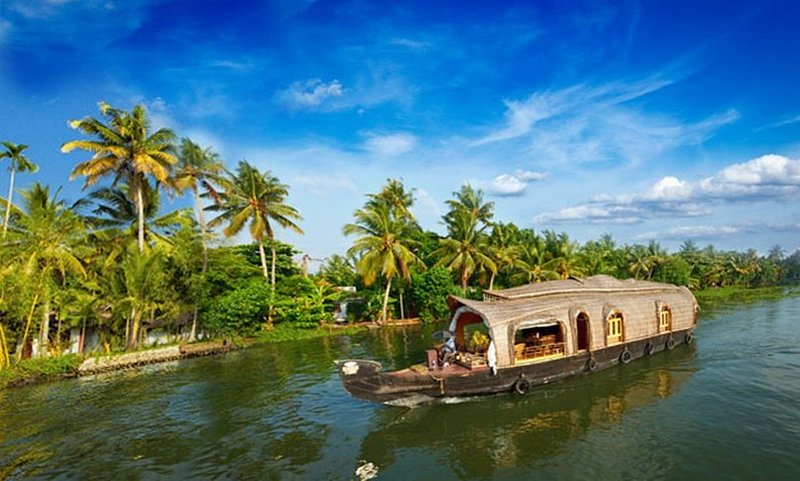
Alleppey Backwaters

Alleppey Backwaters

A Journey Through Time: The History of Alappuzha
​The history of Alappuzha (historically known as Alleppey) is deeply intertwined with its spectacular, labyrinthine network of rivers, canals, and lagoons that sit parallel to the Arabian Sea.

Ancient Maritime Trade & The Sangam Era

​Long before it became a globally renowned leisure destination, Alappuzha was a bustling economic hub. Historical texts from the Sangam era (dating back to the 1st to 3rd centuries AD) reference the region’s prominent position in trade. The famous Roman and Greek travelers, Pliny the Elder and Ptolemy, wrote about Purakkad (referred to in classical texts as Barace), a flourishing coastal trading center in ancient Alappuzha. Merchants from Rome, Greece, Arabia, and China traveled across the seas to trade for spices, pepper, and local goods.

The Architect of Modern Alappuzha: Raja Kesavadas

​The Alappuzha town we recognize today owes its existence to the brilliant vision of Diwan Raja Kesavadas, the Prime Minister of the Kingdom of Travancore in the late 18th century. Around 1762, recognizing the unique oceanic and geographical advantages of the area, he established a well-planned port city.

To connect the inner backwaters directly to the Arabian Sea port, he constructed two parallel canals. He invited leading traders and industrialists from Kutch, Mumbai, and Surat to set up business houses here. This infrastructure transformed Alappuzha into the commercial capital and financial nerve center of Travancore, primarily driven by the export of coir (coconut fiber matting) and spices.

The “Venice of the East”

​In the early 20th century, Lord Curzon, the Viceroy of the Indian Empire, visited the state. Utterly fascinated by the intricate maze of canals and the vibrant water-bound lifestyle, he famously exclaimed that nature had spent upon the land her richest bounties, dubbing Alleppey the “Venice of the East.”

Evolution of the Kettuvallam (Houseboat)

​The modern luxury houseboats that glide across the backwaters today have humble, practical origins. Known originally as Kettuvallams (literally meaning “boats tied with ropes”), these massive wooden vessels were engineered entirely without metal nails. Instead, artisans used planks of jackfruit wood held together tightly by coir ropes and sealed with black caustic resin extracted from boiled cashew shells.

Historically, these were the cargo ships of Kerala, used to transport tons of harvested rice from the low-lying fields of Kuttanad, along with heavy bundles of spices, down to the Alappuzha port. When modern road networks and railways took over freight transport in the late 20th century, the traditional Kettuvallams were creatively reimagined into the floating luxury villas seen today.

FAQs

What is the geographical layout of the Alappuzha backwaters?
The Alappuzha backwaters form a vast ecosystem covering roughly 300 square kilometers. It features a rich blend of freshwater from 38 rivers originating in the Western Ghats meeting the brackish waters of the Arabian Sea. At its core sits Vembanad Lake, the longest lake in India, which connects several districts. To protect agricultural activities further inland, the Thanneermukkom Bund (saltwater barrier) was built to keep ocean water from encroaching on the fresh water channels.
What is unique about the Kuttanad region in Alappuzha?
Kuttanad, known as the "Rice Bowl of Kerala," is globally famous because it is one of the very few places in the world where farming is practiced below sea level (about 1.5 to 2 meters below). Its unique biosaline drowning-and-pumping farming system has been recognized by the FAO as a Globally Important Agricultural Heritage System (GIAHS).
When is the best time to visit the backwaters?
The ideal season to explore the backwaters is between October and March, when the weather is comfortably cool and dry. However, visiting during the monsoon season (June to September) offers a vastly different, intensely green landscape with rain-washed palms, though open-water cruising hours can be restricted during heavy downpours.
What are the primary houseboat cruising routes in Alappuzha?
Depending on the boarding point, the most popular routes include: ​Alleppey to Kainakary / Punnamada Lake: Great for viewing narrow, winding village canals and witnessing local life closely. Alleppey to Kumarakom: A wider, open-water cruise crossing the vast expanse of Vembanad Lake, ideal for serene, unobstructed sunset views. ​Alleppey to Thottappally: A peaceful, historic path running south through the heart of Kuttanad's vast paddy fields.
How does a typical overnight houseboat stay operate?
According to local maritime regulations, houseboats cruise the open waters from 12:00 PM until 5:30 PM, pausing briefly for a fresh local lunch prepared onboard. At 5:30 PM, all boats must anchor at the banks of the canals for the evening to keep the waters clear for traditional fisherman casting night nets. The cruise resumes the following morning around 8:00 AM for a short breakfast trip before checkout at 9:00 AM.
What is the significance of the Nehru Trophy Boat Race?
Held annually on the second Saturday of August at Punnamada Lake, this world-renowned event features the Chundan Vallams (Snake Boats)—narrow wooden boats over 100 feet long powered by more than 100 synchronized oarsmen. The event originated in 1952 when Prime Minister Jawaharlal Nehru visited the region and was so enthralled by an impromptu boat race that he donated a silver trophy to establish an annual competition.

Price From : ₹400/-

Address

Near Avaloormadam temple, thathampally po, pin code 688013, Alleppey, Kerala, India