
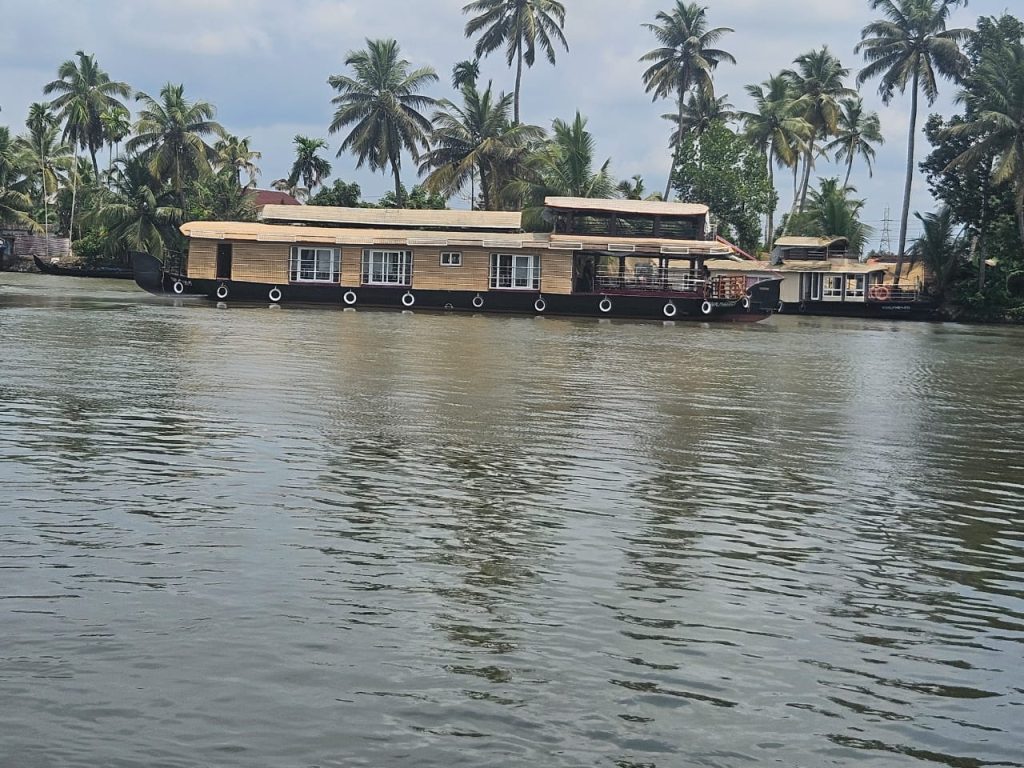
Alleppey Town
Alleppey houseboat booking, Kerala backwater tour, and Alappuzha boat house tariff.
Ancient Maritime and Trade Beginnings
Long before it became a premier tourism destination, Alappuzha was an ancient maritime heavyweight. Mentioned as Baraces by the Roman historian Pliny the Elder in the 1st Century AD, the region maintained deep trade relations with ancient Greece, Rome, and Phoenicia. Its low-lying geography—sandwiched between the Arabian Sea and the massive network of rivers feeding into the Vembanad Lake—made it a natural point of convergence for spice traders.
The Vision of Raja Kesavadas (18th Century)
The modern town of Alleppey owes its existence entirely to Raja Kesavadas (Kesavan Raman Pillai), the legendary Valiya Diwan (Prime Minister) of the Kingdom of Travancore under Maharaja Dharma Raja. In the late 18th century, Kesavadas recognized the strategic oceanic and inland advantages of the area.
The Coir Revolution & “Venice of the East”
In 1859, the first industrial coir manufacturing factory was established in Alleppey, pioneering the processing of coconut husk fiber into mats and rugs for global export. The town’s grid of commercial canals, bustling waterways, and wooden footbridges deeply impressed Lord Curzon, the Viceroy of India, during his official visit in the early 20th century. Captivated by the water-locked urban layout, he famously bestowed upon it the title “The Venice of the East.”
Alappuzha, commonly known as Alleppey, is widely celebrated as the “Venice of the East” and is the primary hub for backwater tourism in Kerala. Situated along the Arabian Sea coast, the town is defined by a mesmerizing web of freshwater lagoons, canals, rivers, and lakes.
- Backwater Cruises: Alleppey is the legendary departure point for overnight houseboat (kettuvallam) cruises, shikara boat rides, and canoe trips that navigate the serene canals leading into Vembanad Lake.
- Coir Heritage: The region is the historic heart of Kerala’s coir industry, where local artisans produce a wide range of mats, carpets, and handicrafts crafted from coconut fibers.
- Coastal Attractions: The town features the historic 19th-century Alappuzha Lighthouse and a long sandy beach with a historic pier extending into the sea.
- Boat Races: It is world-famous for hosting the prestigious Nehru Trophy Boat Race on Punnamada Lake, where massive snake boats compete in vibrant annual events.
Practical Visitor Information
- Best Time to Visit: October to February offers pleasant, breezy weather ideal for outdoor cruising and sightseeing. The monsoon season (June to September) is also popular for traditional Ayurvedic rejuvenation therapies.
- How to Reach:
- By Air: Cochin International Airport (COK) is approximately 85 km away.
- By Train: Alappuzha Railway Station (ALLP) provides direct rail connectivity to major southern cities like Kochi, Thiruvananthapuram, and Bangalore.
- By Road: Easily accessible via National Highway 66 from major nearby cities.