
Anakulam
Anakulam is a peaceful forest-fringed hamlet located under the Mankulam Panchayat in the Idukki district of Kerala, roughly 40 km from Munnar.
Historical Context & Unique Background
1. Etymology and Origins
The name Anakulam literally translates to “Elephant Pond” (from the Malayalam words Aana meaning elephant and Kulam meaning pond or water body). Historically, the region was an interior reserve forest area predominantly inhabited by indigenous tribal communities who lived in deep harmony with the local wildlife.
2. The Discovery of the “Salty” Springs (1912)
While local tribal communities knew of the phenomenon for generations, recorded observations date back to around 1912. The core historical attraction of Anakulam is a specific spot where the Ittacholayaar and Nallathanniyar streams (tributaries of the Periyar River) meet.
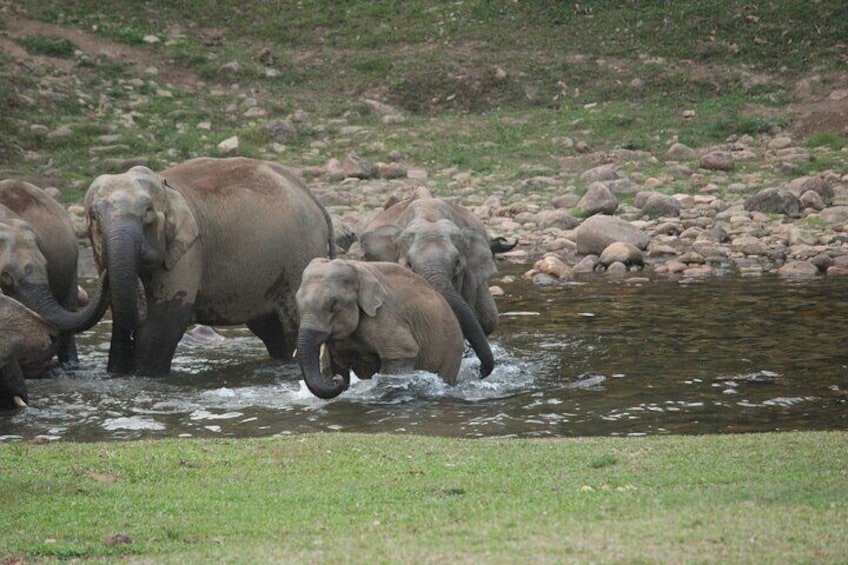
Here, wild elephants regularly emerge from the dense Malayattoor forest division to drink. Geologists and forest officials discovered that unique mineral aquifers bubble up from the riverbed, giving the water a distinctly salty, mineral-rich taste. These essential nutrients are highly sought after by the elephant herds.
3. A Legacy of Human-Wildlife Coexistence
Unlike many areas in India experiencing human-elephant conflict, Anakulam has maintained a rare century-long history of peaceful coexistence.
- Local villagers and children regularly play sports (like football or cricket) right on the banks of the riverbed.
- When the elephant herds emerge from the treeline in the evening, the locals calmly step aside to grant them space. The elephants drink, display playful behavior with their calves, and return to the deep forest without damaging local shops or property.