
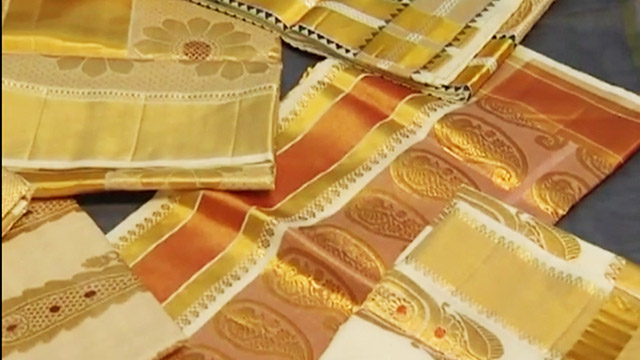
Balaramapuram Handloom Zari Items – Kerala Kasavu Sarees
Balaramapuram (located near Thiruvananthapuram, Kerala) is arguably the most historically famous weaving cluster in South India. Established over 200 years ago under the patronage of Maharaja Avittom Thirunal Balarama Varma of Travancore, Balaramapuram handloom was the first handloom product in Kerala to receive the Geographical Indication (GI) tag (in 2009).
Balaramapuram is world-renowned for its unbleached grey-cotton fabric, natural cream tones, and the unique double-sided Kasavu (gold/silver zari) weaving technique where patterns look identical on both the front and back of the cloth.
1. Iconic Balaramapuram Handloom Items
Balaramapuram Kasavu Sarees: Fine cotton sarees (80s, 100s, and superfine 120s thread count) featuring natural off-white bases accented by pure gold, silver, or half-fine Kasavu borders.
Pudava & Kavani (Set Mundu): The traditional two-piece bridal and ceremonial drape of Kerala. The Pudava (lower drape) and Kavani (upper drape) from Balaramapuram are considered the gold standard for traditional Kerala weddings.
Kora / Grey Dhotis (Mundu): Fine-spun, unbleached male lower garments featuring distinctive double-sided metallic zari borders.
Veshti & Melmundu: Royal-style shoulder cloths and unstitched dhotis used during temple rituals and formal events.
Fine Cotton Shirting & Dupattas: Modern adaptations using traditional fine-count cotton yarns without artificial dyes.
2. Traditional Infrastructure & Production Setup
Unlike modern industrial setups, Balaramapuram maintains an authentic, manually intensive production network:
Infrastructure SetupEquipment & ProcessTechnical Role
Throw-Shuttle Pit LoomsSunken earth pits fitted with foot treadles and lightweight bamboo shuttles.The weaver sits above a pit carved into the floor. Throw-shuttle operation allows complete manual control over every thread’s tension.
Street Warping & Brush SizingLong outdoor stretching alleys, natural rice-starch (kanji) vats, and coconut-fiber sizing brushes.Yarns are manually stretched outdoors and brushed with starch and coconut oil to strengthen fine high-count yarns before loom mounting.
Lace / Extra-Weft TechniqueManual thread-counting needles without Dobby or Jacquard attachments.Motifs are laced by hand into the warp. This creates the famous identical front-and-back motif signature to Balaramapuram.
Primary Weavers’ CooperativesBalaramapuram Regional Handloom Apex Cooperatives & local Master Weaver sheds.Supplies pure tested zari and high-count cotton yarn, ensures fair wages, and enforces GI compliance.
3. Frequently Asked Questions (FAQs)
Q1: What makes Balaramapuram handloom different from Kuthampully and Chendamangalam?
Balaramapuram: Known for pure unbleached cotton, throw-shuttle pit looms, and double-sided identical zari motifs woven strictly by hand without Dobby or Jacquard machines.
Chendamangalam: Known for high-count light cotton, soft hand-feel, and signature thin colored edge stripes (Puliyilakkara).
Kuthampully: Famous for Jacquard-woven heavy borders, peacock/temple motifs, and vibrant printed or dyed variations.
Q2: Why are Balaramapuram sarees naturally off-white or cream?
A: Traditional Balaramapuram weaving avoids harsh chemical bleaching processes. The signature cream color comes from unbleached, natural cotton yarn (Kora cotton), making it breathable, eco-friendly, and ideal for hot, humid climates.
Q3: How do I test if the Kasavu (zari) in Balaramapuram is genuine?
A: Traditional Balaramapuram weaving uses pure gold-tested silver threads (Tested Zari). Look for the GI Tag (Geographical Indication) and Handloom Mark labels. Additionally, check the reverse side of the motif—if it looks identical to the front with no messy loose threads, it was hand-laced on a Balaramapuram pit loom.
Q4: How should Balaramapuram cotton and Kasavu be washed?
A: Always dry clean rich Kasavu sarees or wedding Pudavas to preserve the metallic zari luster. For regular dhotis and set-mundus, hand wash gently in cold water using mild liquid detergent. Never use bleach, avoid harsh wringing, and dry in shade to keep the unbleached fabric supple.