
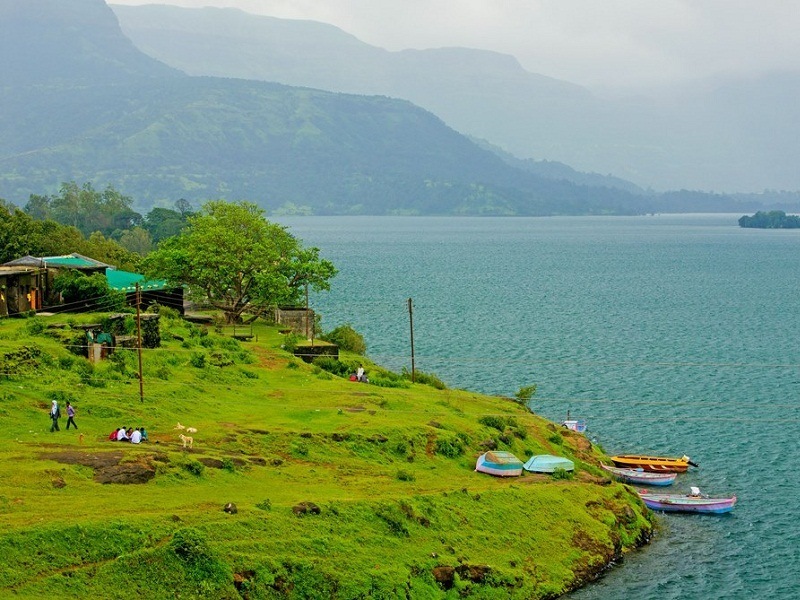
Bhandardara
Sitting quietly by the Pravara River in the Ahmednagar district of Maharashtra, Bhandardara is a pristine, lakeside holiday destination. Famed for its massive blue lakes, historic forts, and rushing waterfalls, its story beautifully blends nature’s bounty with massive colonial engineering.
The History of Bhandardara
1. Mythological & Tribal Roots
According to local folklore, Bhandardara and its surrounding hills have deep spiritual roots. The name is loosely associated with a treasure of nature (Bhandar meaning treasury). Local legends say that the ancient sage Agastya Rishi meditated here for a year, surviving only on water and air. Pleased with his intense devotion, God blessed him with a stream of the Pravara River, which flows down through the valleys today. Historically, the region was populated by local Mahadeo Koli tribal communities who navigated these dense forest highlands.
2. The Maratha Border Strongholds
Because Bhandardara sits in a high-altitude bowl surrounded by formidable cliffs, it held massive defensive value. During the 17th century, the great Maratha ruler Chhatrapati Shivaji Maharaj and his successors utilized the soaring peaks flanking the region as strategic watchtowers.
The most famous of these is the Ratangad Fort, an 400-year-old fort captured by Shivaji Maharaj. It features a natural rock orifice known as the Nedhe (or “Eye of the Needle”). These forts effectively guarded the trade paths between the Konkan coast and the mainland plains.
3. The British Engineering Milestone (1910–1926)
The modern footprint of Bhandardara was reshaped entirely by British engineers in the early 20th century. To tackle regular droughts in the down-valley districts of Ahmednagar and Nashik, the British built the Wilson Dam across the Pravara River.
Constructed between 1910 and 1926, the dam stands over 150 meters high, making it one of the oldest earthen dams in Asia. The massive reservoir formed behind it was named Arthur Lake in honor of Sir George Arthur, a former Governor of Bombay. When the dam’s gates open during peak monsoons, the radial spillway creates the world-famous Umbrella Falls.