
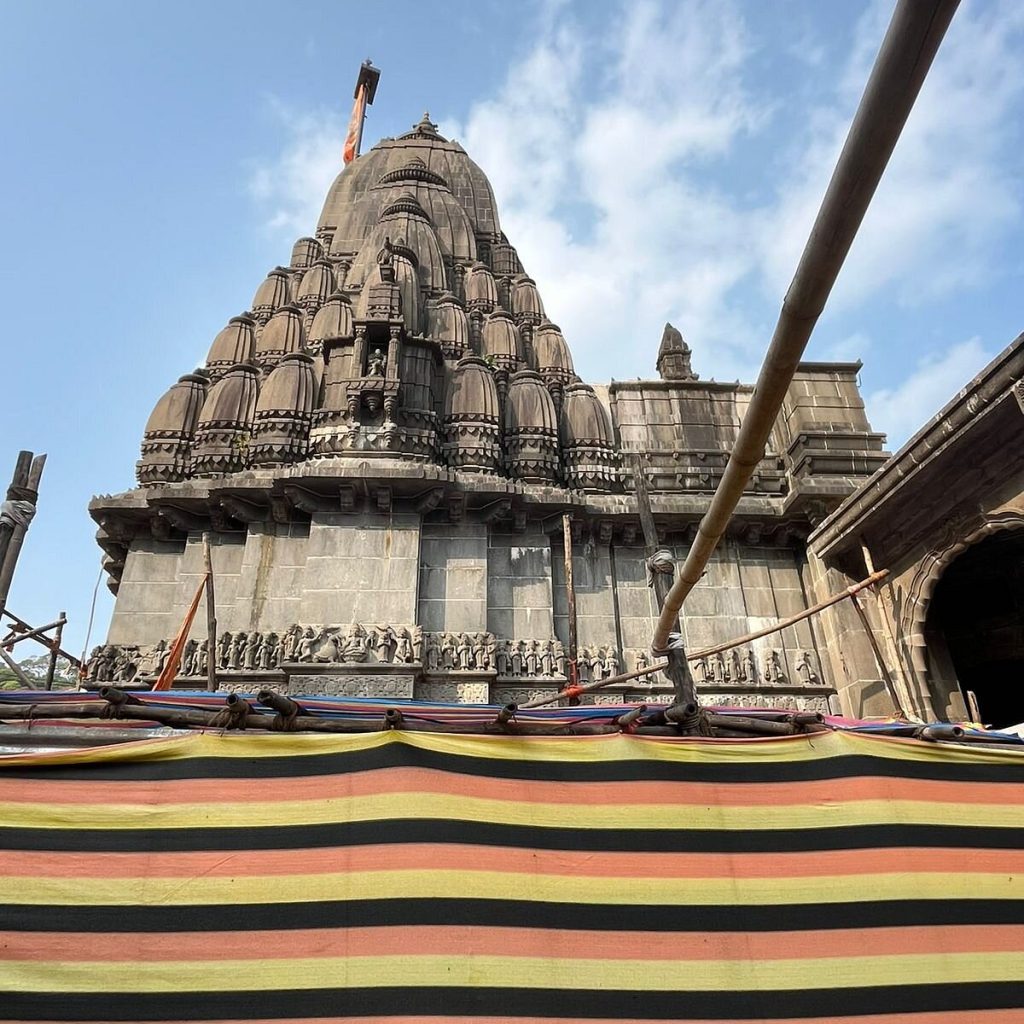
Bhimashankar
Bhimashankar, hidden within the dense, mist-covered forests of the Western Ghats near Pune, Maharashtra, is a majestic confluence of spirituality and untouched nature. It is widely revered as home to one of the twelve sacred Jyotirlingas and serves as the literal source of the Bhima River, which flows down to merge with the Krishna River.
Historical & Mythological Highlights
1. The Divine War: Shiva and Tripurasura
According to Hindu mythology (Shiva Purana), an extremely powerful demon named Tripurasura (or the demon Bhima, son of Kumbhakarna in variant texts) performed severe penance to gain immense powers, which he used to tyrannize both mortals and gods.
- Responding to the frantic prayers of the gods, Lord Shiva manifested himself in a cosmic, fiery form on the Sahyadri hills.
- A catastrophic battle ensued, and Shiva completely incinerated the demon. Exhausted after the fierce battle, the sweat from Lord Shiva’s brow trickled down the mountainside, gathering into a stream that became the Bhima River. At the request of the gods, Shiva permanently established his divine presence there as the Bhimashankar Jyotirlinga.
2. Architectural Evolution & Maratha Patronage
The core of the shrine is ancient, but the magnificent structural temple seen today is a testament to centuries of historic architectural layers.
- The Nagara Style: The primary inner sanctum (Garbhagriha) and the beautifully carved stone spire (Sikhara) were built in the classic Nagara (North Indian) architectural style around the 13th century.
- Maratha Fortifications: In the 18th century, the historic Maratha statesman Nana Phadnavis built the grand Sabhamandap (the large congregational assembly hall) flanking the temple.
- The Peshwa Bell: Right at the entrance of the temple hangs a massive, heavy iron bell. This bell has a unique history—it was captured as a war trophy by Chimaji Appa (brother of Peshwa Baji Rao I) after defeating the Portuguese at the Battle of Vasai in 1739.
Key Places to Explore around Bhimashankar
- Bhimashankar Jyotirlinga Temple: The focal point of the valley, featuring beautifully carved stone pillars depicting scenes from ancient epics.
- Bhimashankar Wildlife Sanctuary: Wrapping entirely around the temple town is a highly protected, pristine forest. This sanctuary is globally famous as the primary habitat for the Malabar Giant Squirrel (Ratufa indica), known locally as the Shekru—a multi-colored, majestic tree squirrel that is also the official state animal of Maharashtra.
- Gupt Bhimashankar: Located about 2-3 km into the dense jungle along a nature trail, this is the spot where the Bhima River naturally originates. The stream flows over a small stone Shiva Lingam hidden right beneath a natural waterfall.
- Nagphani Point: The highest geographic peak in the forest range. The edge of the cliff mimics the raised hood of a cobra snake (Nagphani), offering sweeping, panoramic views of the entire Western Ghats valley below.