
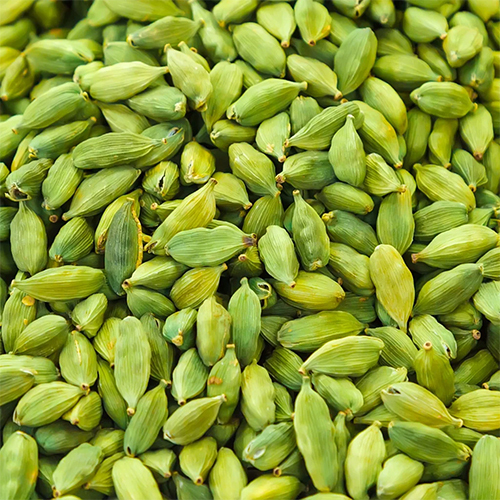
Cardamom / Elaichi ( Queen of Spices)- infrastructure facilities across in India
Elaichi is the Hindi word for cardamom, a warm, highly fragrant spice known as the “Queen of Spices”. It comes from the seed pods of plants in the ginger family and adds a sweet, floral, and citrusy flavor to foods and drinks.
Types of Elaichi:-
Green Elaichi (Choti Elaichi): Small, bright green pods with a sweet taste. Used in teas, milk, and sweets.
Black Elaichi (Badi Elaichi): Large, dark brown pods with a smoky flavor. Used in spicy savory dishes and rice.
Common Uses
Tea and Coffee: Crush a small pod to add flavor to chai.
Sweets: Used in desserts like kheer, halwa, and gulab jamun.
Savory Foods: Added to biryani, pulao, and rich gravies.
Mouth Freshener: Chewed plain to clean breath after meals.
If you like, let me know if you need:
A recipe using elaichi
Its specific health benefits
Tips on storing it fresh
Cardamom (Elettaria cardamomum for Small Cardamom, Amomum subulatum for Large Cardamom), known as the “Queen of Spices,” is one of India’s most valued cash crops. India is the world’s second-largest producer of small cardamom.
Cardamom Cultivation Across India
India cultivates two distinct types of cardamom depending on elevation and geographic location:
Small Cardamom (Green Cardamom):
Primary Belts: Grown along the Western Ghats across Kerala (~70% of total Indian production), Karnataka (~20%), and Tamil Nadu (~10%).
Climatic Requirements: Requires 600–1200 meters elevation, high humidity, 1500–2500 mm rainfall, and 40–60% shade canopy.
Varieties: Vazhukka (most popular semi-erect pod), Mysore, and Malabar.
Large Cardamom (Black/Brown Cardamom):
Primary Belts: Grown in the Eastern Himalayas across Sikkim, West Bengal (Darjeeling & Kalimpong districts), and Arunachal Pradesh.
Climatic Requirements: High altitude (1000–2200 meters), cool temperate climate, and heavy rainfall.
Infrastructure Facilities Across India
The Spices Board of India (Ministry of Commerce and Industry) along with regional state agricultural boards manages key infrastructure:
Facility TypeLocationsKey Infrastructure & Operational Features
Spices ParksPuttady (Kerala), Bodinayakanur (Tamil Nadu), SikkimIndustrial hubs offering post-harvest processing, size-grading, color-sorting lines, and PUF cold storage units.
Cloud E-Auction CentersPuttady (Idukki, KL) & Bodinayakanur (Theni, TN)Cloud-based live e-Auction platforms with high-speed server backends, transparent bidder terminals, and real-time electronic price discovery.
Research & Tech InstitutionsICRI (Myladumpara, KL), regional stations in Sakleshpur (KA) & Gangtok (Sikkim)Focuses on breeding high-yielding varieties, tissue culture, soil analysis, organic farming protocols, and IPM practices.
Processing & CuringPlantation clusters nationwideModernized fuel-efficient curing houses (gas-based/improved wood-smoke kilns) to preserve green color and essential oil content (1,8-cineole, terpinyl acetate).
Frequently Asked Questions (FAQs)
What is the difference between Small (Green) and Large (Black) Cardamom?
Green cardamom comes from Elettaria cardamomum and is small with a sweet, aromatic profile used in both sweet and savory dishes. Large/Black cardamom comes from Amomum subulatum, is larger with a coarse outer pod, and features a heavy, smoky flavor profile derived from traditional open-fire drying.
How is Cardamom graded and priced in India?
Small cardamom is graded based on pod size (e.g., 8mm+, 7.5mm, 7mm), weight per liter (bulk density, usually 380–450 g/L), color, and lack of blemishes. The 8mm+ deep-green pods command the highest market prices.
Why is cardamom one of the world’s most expensive spices?
Cultivation requires specific microclimates, continuous canopy shade management, constant irrigation, and intensive manual labor. Pods must be hand-picked individual-by-individual at precise maturity before they split open.
What is the typical shelf life and optimal storage condition?
Whole cardamom pods retain flavor for 1–2 years if stored in airtight containers in a cool, dark place. Ground cardamom loses volatile oils quickly and should be consumed within 3–6 months.