
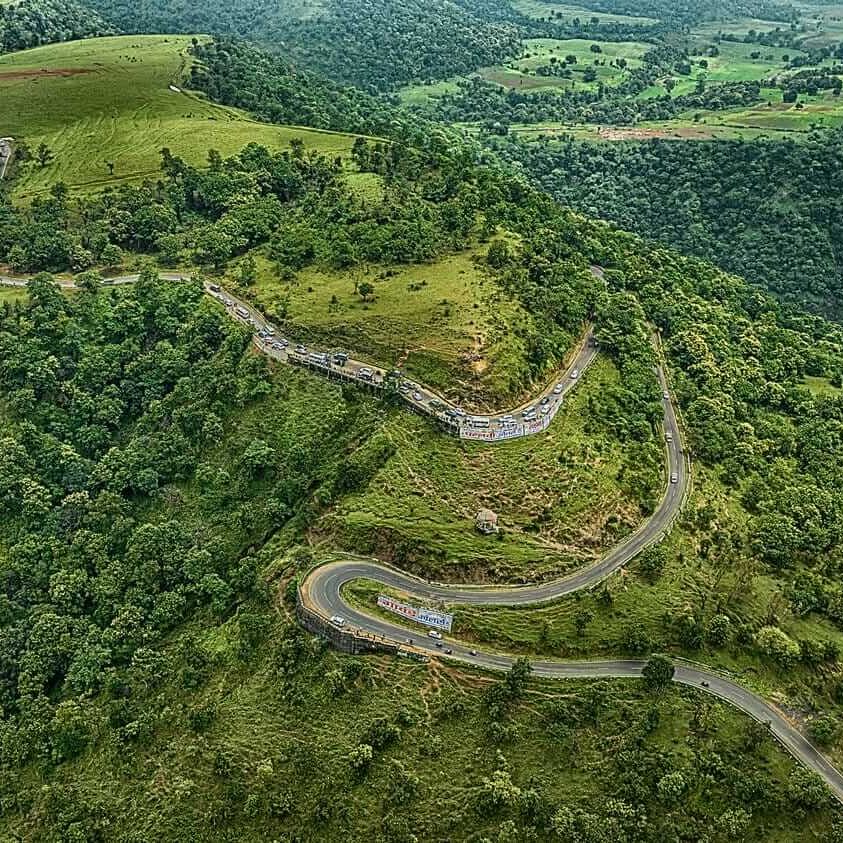
Chikhaldara
Tucked away in the Satpura mountain range within the Amravati district, Chikhaldara holds a very unique status. Standing at an altitude of 1,118 meters, it is the only hill station in the entire Vidarbha region of Maharashtra and bears the rare distinction of being the state’s only commercial coffee-growing region.
The History of Chikhaldara
Chikhaldara’s past is a beautiful weave of ancient Sanskrit epics, medieval fortresses, and colonial surprises.
The Mythological Landscape (The Mahabharata)
According to Hindu mythology, Chikhaldara is deeply connected to the Agyatvas (the period of exile spent in hiding) of the Pandavas. The epic details that the villainous, powerful general Keechaka insulted Draupadi. In retaliation, Bhima fought Keechaka in a colossal wrestling bout, killed him, and hurled his body deep into this valley.
The spot came to be known as Keechakadara (Keechaka’s Valley), which over centuries colloquialized into Chikhaldara. Right next to this is Bhimkund, a massive natural water tank where Bhima is said to have washed his hands after the battle.
2. The Medieval Stronghold of Gawilgad
Long before it was a peaceful retreat, Chikhaldara’s rugged plateau was a highly strategic military outpost. Built right on the ridge is the formidable Gawilgad Fort, constructed in the 12th–13th century by the Gond dynasty.
Over the centuries, it was heavily fortified with stone by the Bahmani Sultanate and later controlled by the Marathas. It featured intricate Persian inscriptions, massive iron cannons, and an ingenious water harvesting system consisting of multiple interconnected tanks. It fell to the British in 1803 during the Second Anglo-Maratha War after a grueling siege.
3. The British “Discovery” (1823)
The modern avatar of the hill station began in 1823 when Captain Robinson of the Hyderabad Regiment chanced upon the plateau. The British officers fell in love with Chikhaldara because its cooler microclimate and lush green vegetation reminded them of autumn in England.
Finding the soil and altitude exceptionally favorable, the British successfully introduced coffee plantations here in the mid-19th century. At one point, the colonial administration seriously considered making Chikhaldara the official summer seat of the Government of India.