
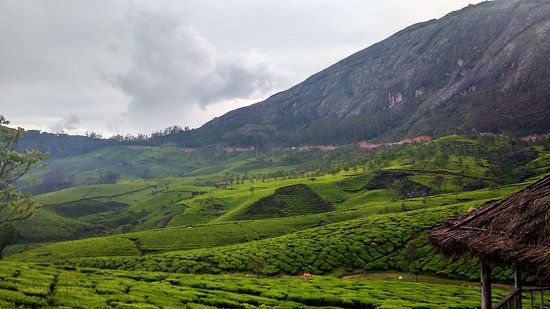
Chinnakanal
Located roughly 20 km outside the main Munnar town along the Munnar-Thekkady highway, Chinnakanal offers a quieter, more untamed side of the Western Ghats. Known for its steep terraced slopes, cascading waters, and rich wildlife corridors, it is an essential piece of the region’s plantation history.
Historical Context
The story of Chinnakanal is deeply intertwined with the broader evolution of the Munnar high ranges from an unexplored wilderness into a global plantation hub.
1. The Tribal Beginnings & Colonial Shift
Before the mid-19th century, the dense forests of Chinnakanal and surrounding areas were inhabited primarily by the indigenous Muthuvan tribal community. The land itself fell under the jurisdiction of the Poonjar Royal Family.
In the 1870s, John Daniel Munro, a British Resident of the Travancore kingdom, visited the region and recognized the agricultural potential of these hills. In 1877, he leased a massive tract of land (over 136,000 acres) from the Poonjar Raja.
2. The Spice & Tea Boom
While initial plantation attempts focused on coffee, cinchona, and cardamom (which still thrives heavily in the Chinnakanal-Suryanelli belt), planters soon realized that tea was perfectly suited to the altitude (ranging from 1,500 to 2,000 meters) and rainfall patterns.
By the late 1890s, companies like James Finlay & Co. (which later evolved into collaborations with the Tata Group) systematically converted these rugged hills into manicured estates. To meet the immense labor demands, thousands of workers migrated from neighboring Tamil Nadu, creating the unique, vibrant blend of Malayalam and Tamil cultures that defines Chinnakanal’s communities today.
3. The Power House Legacy
Chinnakanal is home to the famous Power House Waterfalls (also known as Chinnakanal Waterfalls). Historically, this cascade, which originates from the sacred Devikulam River/Sita Devi Lake, played a symbolic role in early regional water management and proximity to early hydro-electric assessments in the Idukki district.