
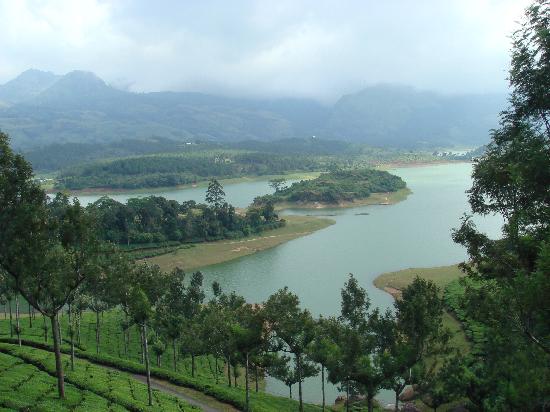
Devikulam

Devikulam

Perched at an altitude of roughly 1,800 meters above sea level, Devikulam is a pristine, narrow valley located just 5 to 7 kilometers from the bustling center of Munnar town. Famous for its velvety, rolling tea fields and its deeply sacred alpine lake, Devikulam holds a distinct place in both the ancient mythology and the colonial history of the Western Ghats. 

Historical & Mythological Context

​The name Devikulam directly translates to “The Pond of the Goddess” in Malayalam, setting the tone for a landscape deeply steeped in folklore.

1. The Ramayana Connection

​According to local Hindu legend, during their period of exile, Lord Rama and his consort, Goddess Sita, traveled through these dense high-range forests. Stricken by the serene beauty of the hidden valley, Goddess Sita is said to have bathed in a sparkling, natural thermal spring lake here. Since then, the lake became known as the Sita Devi Lake, and the waters are revered by locals for holding curative mineral properties and spiritual purity.

​2. The British Hill Station Retreat

​Long before Munnar became a commercial hub, early British surveyors and planters in the late 19th century fell in love with Devikulam’s microclimate. Because it sits slightly higher than Munnar town, it offered cooler temperatures and an escape from tropical illnesses on the plains.

​When the Kannan Devan Planters Association and pioneering companies like James Finlay & Co. established the tea empire here, Devikulam became an exclusive enclave. British officers set up country cottages, trout-fishing clubs around the lake, and golf clearings, transforming the rugged terrains into an elegant summer retreat.

FAQs

What is the main attraction in Devikulam?
​The crown jewel of Devikulam is the Sita Devi Lake (often just called Devikulam Lake). Framed by thick velvet lawns, ironwood trees, and blue gum plantations, it is widely regarded as one of the most serene and untouched bodies of water in the Idukki district.
Can tourists freely visit and swim in Sita Devi Lake?
​No, entry is highly restricted. The lake and its surrounding forests fall under the operational jurisdiction of the Tata Tea estates and local forest conservation departments. To prevent pollution of the natural eco-system, prior permission or an entry pass is required to access the lake road, and casual swimming or unauthorized trespassing is strictly prohibited.
How far is Devikulam from Munnar town?
​It is incredibly close—only about 5 to 7 km southwest of Munnar town along the Munnar-Kumily Highway. A quick 15-minute taxi, local bus, or auto-rickshaw ride will bring you straight into the heart of the valley.
What are the other places to see nearby?
​Pallivasal Waterfalls: A scenic cascade located short distance away, perfect for quick photography stops. ​Lockhart Gap Viewpoint: Located just a few kilometers ahead, offering panoramic views of the entire valley and misty mountain gorges. ​Tea Museum & Estates: The surrounding hills feature some of the oldest tea bushes planted in the region.
Is Devikulam a good place for a stay compared to Munnar?
​Yes, especially for travelers looking to avoid the crowded marketplaces of main Munnar town. Devikulam is home to several premium, quiet eco-resorts, colonial-style plantation bungalows, and valley-view stays that offer a much more peaceful and secluded atmosphere.
What is the exact process, contact checkpoint, and fee structure to obtain a permit for visiting Sita Devi Lake in Devikulam?
Visiting Sita Devi Lake (Devikulam Lake) is highly exclusive because the lake and its surrounding plantation roads are completely private property owned and managed by Kannan Devan Hills Plantations (KDHP) / Tata Tea. ​Because it is not a commercial public tourist site, there is no online booking portal, no standardized public ticket counter, and entry is heavily restricted to protect the environment and private estate security. ​Here is exactly how the process works to secure a permit: ​1. The Official Process & Checkpoint ​To gain official entry, you must get formal, written clearance directly from the plantation management. The Contact Checkpoint: You must physically visit the KDHP (Tata Tea) Regional Office located in main Munnar Town (near the Munnar General Hospital / KDHP House area). The Procedure: You submit a formal request letter at the administrative office stating the date of your intended visit, the number of guests, and your vehicle registration details. ​The Catch: Management rarely approves casual, individual walk-in requests from independent tourists due to safety and strict corporate privacy rules. Permits are usually only granted for corporate guests, research purposes, or via specialized diplomatic/local references. 2. The Reliable "Insider" Alternative ​Because securing an independent permit from the KDHP main office is exceptionally difficult for regular travelers, almost all successful visitors use an alternative route: Booking through a premium local resort or authorized premium tour desk. ​How it works: Premium properties in the Devikulam/Chinnakanal belt (such as Sterling Munnar, Club Mahindra, or historic plantation bungalows) maintain active, long-standing relationships with the KDHP estate management. ​The Process: When you stay at or book a guided plantation trek through these authorized properties, their guest relations team handles the estate clearance on your behalf. They bundle the private road entry, a mandatory estate guide, and sometimes a 4x4 vehicle into a curated day-excursion package. ​3. Fee Structure ​Because this is a private estate rather than a government forest department checkpoint, there is no fixed, public tariff card. The costs instead depend on how you manage to gain entry: Entry MethodEstimated Fee StructureWhat's Included Direct KDHP Permit (If approved)Nominal administrative or vehicle entry fee (approx. ₹200 – ₹500 per vehicle).Private road access only. Resort/Premium Tour Desk Package (Standard Route)₹1,500 – ₹3,500 per jeep/group.Handled gate clearance, authorized 4x4 private estate vehicle, and a mandatory local plantation guide. Critical Safety Note: Mobile networks are practically non-existent near the lake, and the dense shola forests surrounding it are active wildlife zones home to wild elephants and leeches. If you are using the resort route, an estate guide is mandatory for your own safety.

Price From : ₹400/-

Address

Near Avaloormadam temple, thathampally po, pin code 688013, Alleppey, Kerala, India