
Eravikulam National Park
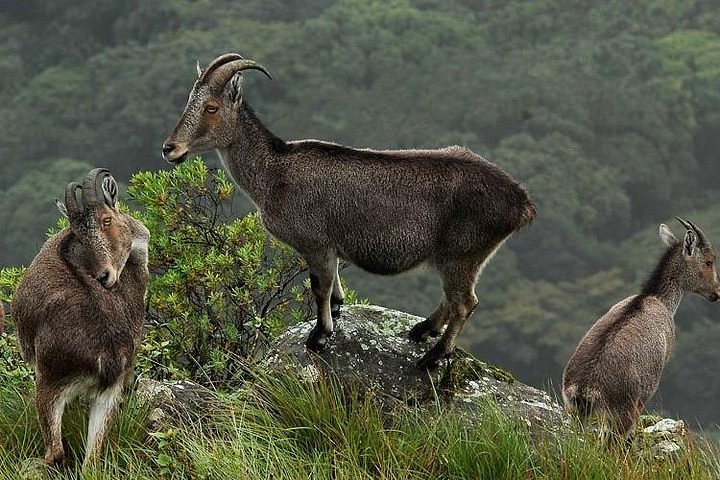
Eravikulam National Park, located roughly 15 km north of Munnar, is Kerala’s very first national park. Spread over 97 square kilometers of rolling high-altitude grasslands and Shola forests, it is internationally renowned for sheltering the world’s largest viable population of the endangered Nilgiri Tahr (a rare mountain goat). It also encompasses Anamudi (2,695 meters), the tallest peak in India south of the Himalayas.
1. Historical Context of Eravikulam
The transformation of Eravikulam from a private colonial hunting ground to India’s top-ranked protected national park is a milestone in wildlife conservation.
- The Raj-Era Game Preserve: In the late 19th and early 20th centuries, when the British turned Munnar into a tea empire, the high plateau of Eravikulam remained largely uncultivated due to its rugged altitude. The land was leased by the Kannan Devan Hills Produce (KDHP) Company. The British managers and elite planters operated the area as a private game preserve and hunting ground, specifically targeting the Nilgiri Tahr and panthers.
- The High Range Game Association: Realizing that unregulated hunting by outsiders was rapidly destroying the wildlife, the resident British planters formed the High Range Game Association in 1928. Ironically, this hunters’ club became the area’s first protective shield. They appointed local tribal Muthuvans as game watchers to prevent poaching, establishing the early boundaries of wildlife management.
- Government Takeover (1971): Following Indian independence, the Government of Kerala passed a landmark act in 1971 (The Kannan Devan Hills Produce Resumption of Lands Act), officially reclaiming uncultivated plantation lands—including the Eravikulam plateau—back into public, state control.
- Sanctuary to National Park (1975–1978): Prompted by international concerns over the rapid extinction risk facing the Nilgiri Tahr, the state declared the area as the Eravikulam-Rajamala Wildlife Sanctuary in 1975. Recognizing its immense ecological, faunal, and floral significance, it was elevated to full National Park status in 1978.