
Gandikota
Known popular as the “Grand Canyon of India,” Gandikota is a small village in the Kadapa district of Andhra Pradesh. It is famous for its spectacular gorge formed by the Pennar River cutting through the Erramala hills, topped by a massive, historic fort.
The History of Gandikota
The name Gandikota comes from the Telugu word ‘Gandi’, which means gorge, and ‘Kota’, meaning fort.
The Foundations (12th Century): The first mud fort was built in 1123 AD by Kapa Raja, a local chieftain from nearby Bommanapalle. He realized the strategic brilliance of the site—surrounded by a deep, impassable gorge on three sides.
The Kakatiya & Vijayanagara Era: The fort was later upgraded with massive stone masonry under the Kakatiya rulers. It eventually became an important strategic outpost for the Vijayanagara Empire, managed by the Pemmasani Nayaks, who ruled over the region for nearly three centuries and heavily fortified the site.
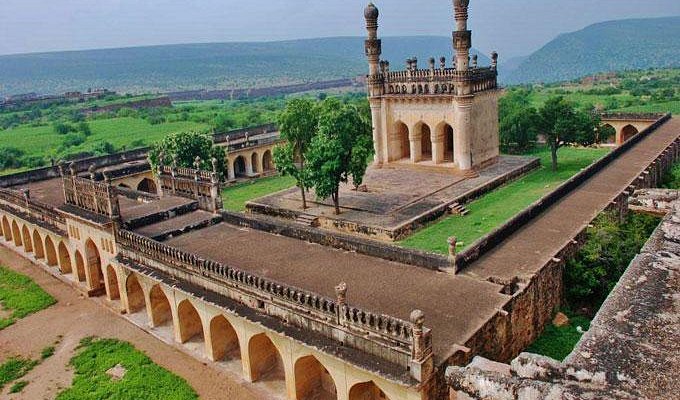
The Qutb Shahi Conquest (17th Century): In 1650 AD, the fort fell to Mir Jumla, the commander of the Golconda Sultanate (Qutb Shahi dynasty). During this Islamic rule, a beautiful grand mosque (Jamia Masjid) was added inside the fort complex, creating the multi-cultural architectural blend you see today.
Later Rulers: The fort later passed into the hands of Hyder Ali of Mysore before eventually being taken over by the British East India Company.