
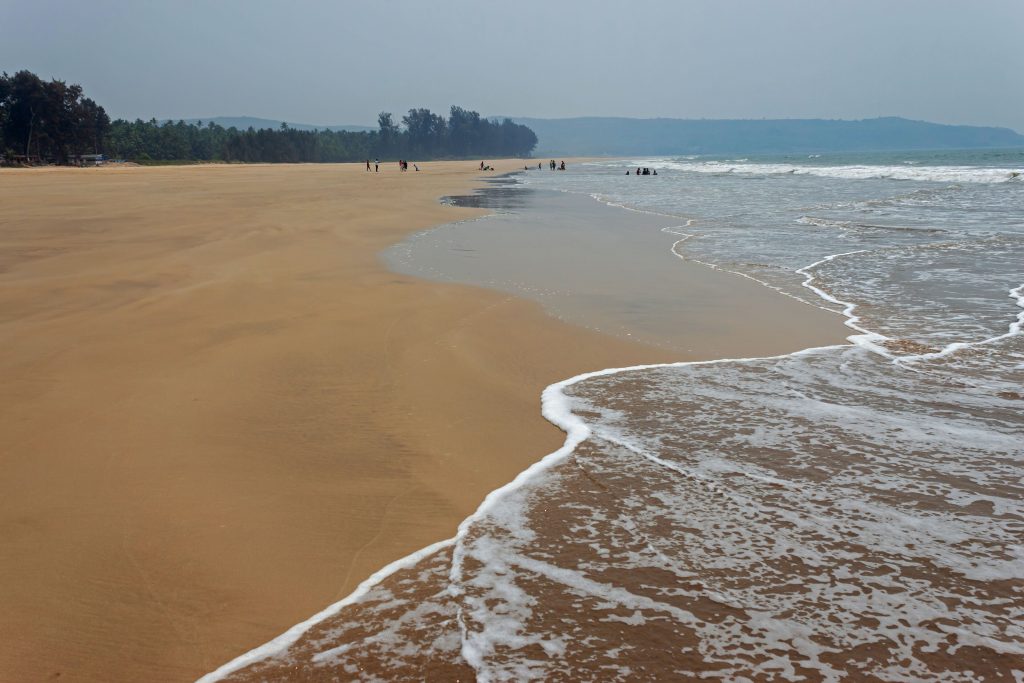
Guhagar
Guhagar, nestled in the Ratnagiri district of Maharashtra, is a scenic coastal town bound by the Arabian Sea on one side and the dramatic Sahyadri mountain range on the other. Its name literally translates to “Cave House” (Guha meaning cave, and Gar meaning house), pointing to its ancient geological and mythological roots.
Unlike the heavy naval battlegrounds of its northern neighbors, Guhagar’s history is anchored in Puranic legends, ancient temple architecture, and traditional Konkan lifestyle preservation.
Historical & Mythological Background
1. The Legend of Lord Parashurama
According to Hindu mythology, the entire narrow strip of the Konkan coast was created by Lord Parashurama (the sixth avatar of Lord Vishnu). Legend states that Parashurama reclaimed the land from the sea by shooting an arrow from the Sahyadri mountains into the ocean, commanding the waters to recede. Guhagar is believed to be one of the early settlements established shortly after this divine reclamation, making it a sacred land in local folklore.
2. The Ancient Seat of Lord Vyadeshwar
The socio-religious history of Guhagar revolves entirely around the Shri Vyadeshwar Temple, dedicated to Lord Shiva.
- The Origin Story: Local history traces the temple’s origin back to an ancient era when a regular stone on the ground began emitting divine energy. A sage named Vyad Muni performed deep penance here and installed a Shivaling.
- The Structure: The current stone structure stands as a classic example of Panchayatan style architecture (where the main shrine is surrounded by four corner shrines dedicated to Surya, Ganesha, Vishnu, and Ambika). Built out of solid black basalt rock, the temple complex has been meticulously preserved for centuries.
3. Medieval Era & Clan Migration
During the medieval centuries, Guhagar transformed into a prominent cultural and educational hub for Chitpavan Brahmins and other local Konkani clans. The town was ruled sequentially by the Chalukyas, the Silaharas, and eventually integrated into the Maratha Empire. Because it lacked a deep-water military port, it escaped the heavy shellings and structural destruction faced by neighboring naval hubs, allowing its traditional, old-world Konkani village layout to survive intact.