
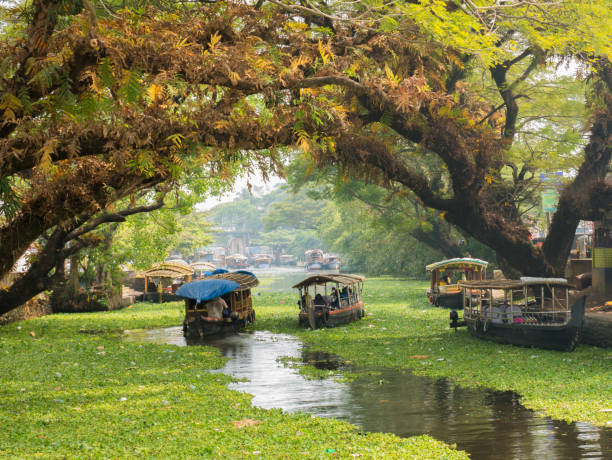
Infrastructure Facilities In Alappuzha’s backwaters
Alappuzha’s backwaters are a masterful blend of nature and human engineering. Long before it became the global capital of houseboat tourism, this intricate network of canals, lakes, and lagoons served as the economic backbone of the Kingdom of Travancore.
Historical Context & Infrastructure Development
Alappuzha’s transformation from a secluded coastal region into a bustling commercial hub is credited to Raja Kesavadas, the visionary Diwan (Prime Minister) of Travancore in the late 18th century. Recognizing the strategic value of the geography—wedged perfectly between the Arabian Sea and the vast Vembanad Lake—he laid the groundwork for the region’s first major infrastructure boom.
- The Canal Network (1780s): Diwan Raja Kesavadas constructed parallel artificial waterways, including the Commercial Canal and the Vadaicanal. These were specifically designed to connect the deep inland backwaters directly to the coast. This network allowed large cargo vessels to transport spices, timber, and coir from the interior hinterlands straight to the shoreline for export.
- Alappuzha Port & Pier (1762): Opened to facilitate international trade, the port made Alappuzha the financial nerve center of Travancore. To ease the loading of cargo onto large ocean liners, a historic iron pier was constructed, stretching out into the sea.
- The Kuttanad Bund System: Part of Alappuzha’s backwater system includes Kuttanad, famous for its below-sea-level farming (ranging from 2.5 to 3 meters below the sea). The infrastructure here relies on an intricate system of man-made bunds (mud and stone embankments) and canals designed to keep the saltwater out and manage irrigation for vast tracts of paddy fields.
- Evolution of the Kettuvallam: The iconic houseboats of today were originally called Kettuvallams (meaning “tied boats”). These massive, eco-friendly wooden vessels were crafted from jackwood planks bound tightly together with coir ropes—completely without the use of a single iron nail. Historically, they were purely logistical infrastructure, used as cargo barges to ferry tons of rice and wild spices across the shallow backwaters before modern roads existed.